This year’s training season emphasizes practical, realistic training to enhance the hospital’s comprehensive capabilities in a multinational operational environment that may involve security challenges, disease risks, and other non-traditional threats.
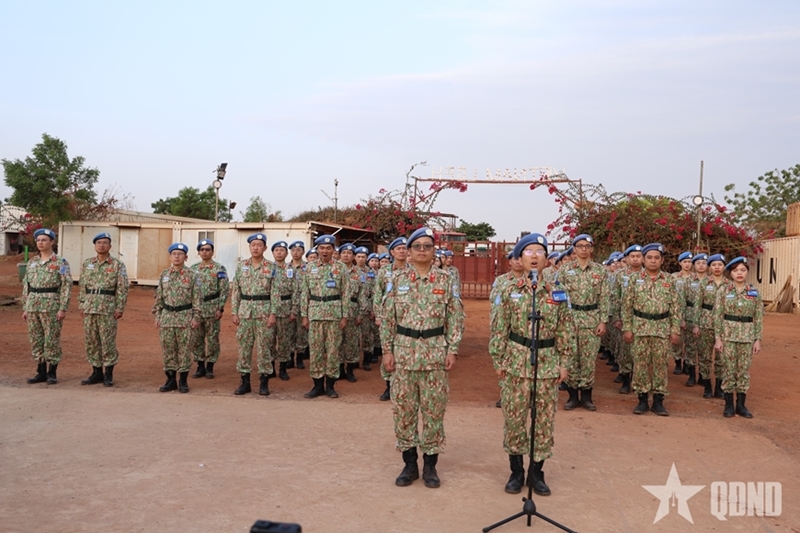
The ceremony was conducted in accordance with regulations, ensuring a solemn and disciplined atmosphere while reinforcing unity of will and action across the unit. Beyond a routine military ritual, the event also provided an opportunity for the hospital to review and evaluate its performance in February in a comprehensive and objective manner.
    |
 |
|
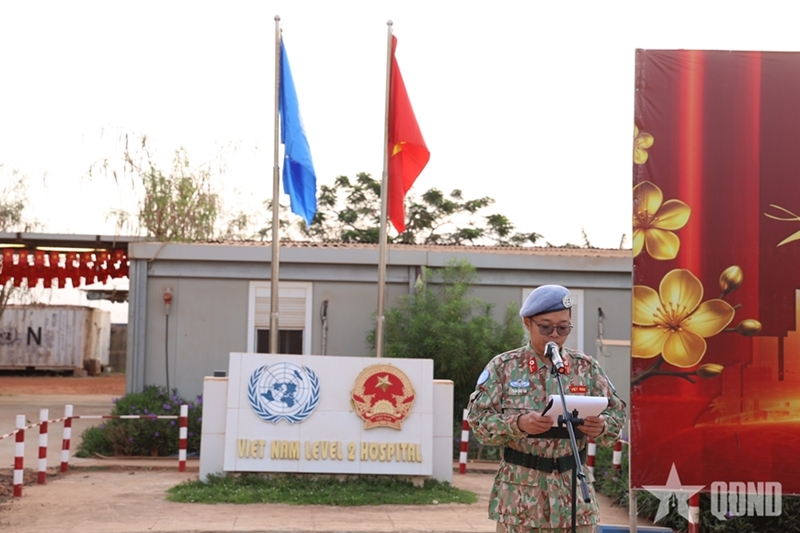
Major Tran Duc Tai, Director of L2FH Rotation 7, delivers remarks at the ceremony. |
By the end of February 2026, L2FH Rotation 7 had completed all assigned tasks despite operating in an area where security and safety conditions remain complex. The unit maintained strict discipline, ensured the safety of personnel and equipment, upheld standardized military order, and stabilized the morale of its officers and staff. Party and political work was carried out effectively, fostering unity in awareness and action in fulfilling international duties.
Professionally, the hospital maintained continuous emergency readiness and successfully treated 159 patients. Preventive measures against infectious diseases were actively implemented, and the unit successfully completed the COE inspection in accordance with United Nations standards. Logistics and technical support were ensured in a coordinated manner, while the hospital compound continued to be improved. Self-sustaining agricultural activities also yielded nearly one ton of fresh vegetables, helping improve living conditions for personnel.
|
|
 |
|
An overview of the ceremony |
Beyond medical duties, the hospital conducted community outreach and cultural events during the Lunar New Year and Vietnamese Doctors’ Day, enhancing the image of Vietnamese military medics as compassionate professionals. At the ceremony, Major Dr. Tran Duc Tai, the hospital’s Director, stressed that a multinational environment demands both medical excellence and military proficiency to ensure security, discipline, and the reputation of Vietnamese peacekeepers.
The 2026 training focuses on practical mission needs, including: area security; landmine awareness; unit defense; emergency maneuvering and mass-casualty response; disease control; firefighting; and the protection of civilians. Additionally, the program covers U.N. regulations on preventing sexual abuse and logistics management, specifically regarding blood products in field conditions.
|
|
 |
|
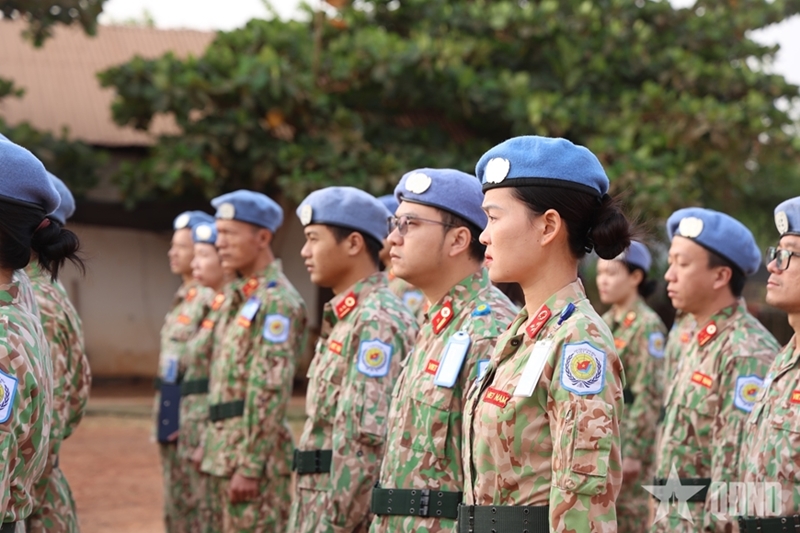
Officers and staff of the hospital at the ceremony |
A notable feature of this year’s training season is the increased emphasis on practical exercises and close coordination among departments within the hospital, between the hospital and lower-level units and hospitals in the sector, as well as with civilian medical facilities in the area. Practical effectiveness is considered the key measure, the highest safety requirement, and training results the basis for evaluating the capabilities of both individuals and the collective.
The event created a dynamic training atmosphere, strengthened confidence, enhanced internal solidarity, and unified the determination of all officers and staff as they move into the new training phase.
By Tien Phuc (from South Sudan)
Translated by Tran Hoai