From mass mobilization activities to “Quang Trung Campaign,” their presence across the Central and the Central Highlands has vividly embodied the enduring bond between the military and the people.
    |
 |
|
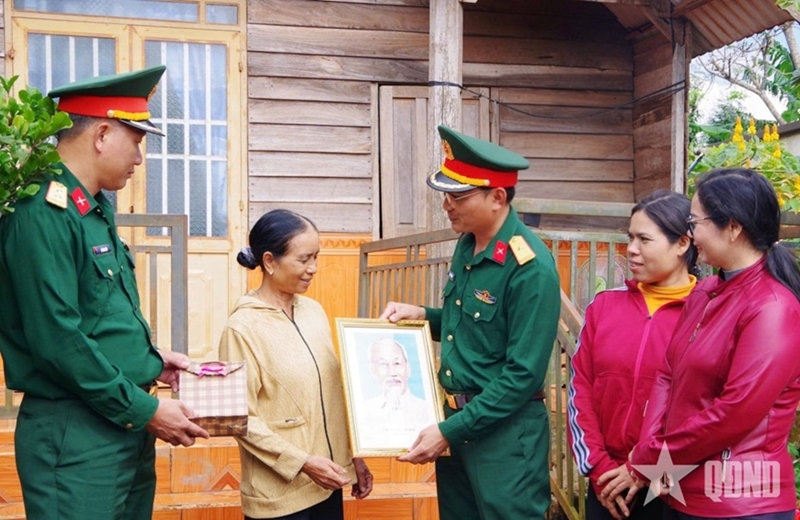
Regiment 95 presents portraits of President Ho Chi Minh to residents in Ea Drong commune. |
In recent days, Dak Rong commune in Gia Lai province has taken on a festive atmosphere as local residents warmly welcomed officers and soldiers of Regiment 1 of Division 2. After traveling more than 90 kilometers, the young soldiers wasted no time getting to work. Under the harsh dry-season sun typical of the Central Highlands, they dredged canals, cleaned the environment, and carried out practical tasks to support local livelihoods. The mud-stained uniforms and tireless movements of soldiers left a deep impression on villagers.
That devotion was met with heartfelt gestures from the community. Local mothers and grandmothers brought cups of cool herbal water infused with the fragrance of forest plants. Laughter, conversation, and songs echoed during working hours, easing fatigue and further strengthening the close-knit relationship between soldiers and residents.
|
|
 |
|
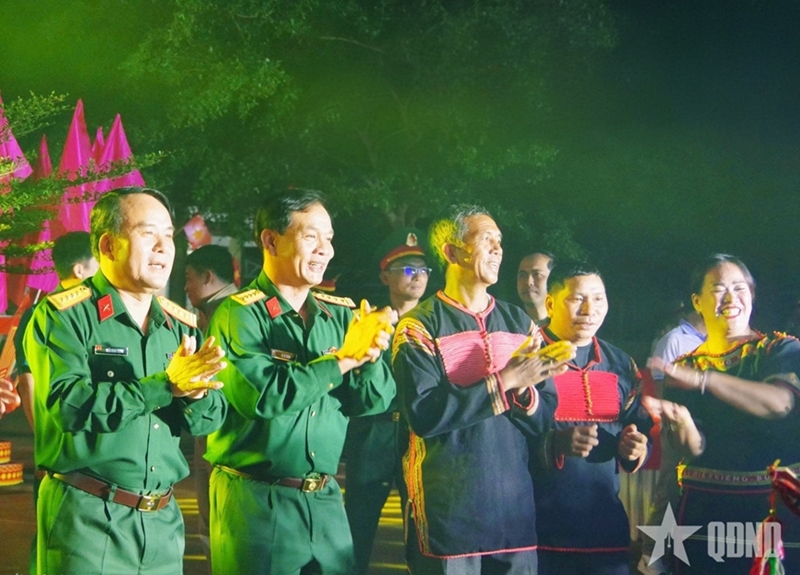
A night of heartfelt military-civilian cultural exchange in Ea Drong. |
In Ea Drong commune, Dak Lak province, the mass mobilization efforts of Regiment 95 carried particular significance. The unit was entrusted by Military Region 5 to serve as a focal point in implementing a project aimed at mobilizing ethnic minority communities to actively counter attempts to undermine the great national unity bloc. With the guiding principle of “visiting every household, meeting every person, and listening to every story,” soldiers brought the Party’s policies closer to the people through concrete and accessible activities.
Along village roads, national flags and banners stood out under the golden sunlight. Officers and soldiers organized legal awareness talks, distributed leaflets, operated mobile information vehicles, set up “zero-dong” stalls, provided free medical examinations and medicines, and presented national flags and portraits of President Ho Chi Minh to local families. These activities were not symbolic gestures, but practical efforts tailored to local needs.
In a traditional longhouse, H’Pur Mlo from Trap hamlet was visibly moved as she personally hung the portrait of President Ho Chi Minh in the most honored place in her house. She recalled that Ea Drong had once been a poor commune facing many hardships. Thanks to the guidance and support of soldiers from Regiment 95, villagers learned new ways to work and develop local economy, enabling the commune to achieve new rural standards. Her words reflected the deep trust local people place in the Party, in President Ho Chi Minh, and in the military.
|
|
 |
|
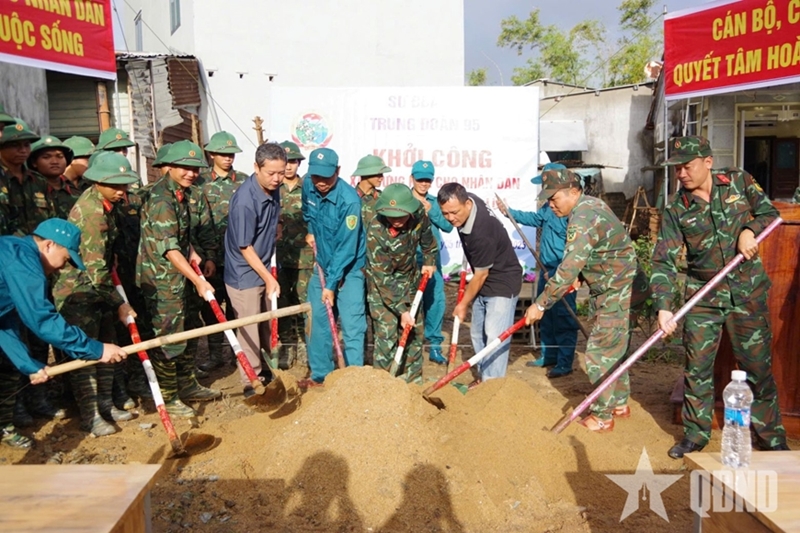
Division 2 breaks ground for housing construction to support local residents. |
That trust was further reinforced during a cultural exchange, themed “Unwavering military-civilian solidarity, a firm great national unity bloc.” In the vast forests of the Central Highlands, a campfire burned brightly, symbolizing the guiding light of the Party. To the resonant rhythm of gongs, officers, soldiers, and local residents were hand in hand in folk dances, creating a powerful image of unity.
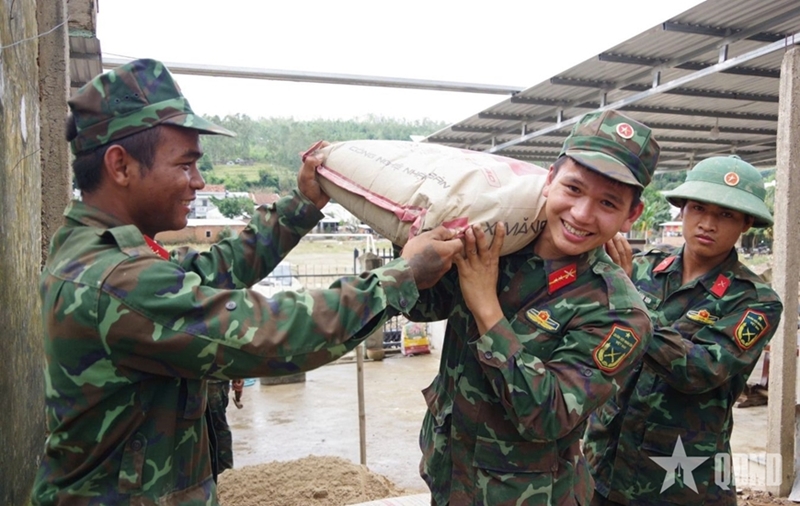
Beyond mass mobilization work, Division 2 has also played a crucial role in post-disaster recovery. Just over a month earlier, many houses in Gia Lai and Dak Lak had been submerged by floods, leaving families facing loss and uncertainty. Through the deployment of “Quang Trung Campaign,” Division 2 mobilized more than 1,200 officers and soldiers to build 83 houses for affected families across the two provinces. Despite unfavorable weather and pressing timelines, the soldiers worked with the highest sense of responsibility to help residents rebuild their lives.
|
|
 |
|
The joy of soldiers helping people rebuild their houses. |
For families like that of Tran Van Cong in An Phu ward, Gia Lai province, the nearly completed new house represents more than shelter. It symbolizes recovery, renewed faith, and hope for the future. The soldiers’ willingness to work day and night, treating the people’s needs as their own, has left a lasting impression on the community.
The newly built houses stand as tangible evidence of mutual support and compassion, reflecting the noble qualities of Uncle Ho’s Soldiers in peacetime. More importantly, they reinforce the people’s enduring trust in the Party and the military. As warm kitchen fires are lit once again in these houses, the bond between troops and the people continues to grow stronger, quietly, steadily, and profoundly.
Translated by Tran Hoai