The event featured around 450 booths from over 20 countries and territories, bringing together airlines, hotels, destination management agencies, and tourism enterprises. Across four days, participants engaged in forums, conferences, and business exchanges aimed at addressing shared challenges and improving service quality while maintaining competitive pricing.
    |
 |
|
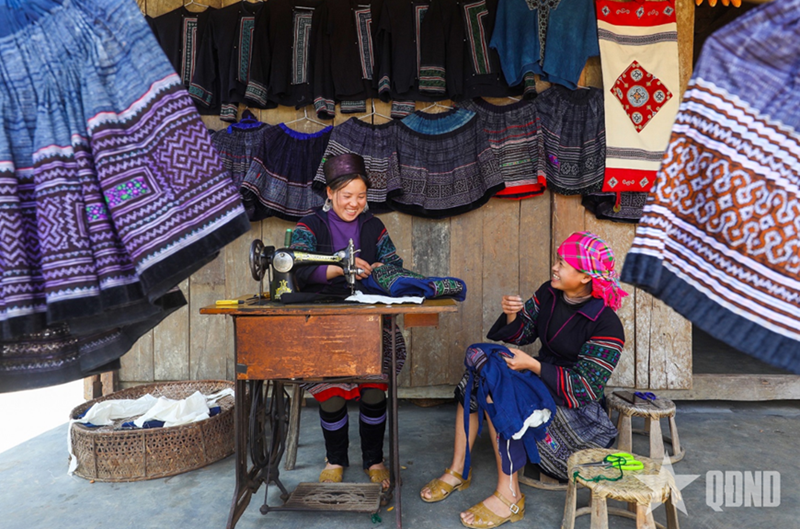
May village in Sa Pa, Lao Cai province attracts visitors with its distinctive ethnic cultural experiences of the Northwestern region. |
According to Vu The Binh, Chairman of the Vietnam Tourism Association, VITM is gradually becoming an important international trade platform rather than merely a venue for discounted tour sales. The growing presence of businesses from key markets is opening up new opportunities for cooperation and is expected to contribute to an increase in international arrivals to Vietnam.
From the perspective of businesses, the event remains a vital marketplace. Pham Hong Dung, Deputy General Director of Muong Thanh Group, described VITM as “the Tet of the tourism industry,” where companies showcase their best offerings. He noted that visitors are not only seeking affordable deals, but also high-quality and sustainable experiences, reflecting strong demand and continued growth potential in the sector.
However, the vibrant atmosphere at the fair also highlights mounting challenges. Rising transportation costs, driven largely by increasing fuel prices, along with ongoing geopolitical instability, have pushed tour prices higher. This has forced companies to carefully recalibrate their operations. Nguyen Quang Hung, Director of Thien Huong TECOTRIP, said these factors have significantly impacted tourism, particularly transportation services. In addition, visitor numbers from Middle Eastern markets and other regions affected by conflict have declined. In response, his company is focusing on strengthening the domestic market, exploring new international markets, and reducing profit margins to offset costs while maintaining stable employment.
Against this backdrop, Nguyen Thi Hoa Mai, Deputy Director of the Vietnam National Authority of Tourism, emphasized the need for stronger and more substantive collaboration among businesses and localities. She stressed that cooperation must be market-driven and backed by concrete data, while promotion strategies need to be reoriented with a clear focus on market demands.
Beyond cost pressures, VITM 2026 also highlighted a deeper shift in the industry’s development model. The focus is moving from increasing visitor numbers to enhancing the quality of experiences. Pham Ha, Chairman and CEO of Lux Group, described this as a “dual transformation,” combining digital adoption with green development. He noted that the key question is no longer how to attract more visitors, but how to deliver better services and generate greater value from each trip.
At Lux Group, artificial intelligence is applied across the entire value chain, from marketing and sales to operations and customer experience. Tools such as chatbots, demand forecasting systems, and personalized itinerary planning have improved efficiency and allowed for more tailored services. According to the company, an employee supported by AI can achieve productivity equivalent to three to five people under traditional models. More importantly, this shift reflects a broader change in mindset, from selling standardized tours to designing individualized experiences.
Other companies, including Muong Thanh and Best Price, are also integrating AI into management and customer service, improving both efficiency and accuracy. At the same time, businesses are redefining tourism products to better engage travelers.
Nguyen Cong Hoan, CEO of Flamingo Redtours, said the company is diversifying its offerings to align with changing customer preferences. Instead of relying on traditional sightseeing, it is developing new experiences to encourage repeat visits. In destinations such as Cat Ba, tourists now have access to a wider range of activities, including sunrise and sunset viewing, squid fishing, kayaking, and exploring national parks. Improved infrastructure, such as the expressway to Mong Cai, has also expanded access to destinations in Quang Ninh, including Bai Tu Long, Co To, Quan Lan, and Van Don.
Meanwhile, Vietravel is developing a new product line under the concept “Creating life value through every journey,” integrating ESG (environmental, social, and governance) criteria and the Life Experience Index (LEI). These indicators are attached to tour products to provide transparency on both environmental impact and experiential value. Environmental scores are calculated based on factors such as responsible waste management and the use of sustainable materials, while the LEI measures the depth of real experiences offered to travelers. Products with higher LEI scores correspond to more immersive and meaningful journeys, ranging from deep cultural engagement to full integration into local life.
In this context, VITM 2026 serves not only as a platform to stimulate short-term demand, but also as a reflection of the industry’s long-term direction. As the market continues to face uncertainties, the ability to adapt quickly, apply technology effectively, and create distinctive experiences will determine which businesses gain a competitive edge.
Translated by Tran Hoai