Regarding preparations for the visit and joint training, Senior Colonel Nguyen Minh Khanh said that the Coast Guard Region 2 Command identified the mission as an important defense diplomacy activity, which also involved a long voyage at sea. Therefore, the unit had made thorough, pro-active and meticulous preparations, with the highest priority given to safety.
    |
 |
|
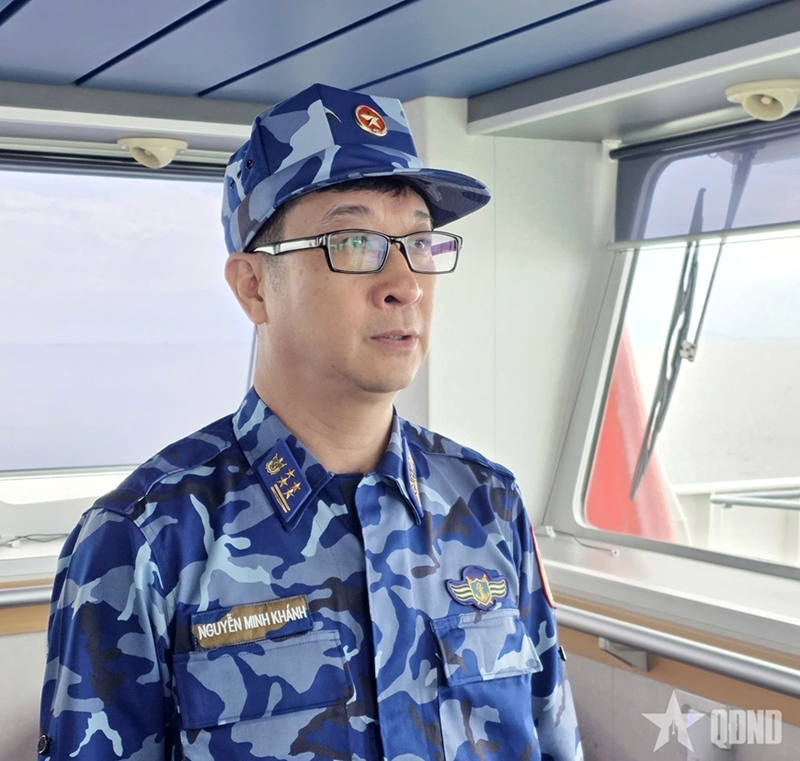
Senior Colonel Nguyen Minh Khanh, Deputy Commander and Chief of Staff of Coast Guard Region 2 |
Regarding personnel, the unit selected officers and personnel with firm political resolve, a strong sense of discipline and professional qualifications that met the mission requirements. They were also thoroughly briefed on the mission, defense diplomacy, military etiquette and conduct, communication culture, and important regulations to be observed while performing duties abroad.
For Coast Guard Ship 8002, the unit conducted comprehensive inspections of the ship's technical condition, engines, navigation equipment, communications systems, life-saving equipment, and search and rescue facilities. Adequate logistics, technical and medical supplies, as well as other necessary conditions, were also prepared to ensure the ship's safe operation throughout the voyage and mission.
|
|
 |
|
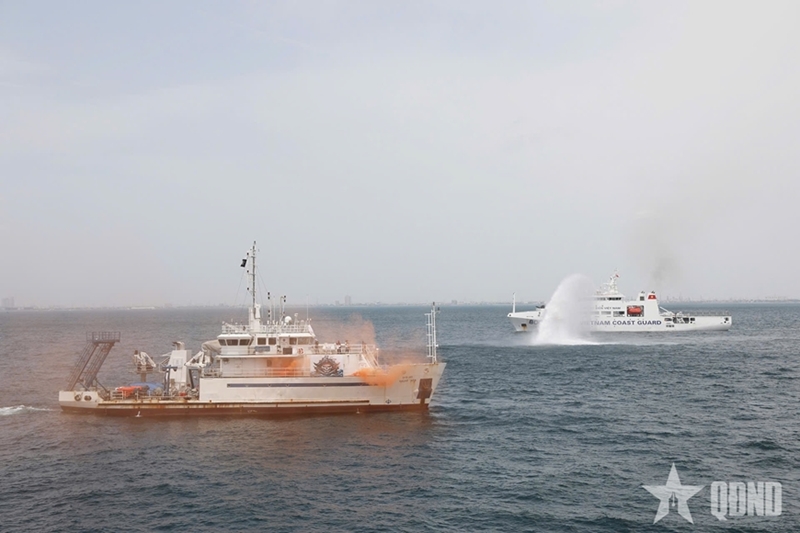
The Viet Nam Coast Guard conducts joint search and rescue field training with the Indian Coast Guard in the Bay of Bengal. |
In addition, officers and soldiers underwent training in ship maneuvering, communications, observation and target detection, as well as the organization of search operations, approaching and rescuing people in distress, and handling possible situations at sea. The training focused on coordination among different sections aboard the ship and cooperation with the partner force.
The ultimate goal was to ensure that every officer and soldier fully understood their responsibilities and duties, mastered the response plans, and was able to proactively handle any situation, enabling Coast Guard Ship 8002 to successfully fulfill its defense diplomacy and joint training missions while ensuring absolute safety for personnel, equipment and facilities.
|
|
 |
|
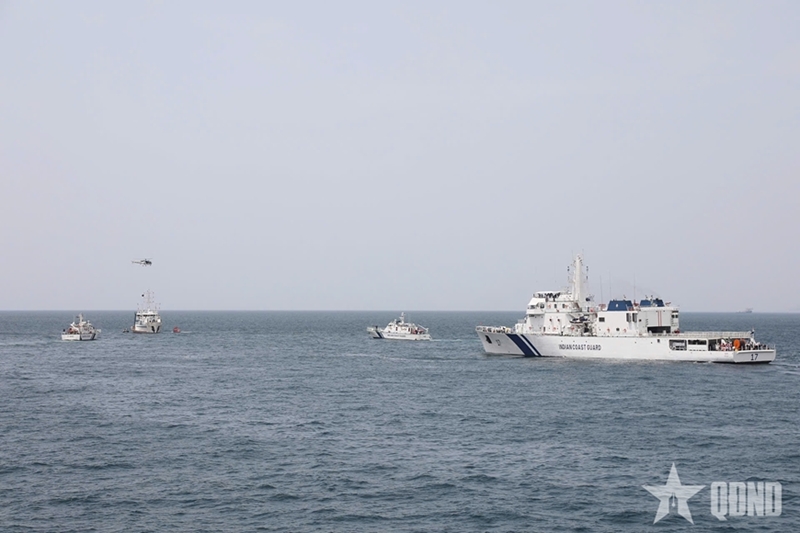
Coast Guard Ship 8002 approaches its designated position in the training area in the Bay of Bengal, India. |
Regarding the joint search and rescue training at sea, Senior Colonel Khanh said that search and rescue is one of the important missions of maritime law enforcement forces and an area in which maritime countries and their forces have considerable potential for cooperation for humanitarian purposes and to ensure the safety of people and vessels operating at sea.
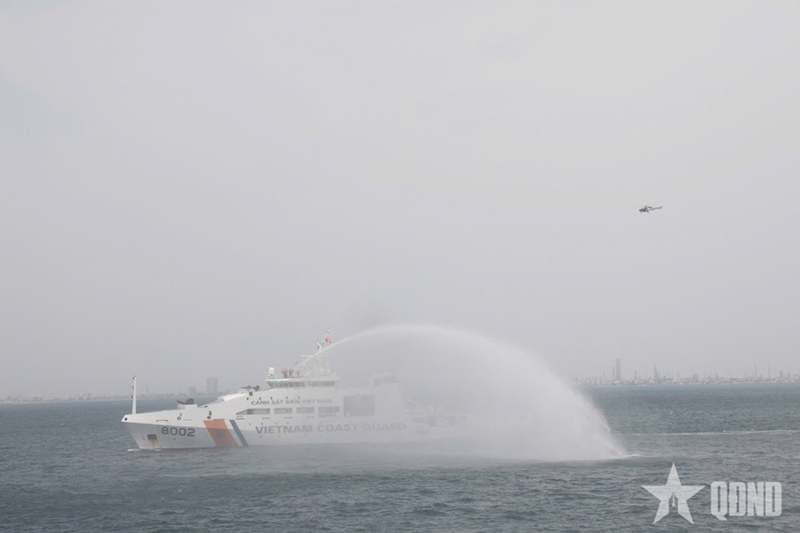
Within the framework of the joint training, the two sides focused on coordinating and cooperating among vessels when search and rescue situations occur at sea. Key activities included exchanging information, identifying search areas, organizing vessel formations, observing and detecting people or vessels in distress, approaching targets, and conducting rescues in accordance with simulated scenarios.
|
|
 |
|
The joint field training enhances the forces' capacity for coordinated responses to maritime situations. |
The training provided both sides with an opportunity to assess their ability to maintain communications, agree on coordination methods, and enhance interoperability among the forces under actual operating conditions at sea.
For the officers and soldiers of Coast Guard Ship 8002, the requirements included strictly observing the training plan, regulations and safety principles; mastering the training content and response plans; properly performing their assigned duties; and maintaining regular and uninterrupted communications. In addition to professional competence, every officer and personnel member aboard the ship was required to demonstrate the professionalism, sense of responsibility and coordination capabilities of the Viet Nam Coast Guard.
With thorough preparations, the joint search and rescue training between the Viet Nam Coast Guard and the Indian Coast Guard successfully fulfilled all planned activities while ensuring absolute safety.
Regarding the similarities and advantages of the two forces in coordinating search and rescue operations at sea, Senior Colonel Khanh said that both the Viet Nam Coast Guard and the Indian Coast Guard perform missions at sea, with ensuring maritime security and safety and participating in search and rescue among their important responsibilities. This is a key similarity and provides a favorable basis for the two sides to strengthen coordination and share experience.
In practice, maritime search and rescue operations often take place under complex conditions and are directly affected by weather, waves, distance and time. Therefore, in order to effectively handle situations at sea, in addition to the capabilities of each force, information exchange, command and control, and coordination between the two forces play an extremely important role.
Through the training, the two forces shared experience in command and control of search operations, organizing search formations at sea, exchanging and processing information, using search and rescue equipment, and coordinating among forces when dealing with complex situations.
More importantly, by conducting the practical activities together, officers and soldiers from both sides gained a better understanding of each other's working methods and gradually enhanced their practical coordination capabilities. This provides an important foundation for the two forces to coordinate in handling maritime situations in the future.
Regarding the expected impact of the visit and joint training on cooperation between the Viet Nam Coast Guard and the Indian Coast Guard in the coming period, particularly in search and rescue and maritime security and safety, Senior Colonel Khanh said that the visit and joint training marked another positive milestone in the cooperative relationship between the two coast guards. They also helped translate shared understandings and cooperation achievements into increasingly concrete, practical and effective activities.
First, direct meetings, exchanges and joint practical activities at sea will further strengthen mutual understanding and trust between personnel from the two sides. This provides an important foundation for the two forces to increase delegation exchanges, share professional experience, and cooperate in training and other areas of common interest.
In search and rescue operations, the two forces will continue to exchange experience, enhance coordination capabilities and gradually expand practical training activities. When incidents, accidents or emergencies occur at sea, mutual understanding, established communication methods and effective coordination between the forces will contribute to more effective responses and help minimize losses of life and property.
In addition, during this visit, the delegation was invited by the Indian side to visit the Regional Marine Pollution Response Center in Chennai and exchange experience in responding to marine environmental pollution incidents. This was a meaningful activity that provided members of the delegation with additional experience in handling maritime situations and helped lay the groundwork for expanding exchanges and cooperation between the two forces.
Translated by Hai Son