Greater convenience for students, greater peace of mind for parents
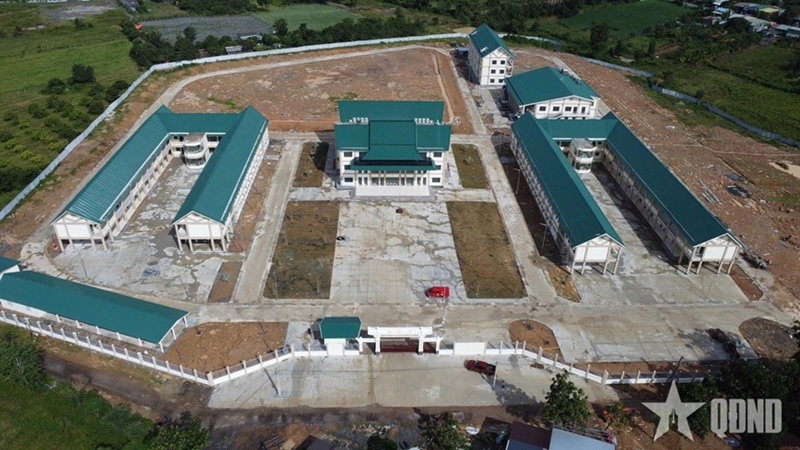
The 2026-2027 school year is a special one for students in Buon Don border commune, as they attend Buon Don Primary and Secondary Boarding School. The new school has modern classrooms, boarding and semi-boarding facilities, a dining hall, playgrounds and other facilities for learning and daily activities.
    |
 |
|
Buon Don Primary and Secondary Boarding School seen from above |
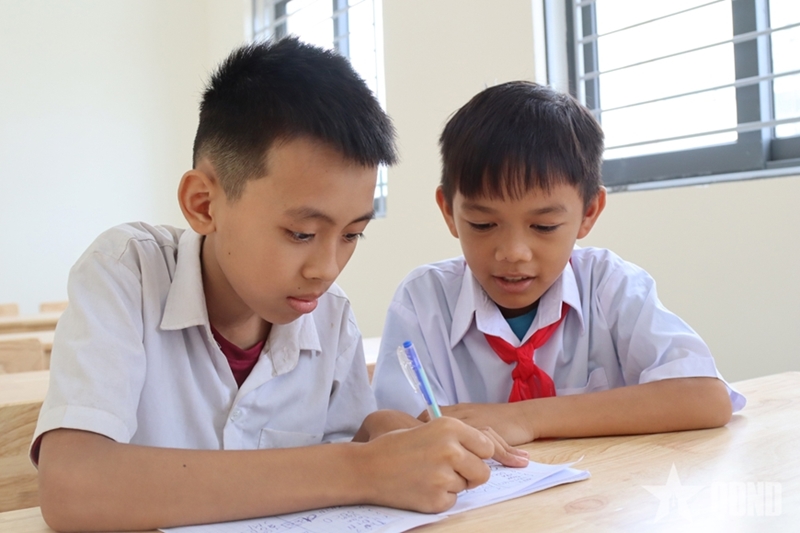
In a classroom, students Luc Tue Lam from the Dao ethnic community and Y Tri Thien Nie Kdam from the E De ethnic community, both in Class 6B, carefully practice their handwriting. Sitting side by side, they occasionally lean toward each other to look at what they have written and smile. Outside, students' laughter and conversations echo among the spacious new buildings, creating a lively atmosphere at the start of the school year. Luc Tue Lam said she likes the new school and will study hard.
For students, the new school provides a spacious, clean environment for learning, playing, resting and daily activities. For families in the border area, it also brings a practical benefit that parents spend less time taking their children to and from school, while the children have more time to study.
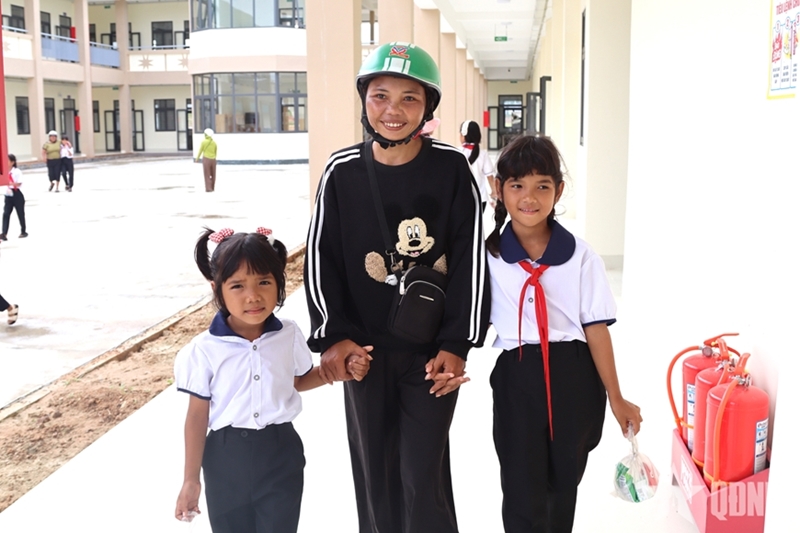
H’Dian Dray, a Mnong woman from Ea Mar hamlet in Buon Don commune, has three school-age children. Previously, taking them to school every day took considerable time, as the parents had to juggle work with dropping them off and picking them up. Now that the children can study under boarding and semi-boarding arrangements, those concerns have been significantly reduced.
|
|
 |
|
Classmates Luc Tue Lam (left) and Y Tri Thien Nie Kdam carefully practice their handwriting. |
|
|
 |
|
Parents bring their children to school with joy at the new school. |
“We are very happy that our children can study in such a spacious, clean and beautiful new school. Now they can eat, live and study here, so we parents feel more at ease and have more time to work,” H’Dian Dray said.
Opening doors to equal access to education
For families in the border area, where life remains difficult, having their children study and live at school brings clear convenience. Parents have more time for work, while students can live in a communal environment with teachers and friends by their side.
Teacher Y Nooc Mlo has spent 15 years teaching at Buon Don Primary and Secondary Boarding School. During that time, he has witnessed generations of students grow up and seen firsthand the changes in teaching and learning conditions.
|
|
 |
|
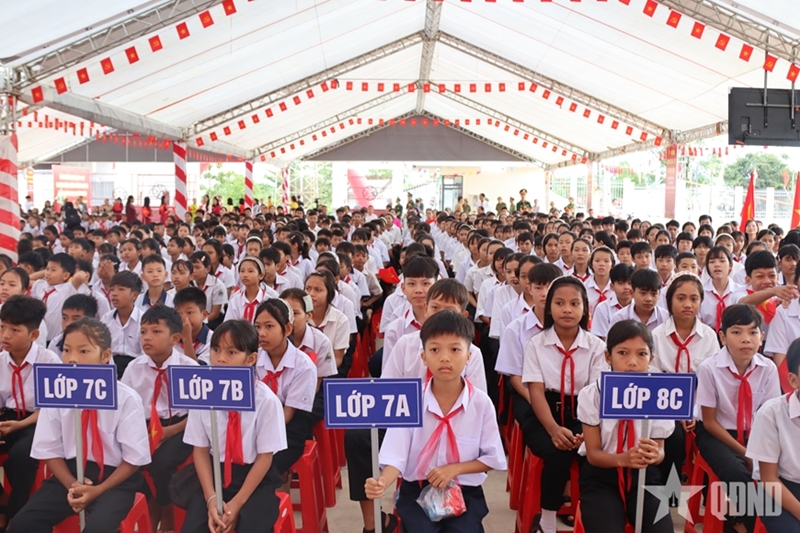
Buon Don Primary and Secondary Boarding School welcomes more than 1,100 students. |
|
|
 |
|
Students are excited on the first day of the new school year. |
For him, seeing students study in new classrooms with boarding facilities, a dining hall, playgrounds and better-equipped living spaces is a source of great joy. According to Y Nooc Mlo, parents are delighted that their children can study in a spacious and clean environment, while teachers have better conditions to teach, care for and support their students.
Thai Van Loc, Principal of Buon Don Primary and Secondary Boarding School, shares the same enthusiasm. He said the school's greatest value lies not only in its modern appearance but also in the improved conditions it provides for students' learning and daily lives.
According to Loc, boarding and semi-boarding arrangements are particularly beneficial to students who live far from school. Instead of frequently traveling between home and school, they can stay on campus and spend more time studying, playing and taking part in daily activities. “This is truly a joy and a source of happiness, as well as educational equality for students, especially children from ethnic minority communities,” Loc said.
|
|
 |
|
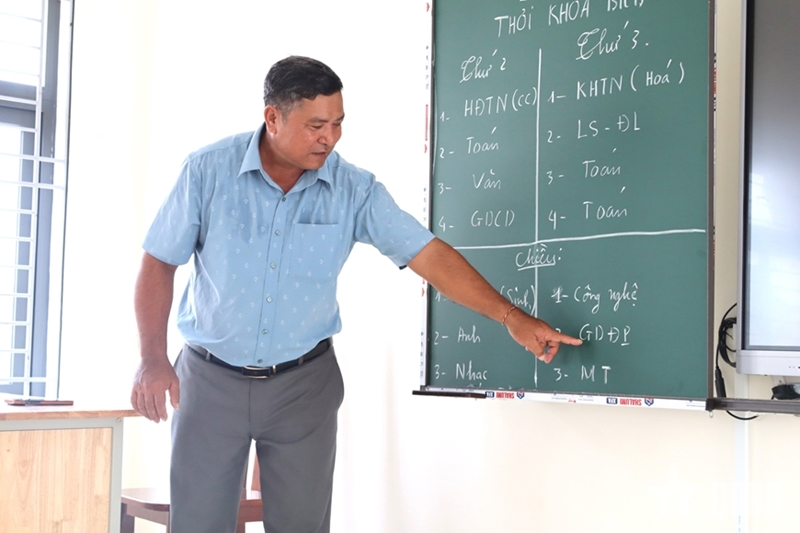
Teacher Y Nooc Mlo teaches students in the new school. |
Buon Don Primary and Secondary Boarding School is one of four border primary and secondary schools being built in Dak Lak under the Politburo's policy of investing in schools in border communes. The school covers about 5.8 hectares and has 41 classes, with more than VND 158.3 billion invested in the first phase. In the 2026-2027 school year, it has 1,137 students, including 136 boarding students and 1,001 semi-boarding students. Nearly 80 percent are children from ethnic minority communities.
Translated by Tran Hoai