more than just carrying medicines, medical equipment, and gifts, the journey brings with it the dedication and compassion of military physicians, with the hope of improving health care for local residents and easing life hardships in remote areas.
    |
 |
|
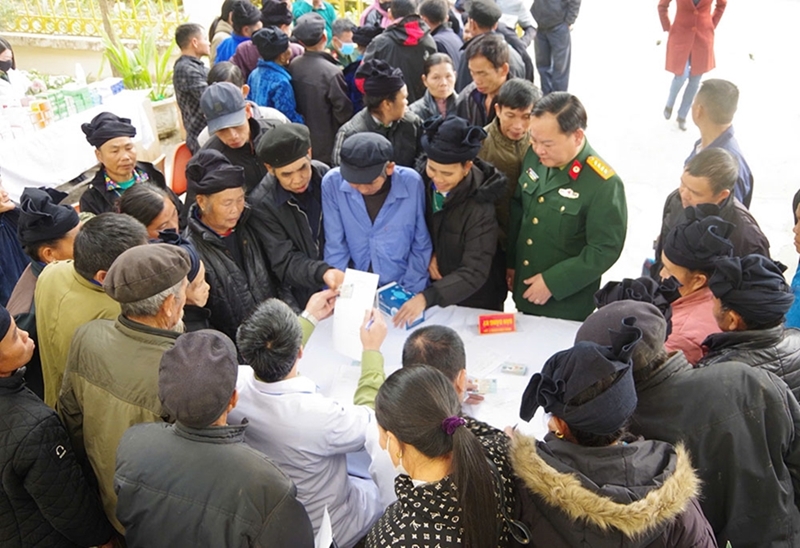
Local residents of Nghia Thuan commune register for medical examination. |
After more than six hours of travel from Vinh Yen ward, Phu Tho province, the delegation arrived at the Nghia Thuan Commune Medical Center. Despite fatigue from the long journey, the warm welcome from local officials and residents quickly dispelled their weariness. Secretary of the Nghia Thuan Commune Party Committee Tham Huu Thanh, together with commune officials, greeted Senior Colonel and Meritorious Physician Nguyen Huy Hoang, Director of Military Hospital 109, and the medical team with heartfelt handshakes.
The atmosphere at the medical center soon became lively as preparations for medical examinations and free medicine distribution got underway. The early-winter chill of this border area seemed to fade as examination rooms were set up across multiple specialties, including dentomaxillofacial care, ophthalmology, otorhinolaryngology, cardiology, obstetrics and gynecology, gastroenterology. All were quickly put into operation to serve the growing number of residents arriving for medical checkups.
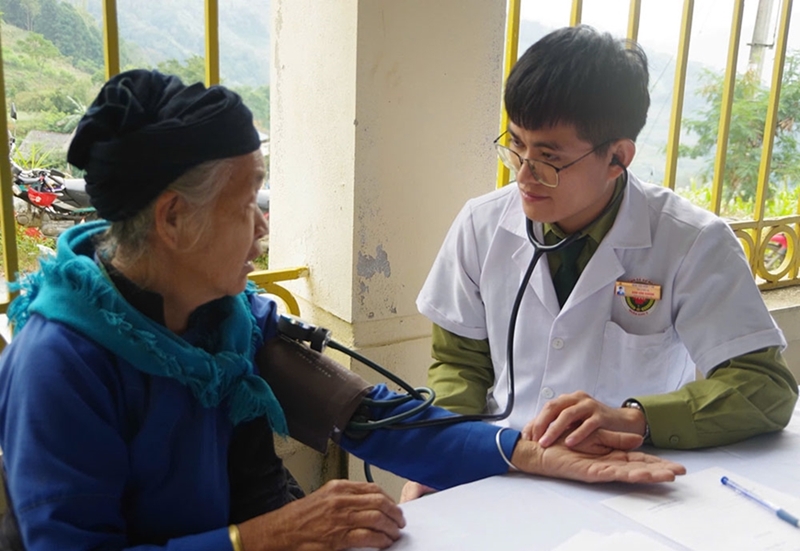
The opening ceremony was brief, and soon a steady stream of people filled the examination area. Among them was Tan Sua May, 70 years old, who arrived early with her granddaughter. Living in Lung Vai village, Can Ty commune, she had walked more than 12 kilometers after waking up at 3 a.m. upon hearing that military doctors were providing free checkups and medicines. May received an ultrasound examination from Lieutenant Colonel Phan Huu Huan, Head of the Rehabilitation Department at Military Hospital 109. After reviewing the results, the doctor carefully explained that she had a renal cyst which, while not life-threatening, required regular monitoring and follow-up examinations. She was also provided with medication and clear instructions on its use before returning home.
Nearby, Colonel Nguyen Hong Quang, Head of the Musculoskeletal–Endocrinology Department, was examining Vang Chan Sai, a resident of Xin Cai village, Nghia Thuan commune. Sai suffers from chronic obstructive pulmonary disease, a condition that leaves him fatigued, coughing, and short of breath even during light activity, particularly during seasonal changes. Quang advised him to undergo regular checkups at the commune medical center, practice breathing exercises and home oxygen therapy, and seek treatment at a higher-level hospital if symptoms get worse. According to Dr. Quang, examinations revealed that local residents commonly suffer from musculoskeletal and dental conditions, while many men face liver-related diseases linked to alcohol consumption and smoking. Depending on each case, doctors provided treatment advice and emphasized the importance of healthy diets, regular exercise, and moderation in daily habits.
|
|
 |
|
Doctors from Military Hospital 109 provide medical examinations for local residents. |
During this outreach mission, the hospital’s medical staff examined, treated, and provided health consultations and free medicines for nearly 5,800 residents and students in Nghia Thuan commune. On the same occasion, the hospital presented 50 gift packages, each worth VND 500,000, to policy beneficiaries, along with donations of 150 padded jackets, 2,500 notebooks, 2,400 pens, and 800 pairs of plastic sandals, with a total value exceeding VND 70 million.
Reflecting on the mission, Col. Hoang said that these activities were part of “The military joins hands for community health” and the nationwide movement “The whole country join hands for the poor, leaving no one behind.” Each year, Military Hospital 109 organizes similar outreach programs to provide medical care, free medicines, and assistance for disadvantaged communities. In coming to the border commune of Nghia Thuan, the hospital hopes to work alongside local authorities and grassroots medical staff to better protect public health and further strengthen the enduring bond between the military and the people.
Translated by Tran Hoai