Under the scorching heat exceeding 40°C of the African dry season, the roar of bulldozers and excavators operated by the Vietnamese engineers continues to shatter the silence of Abyei’s core area. A mission of critical importance is underway: transforming the Banton – Agok “lifeline highway.”
A strategic route and the challenge of “black clay soil”
    |
 |
|
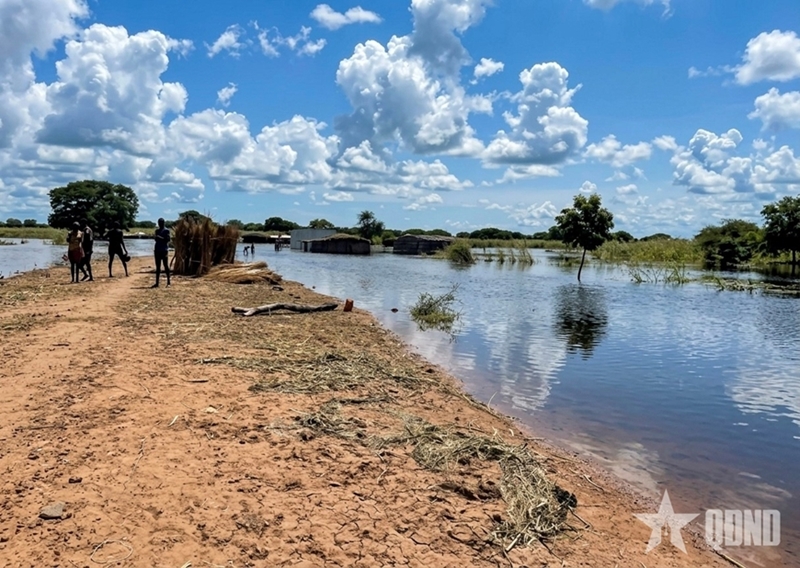
The “black clay soil trap” that once turned the road into an impassable swamp during the rainy season |
On the United Nations Interim Security Force for Abyei (UNISFA) operational map, the Banton–Agok route is the primary supply line connecting the southern sector to the administrative center. Its importance, however, extends far beyond military logistics.
For local authorities and tens of thousands of residents, this road is the sole lifeline for transport and economic activity. Any disruption would not only paralyze peacekeeping patrols but also collapse the entire supply chain, completely isolating the region.
Two months ago, Vietnam’s Engineering Company Rotation 4 completed the initial 10km from Abyei town to Banton Bridge. The remaining 25km toward Agok poses the greatest challenge, as Abyei’s harsh terrain contains a geological "trap" of black clay soil.
|
|
 |
|
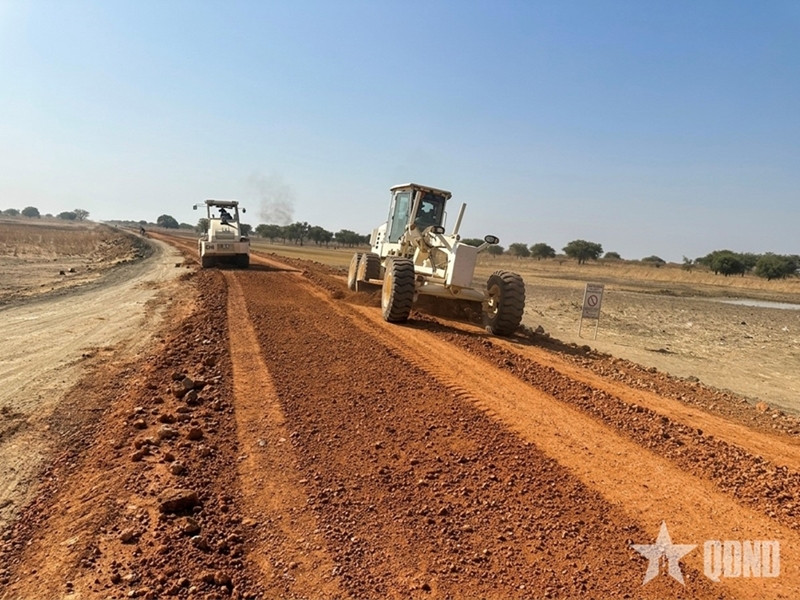
Vietnam’s Engineering Company Rotation 4 mobilizes maximum efforts for the project. |
This type of soil is notoriously difficult to handle. During heavy tropical rains, it turns into deep, sinking mud capable of trapping heavy vehicles. In the dry season, it contracts and cracks severely. With a natural surface width of 10–15m and no proper drainage system, the road has long remained in a fragile state after each rainy season.
Rolling construction, racing against time
Fully aware of the project’s strategic importance, the unit has avoided temporary fixes. After completing Phase 1 (grading and restoring a temporary road surface), the Road and Bridge Section has pushed the tempo to its highest level.
A “rolling construction” strategy is being rigorously applied: Phase 2 (roadbed elevation) and Phase 3 (surface layering) are carried out simultaneously to ensure completion before the rain arrives.
|
|
 |
|
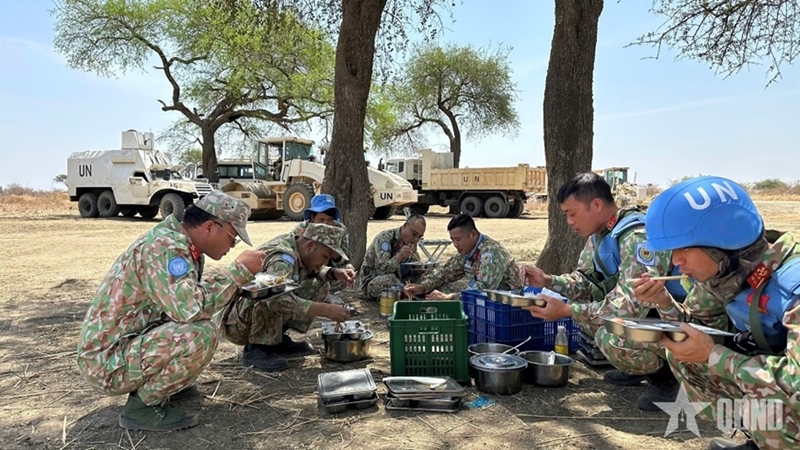
A brief moment of rest for Vietnamese blue-beret soldiers |
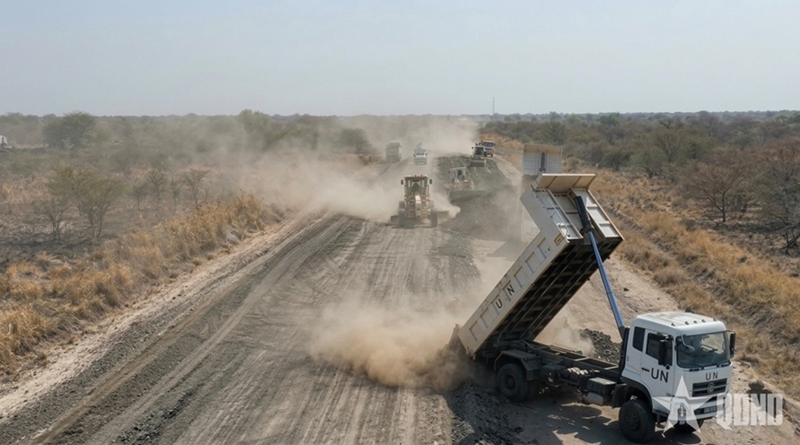
Raising the 25km roadbed by 50cm requires nearly 150,000 cubic meters of soil and sand. On-site, tracked vehicles stir up constant dust as workers lay soil in 20–25cm layers, compacting them to maximum density for durability.
Once technical standards are met, Phase 3 begins. A 20–30cm murram layer is applied as protective "armor." This seamless process reinforces load-bearing capacity and prevents erosion from sudden rainfall, while simultaneous embankment and drainage construction regulates water flow along the route.
Orders from the hearts of engineer soldiers
As the African rainy season approaches, pressure on Vietnam’s Engineering Company Rotation 4 intensifies. Despite the urgency, Lieutenant Colonel Trinh Van Cuong, Head of the unit, maintains a firm directive: speed must never compromise quality.
|
|
 |
|
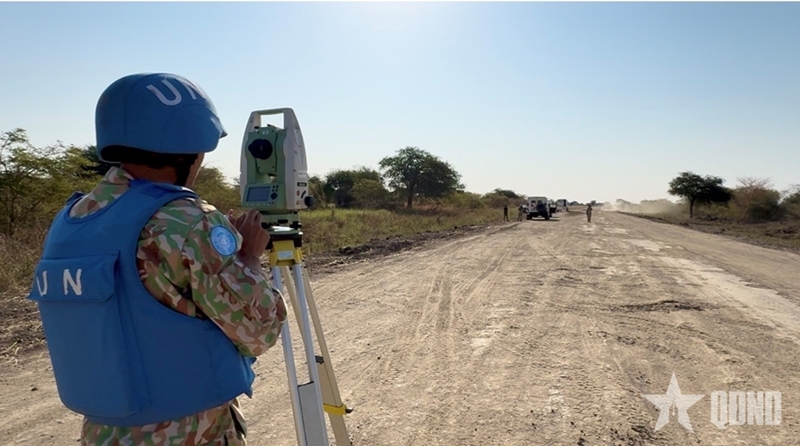
The sweat of Vietnamese blue-beret soldiers brings hope and smiles to Abyei. |
“Black clay turns into a swamp when it rains,” Lieutenant Colonel Trinh Van Cuong explained on-site. “Foundations must be compacted and immediately covered with a 20–30cm murram layer. Any shortcut leads to subsidence, wasting months of effort.”
With midday temperatures nearing 50°C, machinery cabins become furnaces. To maximize efficiency, meals are delivered directly to the field. Major Dang Viet Hung shared that the team adapts by resting on-site to stay ahead of the rains. Despite the exhausting heat, the crew remains driven, often returning to work after only a 15-minute nap.
|
|
 |
|
Panorama of the Banton – Agok construction site |
This labor ensures a resilient future. Once completed, the road will eliminate mud and isolation, allowing U.N.I.S.F.A. armored vehicles to maneuver smoothly and securing uninterrupted humanitarian supply lines.
Translated by Trung Thanh