Building initiative in volatile land
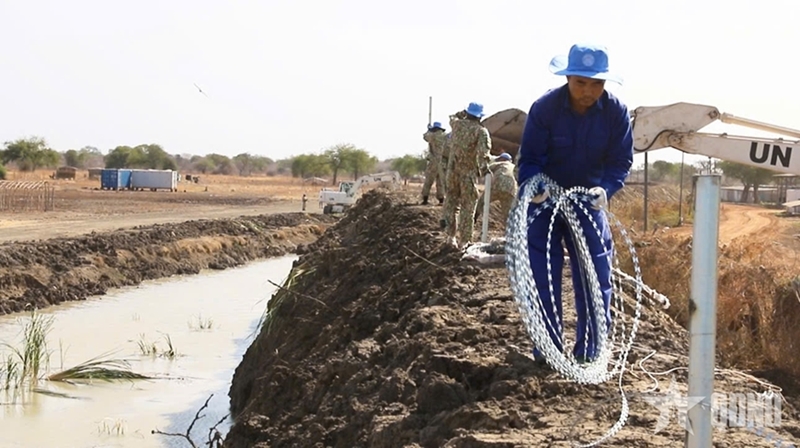
Vietnamese peacekeepers serving with the United Nations Interim Security Force for Abyei (UNISFA) are often associated with heavy machinery clearing key routes such as Banton–Agok. Yet another critical mission unfolds more quietly. That is fortifying the camp’s defensive perimeter. In the days leading up to Tet, efforts to reinforce and heighten earthen ramparts intensify.
    |
 |
|
Structures built by Vietnamese blue-berets |
Abyei’s dry-season heat is relentless, and the ground is rock-hard. Constructing high embankments requires hundreds of cubic meters of earth, moved by both machinery and hands. Lieutenant Colonel Trinh Van Cuong, Head of Engineering Company Rotation 4, emphasized that task accomplishment in Abyei depends on closely integrating situational awareness with preparedness. The area remains highly unpredictable, he noted, and only a strong defensive system, beginning with solid ramparts, can ensure that the unit maintains the initiative.
For Vietnamese engineers, these structures represent more than physical barriers. They embody self-discipline. By day, the soldiers build roads to support peace; by night, they reinforce defenses to safeguard their comrades. Their efforts reflect a clear understanding that readiness is inseparable from mission success.
Five-layer defense: Steel and solidarity
Based on thorough assessments and mission requirements, the unit has established an integrated “five-layer defensive formation” to fortify Highway Camp.
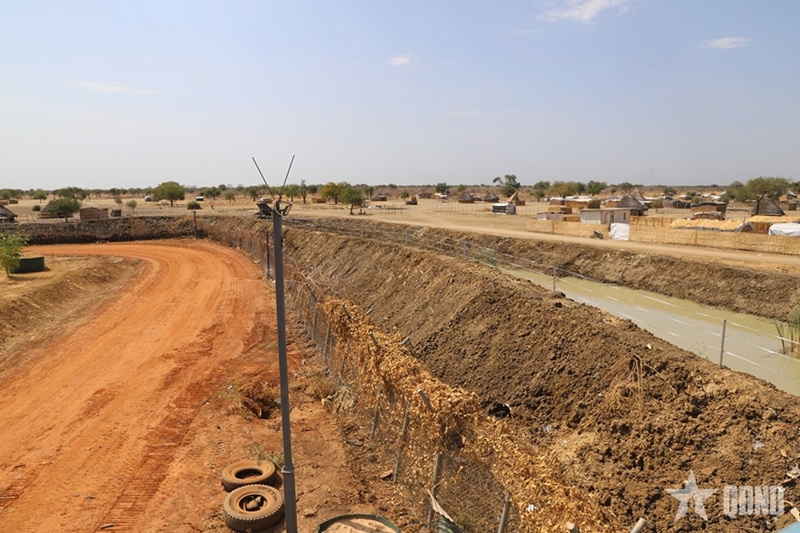
The first layer is a surrounding moat system, dredged and expanded to depths ranging from five to ten meters. It serves as both essential drainage during the rainy season and a natural obstacle to deter unauthorized access.
The second layer consists of earthen walls rising more than 10 meters high. This strategic height blocks outside visibility while giving guards an observational advantage from within.
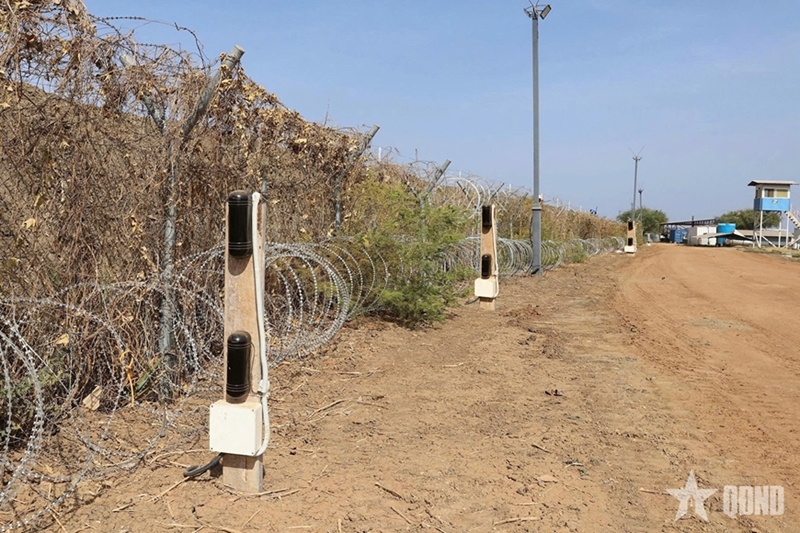
The third and fourth layers add interlocking barriers of barbed wire, one running along the top of the earthen wall and another positioned immediately behind it, creating multiple tiers of obstacles to secure all directions of approach.
The fifth layer introduces modern technology, an electronic fence using laser systems to form an invisible perimeter. Signals are transmitted directly to the command center, where duty officers monitor operations around the clock. Any object crossing a laser beam triggers an alarm, enabling personnel to immediately identify and respond to potential intrusions.
|
|
 |
|
Walls combined with multi-layer barbed wire, obstacles challenging any illegal intrusion |
|
|
 |
|
Laser fence, the “watchful sentinel” providing 24/7 early warning capability |
This combination of physical fortifications and advanced technology reflects a balanced approach. Deep moats and high walls provide a sturdy shield, while the laser system acts as an early-warning “sentinel,” ensuring constant situational control. The completed system guarantees safety for the unit and underscores the professionalism and technical capability of Vietnam’s blue berets in the eyes of international partners.
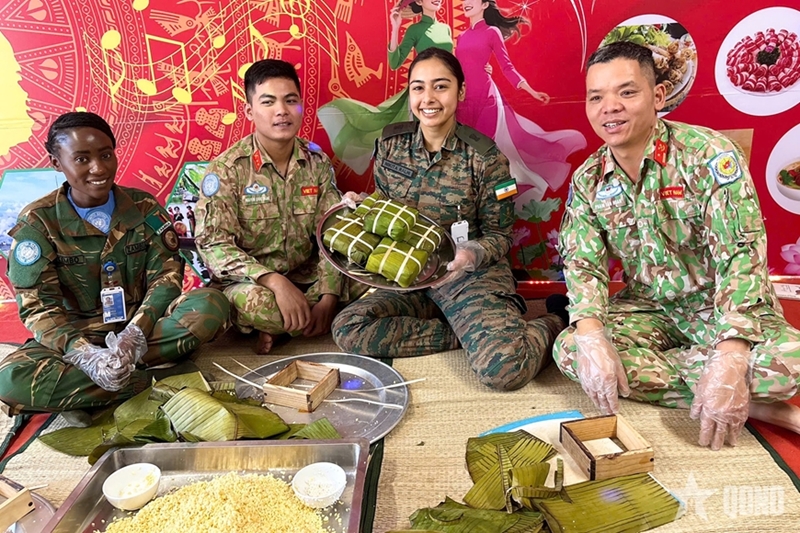
Maintaining readiness during Tet also requires careful leadership. The command team has organized duty rotations scientifically, leveraging the early-warning system to optimize manpower while ensuring strict security. Cultural activities and traditional Tet meals are arranged alongside vigilant guard schedules, striking a balance between morale and mission.
As celebrations unfold inside the camp, soldiers remain on watch outside, rifles in hand, scanning the darkness from guard towers while sensors quietly operate below. A message from headquarters on Lunar New Year’s Eve captures the spirit of the unit that discipline is strength, and safeguarding comrades is the surest way to secure a peaceful spring.
|
|
 |
|
Absolute safety transforms Highway into a “meeting point of peace” for international friends during Tet. |
Though wind and rain may erode earthen walls and technology may require maintenance, the will of Vietnam’s blue berets remains unshaken. Through hard work, technical expertise, and strict discipline, they stand firm in Abyei, ensuring that, even far from home, spring arrives in peace.
Translated by Tran Hoai