The resolution, dated August 31, 2026, calls for substantive and comprehensive reform, with a focus on maximum cuts and simplification of administrative procedures and business conditions. It also seeks to shift management from pre-license inspection to post-license inspection based on risk management, while strengthening real-time, data-driven oversight and putting people and businesses at the center of public services.
The Government aims to improve the quality of institutions, significantly enhance the investment and business environment, strengthen national competitiveness and create new drivers for double-digit economic growth during the 2026-2030 period.
    |
 |
|
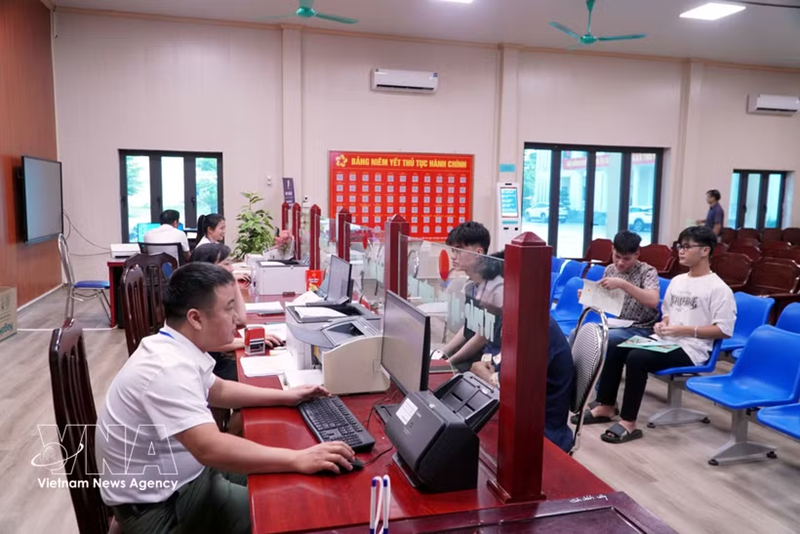
At a commune administrative service centre in Hung Yen province |
Under the resolution, reforms must ensure that no unnecessary administrative procedures, business conditions or conditional business sectors are added compared with those already removed, simplified or decentralized under 11 Government resolutions implementing Conclusion No.18-KL/TW.
By 2027, all eligible administrative procedures are expected to be available as fully online public services, while all administrative procedure results will be digitized and data reused, subject to regulations on state secrets.
People and businesses will not be required to resubmit documents containing information already available in databases officially made accessible by the agencies managing those databases, unless otherwise required by specialized laws.
By 2030, all essential public services are expected to be accessible nationwide regardless of administrative boundaries through public administration service centers. Public services will also be provided proactively when the necessary data and digital infrastructure are in place.
All eligible internal administrative procedures between State administrative agencies are set to be conducted electronically by 2027. The same year, eligible business reporting requirements are expected to be fully electronic, while information, documents and papers related to production and business procedures should only have to be submitted once to State agencies.
The Satisfaction Index of Public Administration Services (SIPAS) is targeted to reach at least 95% by 2030. All feedback and recommendations from individuals and organizations concerning administrative regulations must also be received, handled and publicly reported within the prescribed time limits.
Administrative procedure reform will be closely linked to power control, corruption and negative-practice prevention, and stronger administrative discipline. The Government calls for an end to the “ask-give” mechanism and for measures to prevent the evasion of responsibility, buck-passing, and the pursuit of local and vested group interests in the development and implementation of administrative procedures.
The results of administrative reform will be linked to the assessment and classification of officials and civil servants, becoming an important criterion in personnel work.
The resolution also requires stronger digital transformation and restructuring of administrative procedures around data. National and specialized databases will be connected and shared with administrative procedure information systems, helping replace or eliminate unnecessary dossier components.
Source: VNA