Aspiration for breakthrough
Viet Nam’s economic history over the past four decades shows that the country has experienced periods of rapid expansion, most notably from 1991 to 2000, when growth exceeded 8 percent for six consecutive years.
    |
 |
|
The private sector is making an increasingly significant contribution to economic development. |
In recent years, however, growth momentum has shown signs of weakening. The economy remains heavily dependent on the foreign direct investment (FDI) sector and traditional inputs such as capital and low-cost labor, while labor productivity and technological innovation have not improved at a corresponding pace.
According to economic experts, the challenge is not simply to add another three or four percentage points to annual GDP growth, but to sustain such an increase in an economy that has expanded significantly in size. At the current scale, every additional percentage point of growth represents a substantial amount of economic output.
This means the growth model must change, with less emphasis on expanding inputs and greater focus on quality, productivity, and efficiency.
Bottlenecks facing private sector
Despite its important role, the private sector continues to face both internal and external constraints.
The first is fragmentation. Most private businesses are small or micro enterprises, while household businesses account for a large share of the sector. The economy still lacks enough strong leading enterprises capable of driving value chains and competing internationally.
The second challenge is weakening investment momentum. Private-sector capital grew by only about 4.1 percent a year during the 2021-2025 period, sharply lower than the 13.4 percent recorded in the previous period.
The third is the imbalance in exports. Although Viet Nam has a high export turnover, much of it comes from the FDI sector. Domestic enterprises have yet to fully use foreign-invested companies as a “launchpad” for technological upgrading, resulting in high export volumes but relatively limited domestic value added.
|
|
 |
|
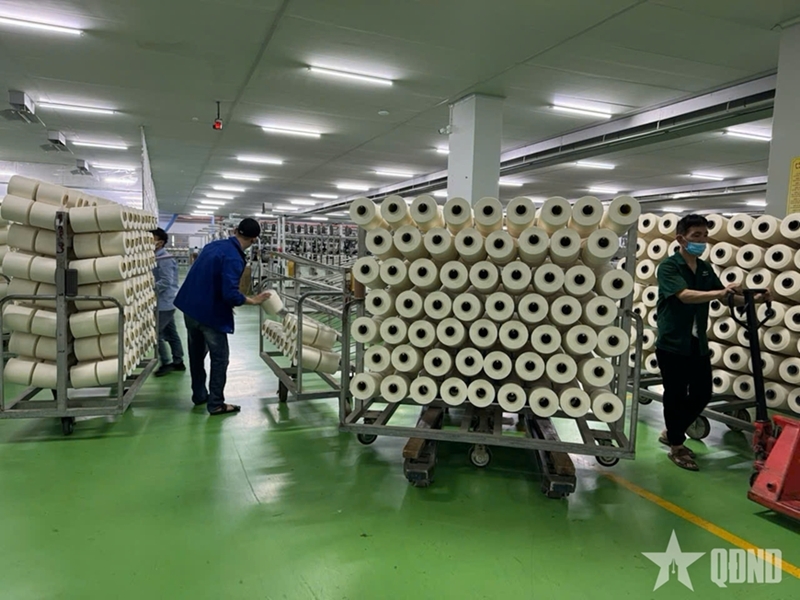
Business operations at Bao Minh Industrial Park, Ninh Binh province |
Creating room for private enterprises’ growth
For the private sector to become the “driver of drivers,” a new policy approach is needed, shifting from fragmented support measures toward a comprehensive development framework.
The business environment, first of all, needs to become more stable and predictable. Administrative reform should go beyond reducing paperwork and focus on redesigning procedures on digital data platforms, helping enterprises cut both time and opportunity costs.
Improving access to capital is another priority. Financial resources should be diversified through the bond market, equity financing, and venture capital funds. Lending decisions should also place greater weight on cash flow and viable business plans rather than relying primarily on collateral.
Productivity should become another central principle. Preferential policies need to be tied to clear criteria on efficiency and innovation. Meanwhile, stronger linkages should be developed between FDI and domestic enterprises so that foreign-invested businesses can help strengthen domestic production capacity instead of the two sectors developing separately.
Formalizing household businesses is also essential. With more than 5 million household businesses nationwide, this sector represents a major economic resource. However, the transition from household businesses to corporate models must deliver tangible benefits in access to capital, markets, and technology, rather than simply adding administrative burdens.
Double-digit growth will not be beyond reach if Viet Nam can fully unlock the potential of its private sector. A strong domestic business ecosystem with greater technological and managerial capabilities can become the engine that turns social resources into prosperity.
That will be the sustainable path for Viet Nam to join the ranks of developed countries by 2045.
Translated by Minh Anh