Deputy PM Thang, who is also head of the committee, urged ministries and agencies to coordinate closely to deliver effective fiscal and macroeconomic policies. The aim is to control inflation, stabilize the macro economy, ensure major economic balances, create room to support growth and bolster the economy’s resilience to external shocks.
He also called for close monitoring of domestic and international developments and prompt, effective steps to bring down the Consumer Price Index, which will leave more room to support growth.
    |
 |
|
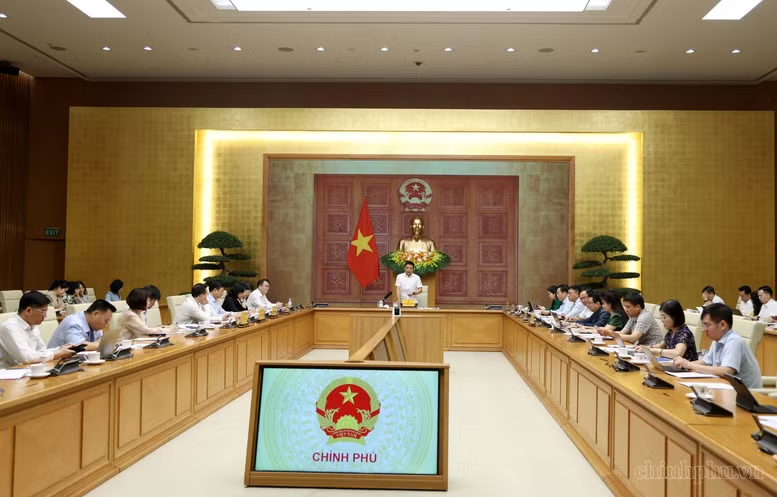
An overview of the meeting (Photo: chinhphu.vn) |
They were told to adjust prices of State-regulated goods and services on appropriate roadmaps and carefully assess the impact on CPI. They must balance market-based pricing, inflation control and support for the recovery of production and trade.
Inspections of price declarations and listings, particularly for essential goods, are to be tightened. Authorities must crack down on speculation, hoarding and price manipulation for illicit gain, as well as arbitrary price hikes that exploit natural disasters such as storms, floods, and peak holiday periods.
Companies must cut selling prices promptly when input costs fall to protect consumers. Authorities must also strictly enforce rules requiring transparent disclosure of school fees and other charges at the start of the academic year and prevent unauthorized collections.
Thang urged ministries and agencies to strengthen monitoring in their areas. They should step up communications with timely, transparent information on price management policies and swings in essential goods prices, to guide public opinion, steady consumer and business sentiment and contain inflation.
He also called for wider dissemination of new pricing rules, along with procedures for receiving price declarations, to ensure timely data for market analysis, assessment and forecasting.
The State Bank of Viet Nam (SBV) was tasked with running monetary policy in close coordination with fiscal policy. The SBV is to monitor exchange and lending rates, money supply, and international capital flows to find ways to curb inflation. Credit growth should be maintained at a reasonable pace, with funds directed toward production, trade, and key priority sectors.
The Ministry of Finance was asked to keep using tax, fee, and charge exemptions, reductions, and extensions to lower business input costs and support livelihoods.
Deputy Minister of Finance Tran Quoc Phuong said the ministry has updated two inflation scenarios for 2026, projecting rates of about 4.5% and 4.8%.
The central bank forecasts average 2026 inflation at 4.5-5%, while international organizations project Viet Nam’s average inflation at about 4.2-5.5%.
Source: VNA