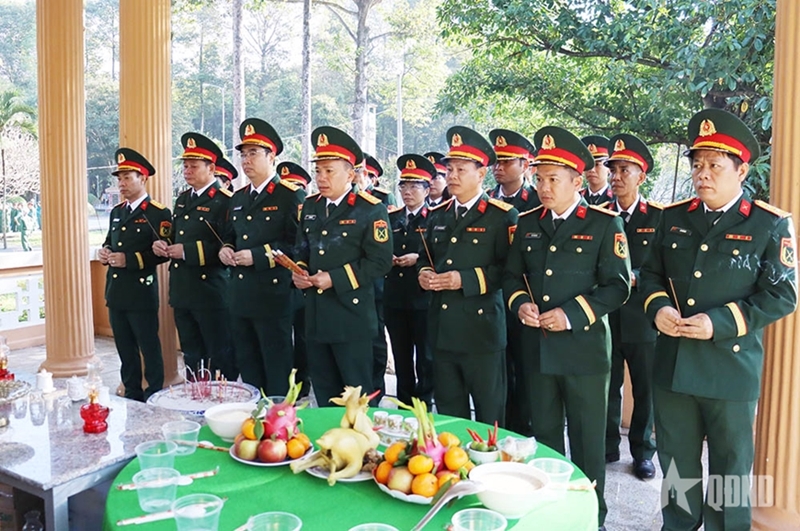
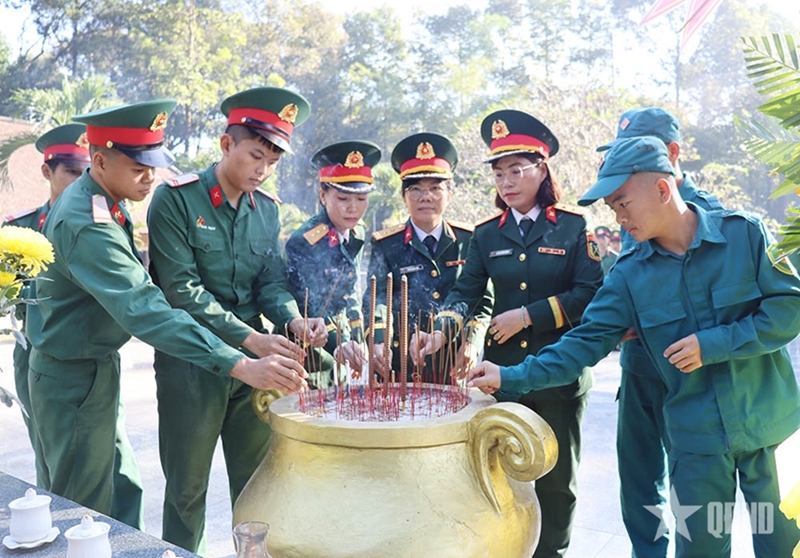
During the event, the delegation offered incense and flowers, visited and studied about Phu Loi case in 1958 that shocked the public and left a painful yet indomitable mark on the history of the revolutionary struggle in the South of Vietnam.
The event provided an opportunity for the unit’s officers and soldiers to look back on the resilient and unyielding struggle of previous generations, while strengthening their motivation and sense of responsibility in building a comprehensively strong, exemplary, and outstanding unit.
    |
 |
|
Delegates offering incense at Phu Loi Prison Historical Site |
|
|
 |
|
Officers and soldiers paying homage at the site |
Speaking at the ceremony, Colonel Do Minh Tri, Head of Defensive Area Command Region 2-Phu Loi, emphasized that the Phu Loi Prison Historical Site serves as a powerful reminder of the enemy’s brutality and the unwavering spirit of the Vietnamese people. “Every officer and soldier today must cherish peace, uphold, and further promote the heroic traditions of Military Region 7’s armed forces throughout 80 years of construction, combat, and growth,” he said.
According to Col. Tri, the activity helped officers and soldiers gain a clearer understanding of their responsibility to build firm political stance, maintain pure ethics, uphold self-discipline, and cultivate professional military conduct, thereby contributing to preserving and promoting the qualities of Uncle Ho’s soldiers in the new era.
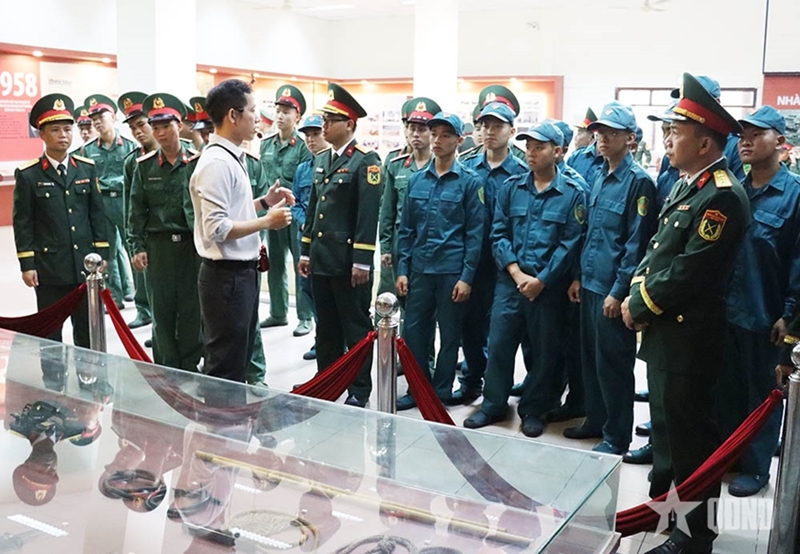
Alongside the incense-offering ceremony, officers and soldiers spent time learning about the system of prison cells, isolation blocks, and preserved artifacts at the site. Each step through the cold, grey barracks evoked images of thousands of revolutionary fighters who were once imprisoned, tortured, yet steadfast in their ideals and passionate patriotism.
|
|
 |
|
The delegation touring and learning about the site |
|
|
 |
|
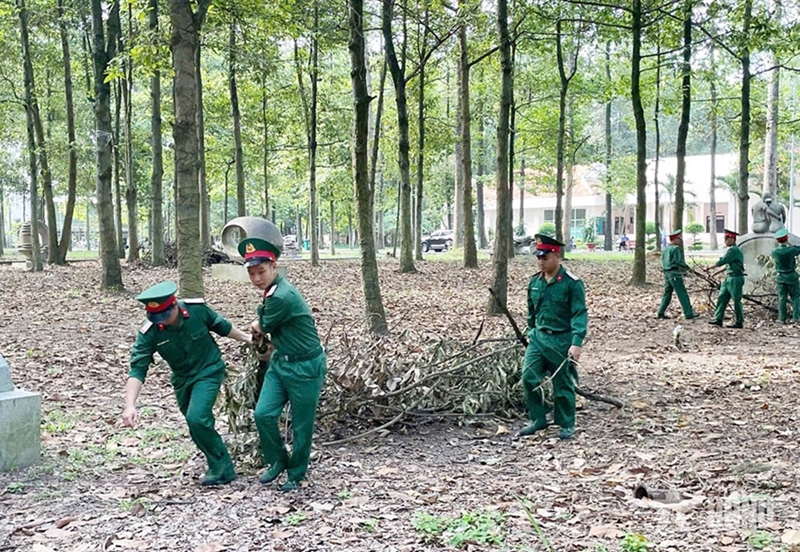
Cleaning the memorial grounds |
Phu Loi Prison was built in 1957 by the U.S.-backed Saigon regime to detain and suppress patriots and revolutionary fighters. On December 1, 1958, the prison witnessed the mass poisoning of hundreds of inmates, an event that provoked widespread outrage both domestically and internationally, becoming irrefutable evidence of the crimes committed under the neocolonial regime.
In 1980, Phu Loi Prison was recognized as a national historical site, becoming a “red address” for educating future generations in patriotism and the revolutionary heroism of the people and armed forces of the South of Vietnam
Translated by Song Anh