    |
 |
|
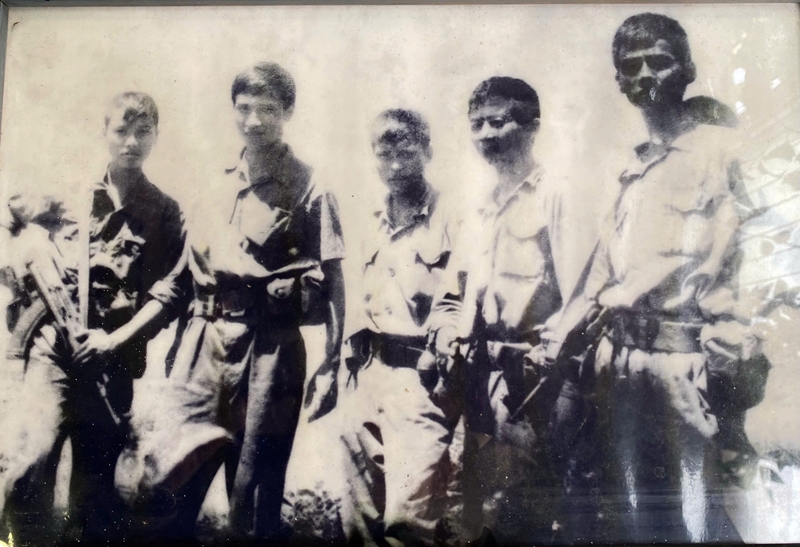
Writer Nguyen Trong Luan and his comrades |
The Central Highlands turned cold as Tet approached, though less bitter than the North. Along Highway 19, stretching 200 kilometers from Binh Dinh to the Cambodian border, fierce battles erupted before the 1972 Lunar New Year. Our forces held the west while the enemy occupied the east. With Saigon puppet troops still controlling Duc Co in Gia Lai, heavy fighting continued just two days before the holiday. Many comrades fell, leaving their Tet gifts untouched; survivors could not bring themselves to eat the candy or smoke the cigarettes of those who had perished.
As white mist blanketed the forests, we watched from Chu Rong Rang Mountain as enemy helicopters landed at Tam post for New Year briefings. From our vantage point, Highway 19 looked like a thin black ruler, with cooking smoke drifting over tin-roofed hamlets. Reconnaissance teams even spotted women in "Ao dai" in the villages, drawing quiet, wistful remarks from the soldiers.
On the first day after the Paris Peace Accords were signed, dreams of returning home filled the air. Despite the tension, spirits remained high as cooks brought New Year rations to the bunkers. Each squad received two meat tins, while platoons shared small packets of pipe tobacco. Every man was issued four Dien Bien cigarettes and two candies. In the bunkers, the aroma of salted green chilies filled the air, and soldiers prepared fresh sweet potato leaves to cook with canned meat for their first New Year meal.
|
|
 |
|
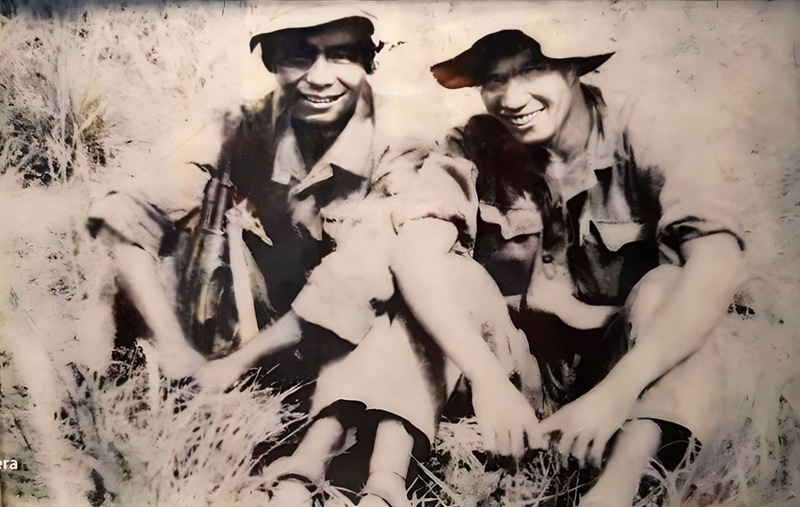
Writer Nguyen Trong Luan and soldier Dinh Ngoc Sy in Cu Chi during the Ho Chi Minh Campaign in April 1975 |
On New Year’s Eve, sporadic enemy gunfire echoed. A company officer explained they were merely celebrating Tet. We were ordered to conserve ammo and remain concealed but stay alert for surprise attacks. I realized then how much reality differed from fiction. There were no formal speeches; commanders called soldiers by name, cursing at the frightened during firefights and laughing it off afterward.
One memory from that Tet remains vivid: smoking together on New Year's Day. As a squad leader in Platoon 1, Company 1, Battalion 8, Regiment 64, Division 320, I served alongside Khuat Duy Hoan. Hoan shared his prized hand-rolled tobacco from the North, which we rolled into cigarettes as thin as cassava stems. On that first night following the Paris Accords, cold mist clung to the eyelashes of soldiers holding the frontline.
On the second day, Hoan went on a “mission” to improve rations, a task unique to the Central Highlands. Resourceful and brave, he returned after three hours draped in sweet potato vines, resembling a tree trunk entangled in creepers. He distributed the fresh green leaves among the bunkers.
The Lunar New Year 1975, the final Tet of the war, was spent in Buon Ho, Dak Lak. Deployed along Highway 14, I was assigned to transport a pig provided by the division for the battalion’s celebration. En route, I visited my friend Dinh Ngoc Sy, a medic at Company 24. That day, Sy was admitted to the Party. We embraced briefly before I departed. On New Year’s Eve, the company huddled around the political officer’s radio beneath a dense forest canopy.
The command had reinforced us for a major campaign. New soldiers were excited for their first operation, while veterans remained quiet, wondering how many of these young men would survive the coming months. Still, we stayed cheerful for luck, playing “flower picking” by the dim light of a hurricane lamp. Back at the platoon, a bamboo pipe wheezed as it passed between us. Suddenly, gunfire erupted from Highway 14 at 11 p.m. While our side still had an hour until midnight, it marked the final frontline Tet of my life.
|
|
 |
|
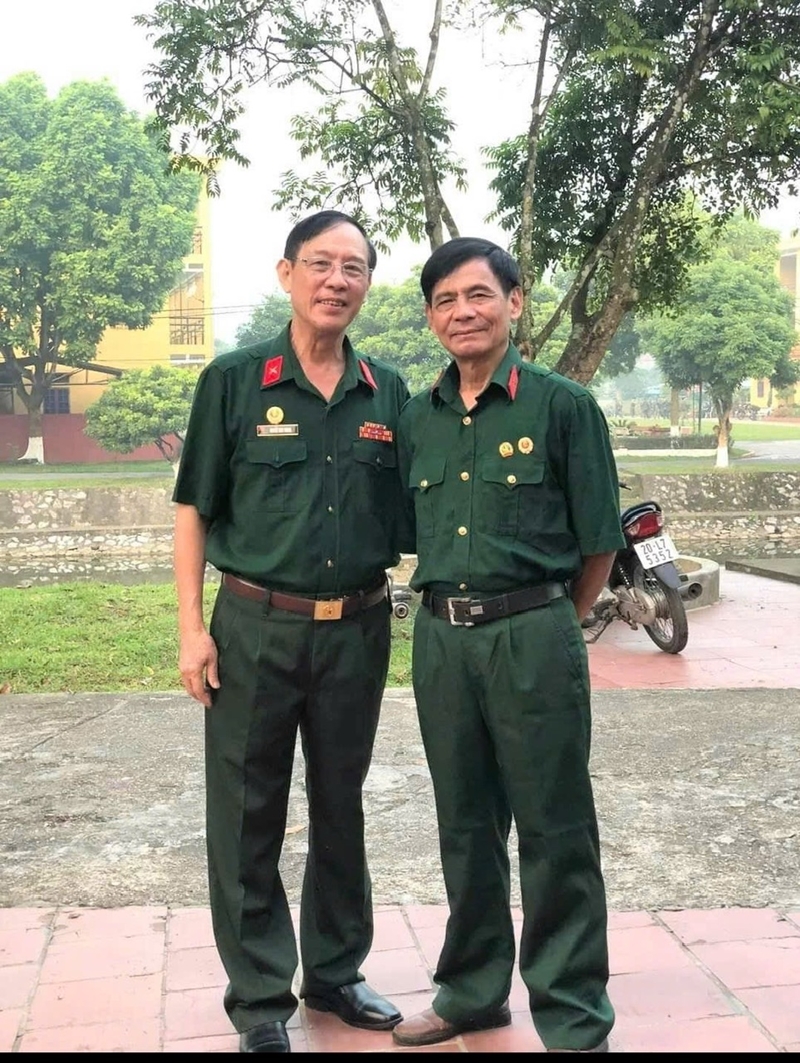
Writer Nguyen Trong Luan (right) and his comrade Khuat Duy Hoan |
Two months later, my unit advanced through the Central Highlands Campaign, then joined the Ho Chi Minh Campaign and moved all the way into Independence Palace.
In the Lunar New Year 1976, I finally celebrated Tet at home. Yet that first peaceful Tet after the war filled me with aching memories of friends who never returned. I remembered the frontline Tets, those cold, misty nights and battles fought during the holiday. After April 30, 1975, I returned to university and later became a mechanical engineer. Khuat Duy Hoan continued his military career, eventually retiring as a Senior Colonel and Deputy Commander of Army Corps 3. Dinh Ngoc Sy became an Associate Professor, a Doctor, and Director of the National Lung Hospital. Every Tet, when spring comes again, the three of us sit together, recalling the frontier Tets that shaped our lives.
Written by writer Nguyen Trong Luan
Translated by Tran Hoai