    |
 |
|
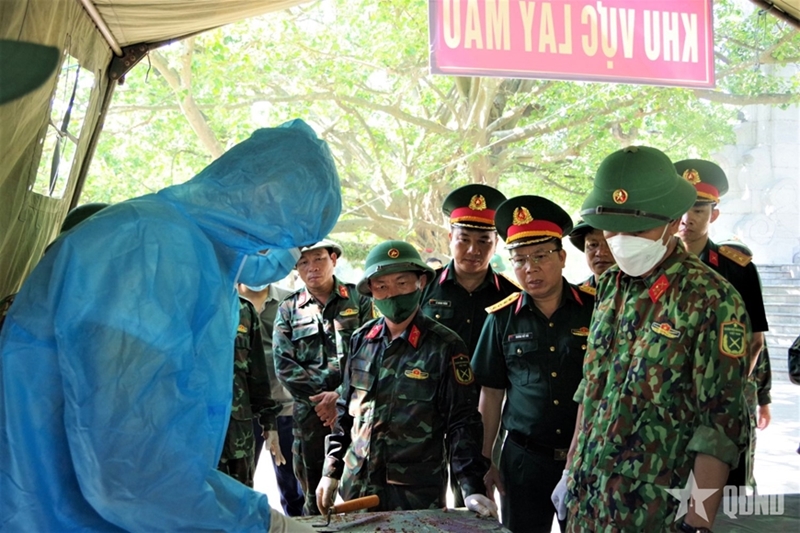
Delegates observing the operation |
The effort supports DNA testing to identify martyrs whose information remains incomplete, while providing a basis for the province-wide implementation of the process in a unified manner.
Truong Son National War Cemetery currently has 8,967 graves with complete information, 1,137 graves with incomplete records, and 93 unidentified graves. During this phase, authorities are collecting, preserving, and transferring samples from the 93 unidentified graves while digitizing and managing grave information through specialized software.
Under the plan, all samples will be collected, documented, digitized, preserved, and transferred in accordance with established regulations and technical procedures.
|
|
 |
|
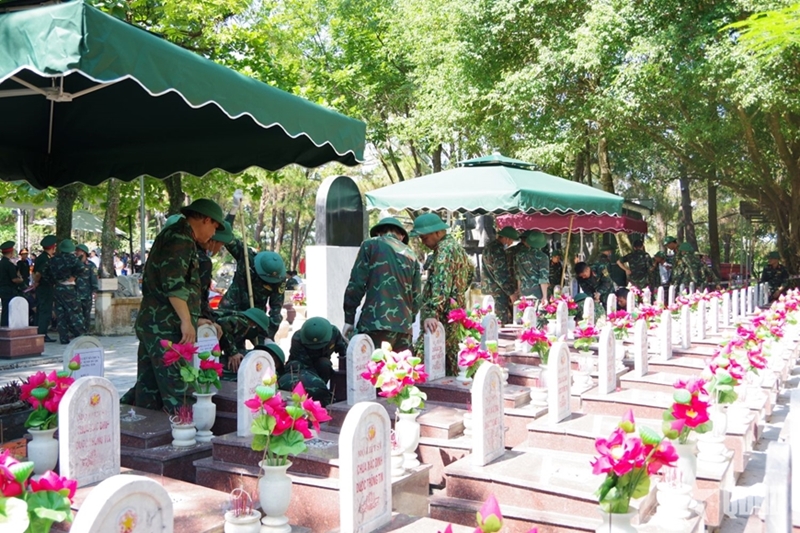
According to the plan, relevant units will complete sample collection from 93 unidentified martyrs at Truong Son National War Cemetery. |
Sampling teams are following strict scientific procedures while ensuring the solemnity of the cemetery. Information for each sampled grave is digitized on site, including grave location, headstone details, biological samples, and related records, serving future storage, transfer, and DNA analysis.
The activity is part of the 500-day campaign to intensify the search, repatriation, and verification of remains of fallen soldiers. The Quang Tri provincial Steering Committee considers the mission a sacred responsibility that reflects the nation’s tradition of honoring those who sacrificed for the country.
|
|
 |
|
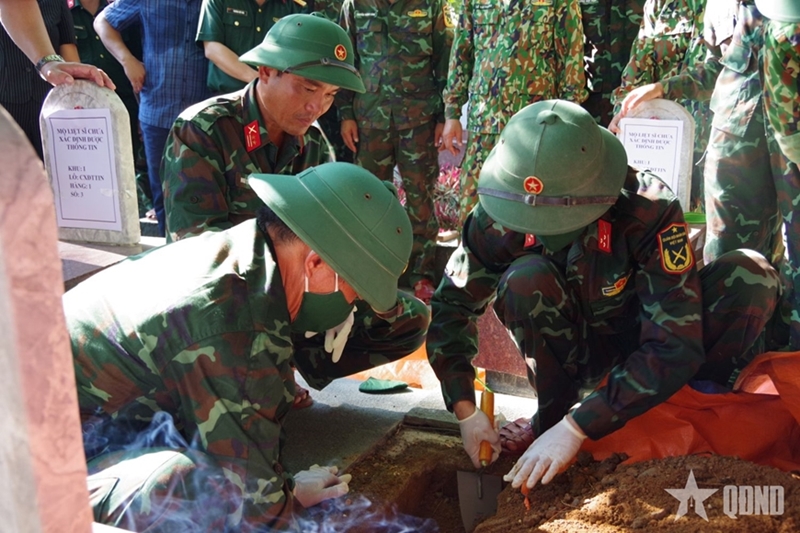
Sample collection is conducted in a rigorous and scientific manner. |
Biological sampling for DNA testing is regarded as an important step toward identifying martyrs whose identities remain unknown or incomplete. The work is expected to help meet the wishes of martyrs’ families nationwide and contribute to restoring the names and hometowns of fallen soldiers.
|
|
 |
|
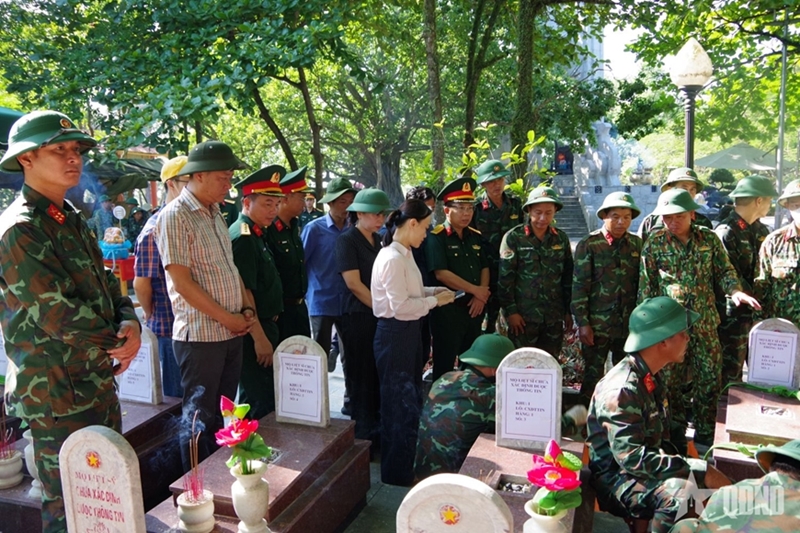
Delegates observe the sampling process. |
During the operation, the Quang Tri provincial Military Command assigned specialist teams to provide on-site guidance and supervision for participating personnel. The activity also serves as practical training for local units as they prepare to conduct similar sampling, transfer, and digitization work in the future.
Translated by Chung Anh