Searching memories
Across Military Region 2, many former battlefields remain the final resting places of officers and soldiers who have been missing for decades. In the border provinces of Tuyen Quang and Lao Cai, search teams face numerous challenges. Time has blurred witnesses’ memories, military records have been lost or scattered following unit mergers and dissolutions, and the terrain has changed due to natural disasters and socio-economic development. Intense artillery bombardment also left many remains fragmented.
The search therefore requires more than excavation. It involves cross-checking records, verifying information and patiently following every available lead.
    |
 |
|
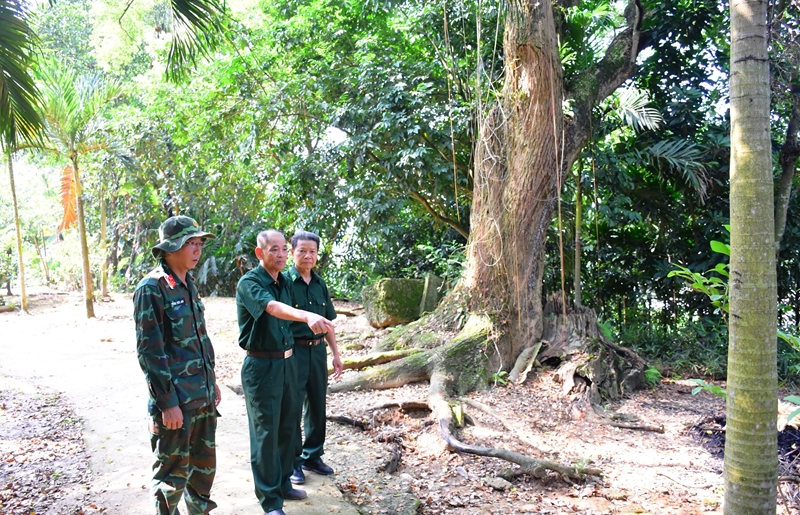
The search team under the Lao Cai Provincial Military Command works with a veteran to identify a burial site in the K30 fortress area. |
The 500-day campaign to accelerate the search, recovery and identification of fallen soldiers’ remains has mobilized multiple forces, including veterans whose memories of wartime terrain and burial sites provide crucial guidance. Their firsthand accounts help search teams narrow down locations and save time and effort.
Colonel Pham Khac Truong, political commissar of the search and recovery team under the Lao Cai Provincial Military Command, said many veterans continued to return to former battlefields to provide information despite their declining health. He emphasized that the soldiers remained determined to overcome difficulties, viewing every search as both a duty and a tribute to those who had sacrificed their lives.
At the K30 fortress area in Lao Cai ward, Lao Cai province, veteran Bui Van Chu, born in 1952 and formerly deputy head of Border Post 251 of the Lao Cai Provincial Border Guard Command, helped the team identify a suspected burial site. After leaving military service, he remained in the area and pro-actively contacted the team when local authorities called for information about fallen soldiers and their burial places.
Following verification, the team surveyed land managed by local residents and began searching despite persistent rain and the risk of landslides. Colonel Phung Duc Anh, the team leader, said most of the work had to be done manually, with machinery providing only limited assistance.
Chu recalled that he and his comrades had buried fallen soldiers near a camphor tree at the foot of the hill below K30 fortress. Guided by his account, the team located the area and began excavating. After days of painstaking work, the soldiers recovered seven sets of remains. The team paid tribute to the fallen before preparing to transfer the remains to a martyrs’ cemetery.
Breaking through rock to find fallen soldiers’ remains
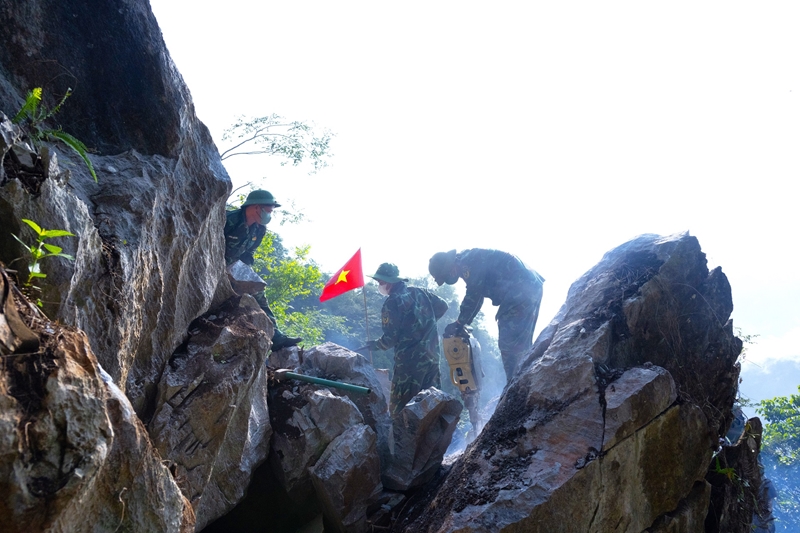
In Thanh Thuy border area of Tuyen Quang province, search teams often set out early from their base in Nam Ngat village to reach suspected burial sites in the mountains. Their mission at Hill 685 requires half a day of travel by vehicle and on foot. The steep, rocky terrain forces soldiers to climb using tree roots, secured ropes and specialized equipment.
Non-Commissioned Lieutenant Colonel Nguyen Ba Quan, member of the search team, said the arduous journey became more bearable when he thought of comrades who might still be lying in deep valleys and rocky crevices.
At the search site, Colonel Nguyen Huu Tiep, deputy head of the team, assigned tasks and supervised operations. Soldiers used rock drills, heavy hammers and crowbars to break through obstacles, while checking safety equipment before approaching cliff edges.
Near the entrance to Sap Cave, where veterans of Vi Xuyen Front reported that about 30 officers and soldiers had remained, Tiep described the challenges of reaching suspected burial sites.
“Whenever we receive information from veterans or local residents about a possible burial site, we immediately set out to verify it. We install fixed ladders on sheer rock faces, secure ropes on slippery slopes and sometimes spend days clearing forest or a week drilling through rock to open a passage,” he said.
Despite scorching heat and sudden downpours, the soldiers continued searching, carefully collecting buttons, fabric fragments and bone remains beneath rocks and around tree roots. Every trace could help locate those who had not yet been recovered.
|
|
 |
|
Personnel of the search team under the Tuyen Quang Provincial Military Command break through rock in search of fallen soldiers’ remains at Hill 685, Thanh Thuy commune. |
Non-Commissioned Lieutenant Colonel Nguyen Dinh Bang, a member of the team, recalled one mission in which soldiers braided ropes and took turns descending a steep rock face. While one held onto the cliff, another searched the cavities. Following information provided by veterans, they found two relatively intact sets of remains.
“When we saw the first bone fragments, everyone was overcome with emotion. The hardships of days spent climbing mountains, breaking rocks and clearing paths suddenly seemed to disappear,” he said.
The determination of the search teams reflects a bond of comradeship passed down through generations. Guided by veterans’ memories, today’s soldiers continue searching the mountains and forests to bring the fallen home, honoring those who sacrificed their lives for the Fatherland.
|
Senior Colonel Nguyen Minh Khoi, Deputy Political Commissar of the Tuyen Quang Provincial Military Command, said the 500-day campaign is a particularly important political mission that demonstrated the military’s responsibility and gratitude to fallen soldiers. He affirmed that officers and soldiers would continue overcoming difficulties and remaining in the field to find the remains and bring the fallen home as soon as possible. |
(To be continued)
Translated by Tran Hoai