Alongside the ongoing recovery efforts at the park, the city is reviewing information, locating historical witnesses and surveying 12 key areas suspected of containing martyrs’ remains.
    |
 |
|
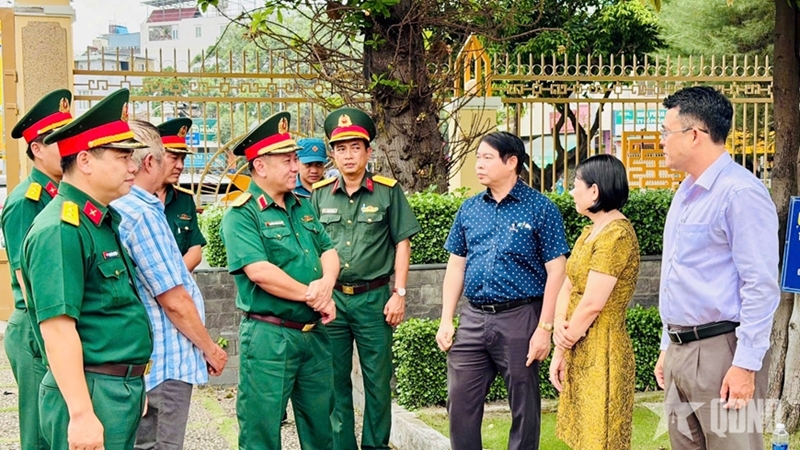
Maj. Gen. Nguyen Thanh Trung (fifth from right) meets with witnesses and local officials during a survey to gather information about martyrs’ remains in Go Vap. |
Major General Nguyen Thanh Trung, Political Commissar of the Ho Chi Minh City Military Command and Standing Deputy Head of the city’s Steering Committee 515 for the Search, Recovery and Identification of Martyrs’ Remains, described the campaign as a special mission requiring a strong sense of responsibility and a special mindset.
|
|
 |
|
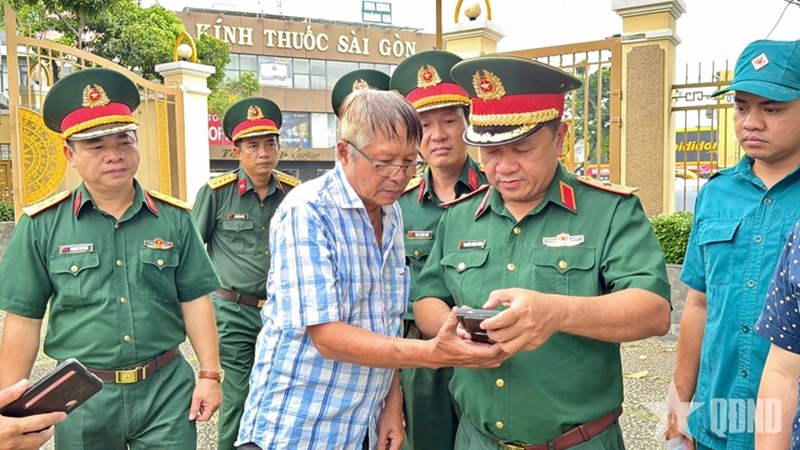
Maj. Gen. Nguyen Thanh Trung talks with a historical witness while surveying an area suspected of containing martyrs’ remains in Go Vap. |
At Le Thi Rieng Park, hundreds of delegations and thousands of residents have come to pay tribute to the martyrs. Many historical witnesses and experts have also provided information to assist the authorities in the search.
To date, forces have recovered 713 sets of martyrs’ remains at the park. The search continues to be conducted urgently and carefully.
|
|
 |
|
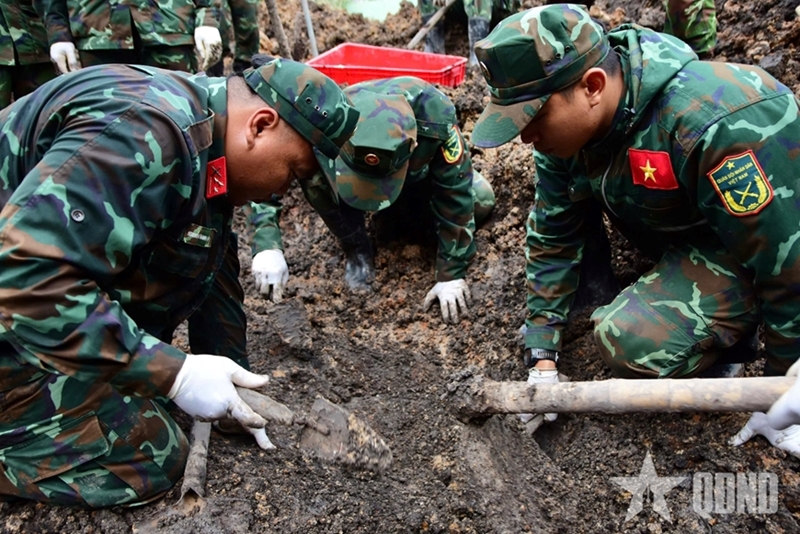
Team K74 searches for and recovers martyrs’ remains at Le Thi Rieng Park. |
At the end of August, a special flight transported more than 7,100 biological samples from the recovered remains from Ho Chi Minh City to Hanoi for DNA testing. An area has also been arranged at the park to gather the remains, maintain incense and memorial offerings, and receive delegations and residents coming to pay tribute.
The search has faced difficult weather conditions. Ho Chi Minh City and Southern Viet Nam are experiencing the peak of the rainy season, with periods of continuous heavy rain. The soil at Le Thi Rieng Park is weak, while the burial trenches are deep underground, requiring the forces to excavate and remove a huge volume of soil.
The search teams have worked day and night, taking advantage of favorable weather to accelerate progress. Machinery is used during excavation, but once signs of remains are discovered, the work is carried out manually. Officers and soldiers carefully examine each layer of soil to recover remains and artifacts. During heavy rain and strong winds, they focus on reinforcing the site and handling related tasks.
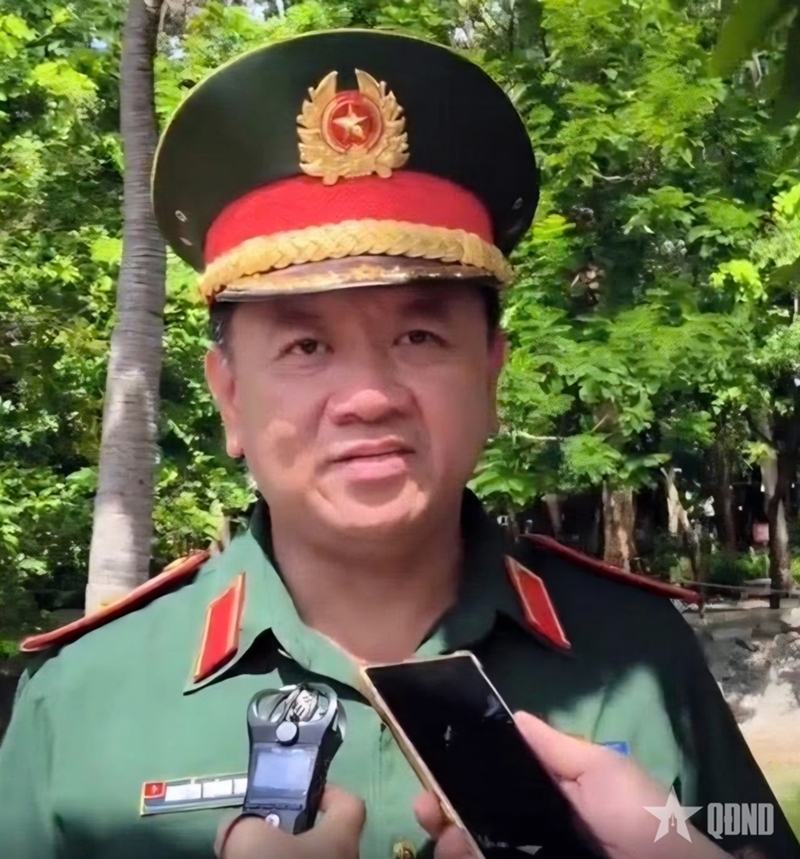
Major General Nguyen Thanh Trung said the search and recovery of martyrs’ remains is a sacred mission that has deeply moved those involved. Each discovery of remains, bone fragments, photographs or artifacts has left officers, soldiers and other participants deeply moved.
Some remains recovered after nearly 60 years underground are still relatively intact. In some cases, the remains retain signs of how the martyrs died, including being bound with electrical wire or having nails driven into their heads. These discoveries reflect the brutality of war and the steadfast and indomitable spirit of previous generations.
|
|
 |
|
Maj. Gen. Nguyen Thanh Trung |
The mission also offers an opportunity to learn about the stories of mothers and sisters who quietly sacrificed their youth while waiting for the return of fallen soldiers. Such real-life stories carry profound humanistic value for literature, art and revolutionary moral education for present and future generations.
The experience gained during the first phase of the campaign at Le Thi Rieng Park has also helped the city expand its search.
The authorities have identified 12 key areas suspected of containing martyrs’ remains and are gradually surveying each location. In Hoa Hiep commune, they are searching the former site of Hospital K76A, where the hospital was stationed from 1965 to 1967. In Go Vap, technical equipment is being used to survey the area around the Go Vap Martyrs’ Memorial.
The city has also received information from several highly reliable historical witnesses, including people who directly witnessed the burial of martyrs during the resistance war. Initial assessments indicate that some other areas, including Tan Son Nhat Airport, Bau Bang commune and Lai Thieu ward, may contain mass graves.
The authorities will continue surveying and verifying suspected locations while seeking additional information from historical documents and witnesses.
The city command has called on experts, scientists, historical researchers and elderly war witnesses, as well as anyone with information about areas suspected of containing martyrs’ remains in Ho Chi Minh City, to provide relevant information to assist the search and recovery efforts.
The second phase of the 500-day campaign is expected to involve a substantial workload. The city’s armed forces and Steering Committee 515 will continue the search and recovery efforts while seeking support from relevant agencies, experts, historical witnesses and local residents.
The first phase of the campaign at Le Thi Rieng Park is expected to conclude with a memorial service for the martyrs and a review of the campaign’s initial results, in accordance with the direction of the National Steering Committee 515.
Translated by Tran Hoai