Each sample from a martyr’s remains is a valuable source of information directly linked to the identity of the fallen and the wishes of their families. Therefore, accuracy and careful handling were given the highest priority throughout the process.
    |
 |
|
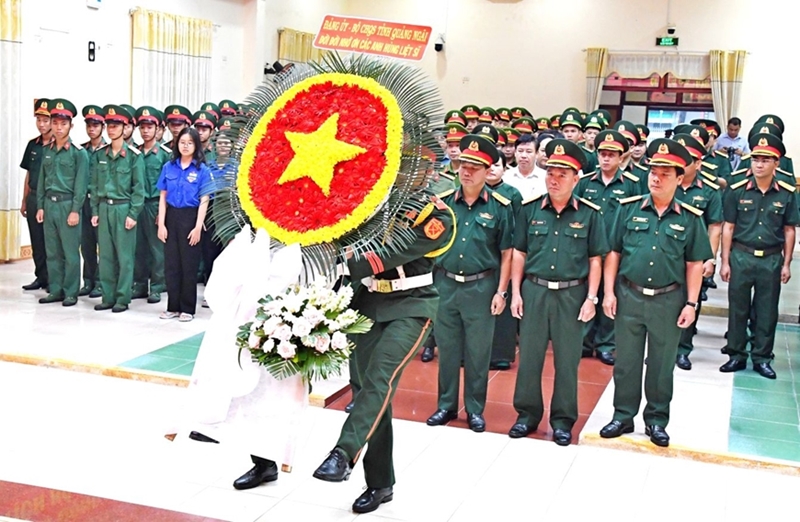
Delegates lay flowers and offer incense in memory of the fallen. |
Before transportation, all 2,219 samples were checked against their records and identification codes, as well as their seals and storage conditions. Records for each sample were completed to ensure proper receipt, inspection, cross-checking, traceability and subsequent testing.
The samples were packaged and sealed in accordance with regulations and transported by specialized military vehicles to Chu Lai Airport before being flown to Noi Bai International Airport for handover to the Military Forensic Institute. The process strictly followed the technical “five-rights” procedure: the right sample, the right records, the right seal, the right storage conditions and the right chain of custody.
|
|
 |
|
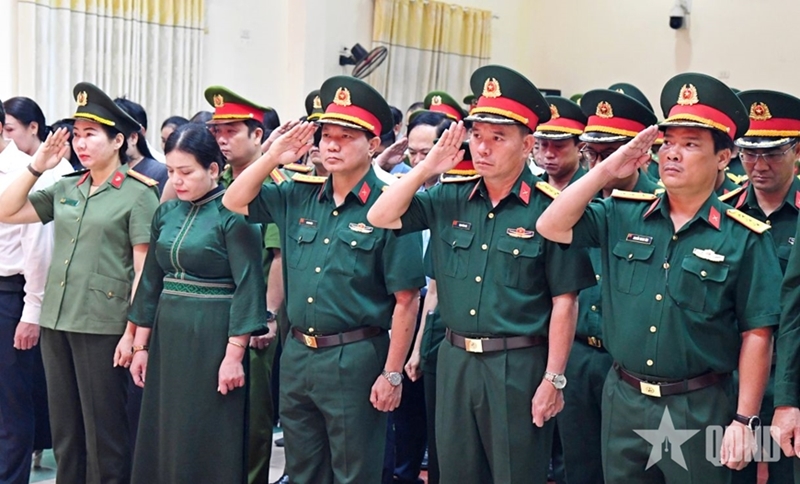
Delegates observe a minute of silence in memory of the fallen heroes and martyrs. |
The careful management, preservation, transportation and handover of each sample and record reflects not only professional requirements but also a deep sense of political responsibility, gratitude and respect for the fallen. It also underscores the responsibility of the Party, State, military and entire political system in honoring those who sacrificed their lives for the Fatherland and upholding the Vietnamese tradition of “when drinking water, remember its source.”
Under the provincial plan, the Quang Ngai provincial Military Command coordinated with relevant agencies and local authorities to survey and collect biological samples from unidentified martyrs’ remains at cemeteries across the province. The work was conducted on a pilot basis before being expanded, with samples collected on a rolling basis to ensure progress and compliance with regulations.
Quang Ngai has 127 war cemeteries with more than 37,600 graves. Of these, 113 cemeteries contain 13,514 unidentified graves requiring biological samples for DNA testing.
|
|
 |
|
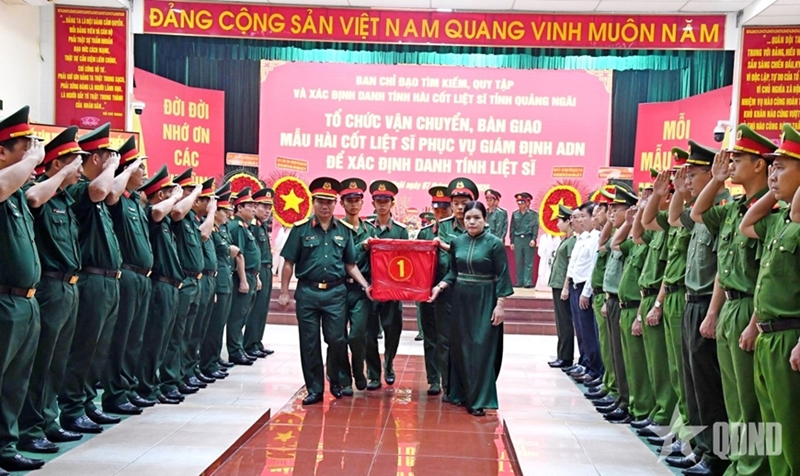
Delegates carry the biological samples to the transport vehicle. |
The province established three inter-sectoral working groups and 12 teams to collect samples. The forces completed the assigned work on September 14, one and a half months ahead of schedule.
A total of 9,069 biological samples were collected, equivalent to 67.10 percent of the target. Each sample was assigned an identification code and accompanied by a separate record and list to facilitate inspection, cross-checking and traceability. The provincial Military Command also maintained a temporary sample storage facility at temperatures of 18 to 22 degrees Celsius.
Before the latest handover, Quang Ngai had transferred 6,882 samples in three previous handovers for DNA testing.
Translated by Tran Hoai