In Hoa Thinh commune, Dak Lak province, one of the areas hardest hit by torrential rains, “Quang Trung Campaign” has gone beyond a housing support initiative. It has become a living testament to the close-knit bond between troops and the people.
    |
 |
|
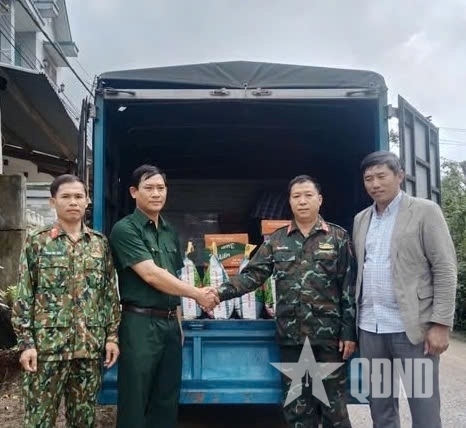
Local leaders of Hoa Thinh commune encourage soldiers of Defensive Area Command Region 3 – Ea Sup. |
Over recent days, working teams from the Defensive Area Command Region 3 - Ea Sup and Infantry Regiment 584 under the Dak Lak Provincial Military Command have left behind many moving images of military - civilian unity. The commune has taken on a more vibrant atmosphere as officers and soldiers work side by side with residents to rebuild houses destroyed by floods. Their presence has helped ease losses and encouraged families to regain stability in daily life.
From the earliest days of the campaign, the warmth of military - civilian relations has been clearly felt. Leaders of Hoa Thinh commune, together with representatives of the Veterans’ Association, visited and encouraged the working teams of the Defensive Area Command Region 3 - Ea Sup. The gifts they brought, including homegrown vegetables, locally raised pork, instant noodles, or bottles of drinking water, were simple in material value but rich in meaning. They reflected the trust, gratitude, and affection of local Party committees, authorities, and residents toward the forces directly assisting the community.
|
|
 |
|
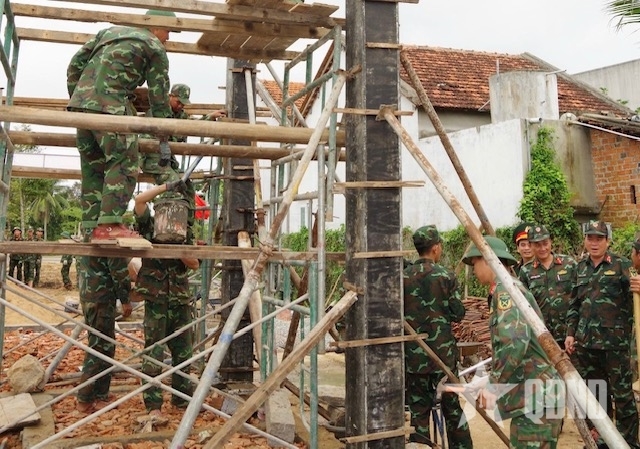
Soldiers of Regiment 584 build houses for residents of Phu Dien hamlet, Hoa Thinh commune. |
At a cordial meeting, commune leaders acknowledged and highly appreciated the strong sense of responsibility and tireless efforts shown by officers and soldiers. Beyond rebuilding houses for families severely affected by floods, the units have actively supported particularly disadvantaged households, taken part in social welfare activities, and visited policy families. These practical actions have contributed to strengthening grassroots unity and reinforcing the “people’s heart posture,” laying a firm foundation for the all-people national defense at the local level.
On behalf of the unit’s leadership, Lieutenant Colonel Pham Van Thuc, Deputy Chief of Staff of the Defensive Area Region 3 - Ea Sup Command, expressed sincere thanks for the support and affection shown by local authorities, mass organizations, and residents of Hoa Thinh. He emphasized that such companionship and genuine care are a great source of encouragement, motivating officers and soldiers to fulfill their tasks to the best of their ability during the “Quang Trung Campaign.” Each moment of joy when a family moves into a new house, he noted, is a victory of soldiers in peacetime.
|
|
 |
|
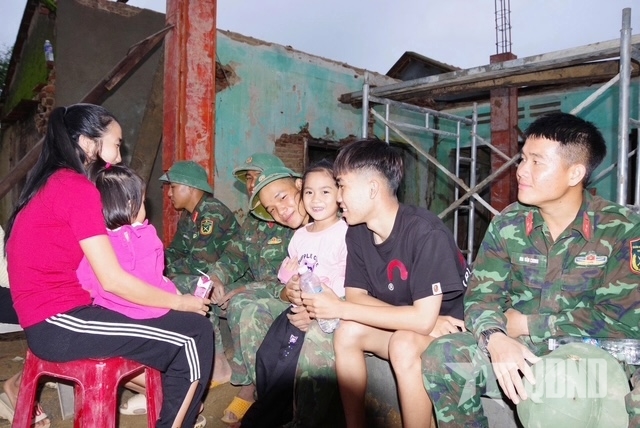
A brief break beside newly-built houses in Hoa Thinh |
That simple meeting reaffirmed a familiar truth that wherever there are people, there are soldiers; wherever soldiers go, the bond between the military and the people grows stronger. The close coordination between local authorities, mass organizations, and the armed forces has not only brought tangible results in mass mobilization work, but has also contributed to building a strong all-people defense posture from the grassroots, in line with President Ho Chi Minh’s teachings.
The construction sites in Phu Dien hamlet offer the most vivid images of military–civilian solidarity. At the sites where houses are being built for flood-affected families, the sounds of concrete mixers, hammers, and drills blend with lively conversations and laughter between soldiers and villagers. These moments of shared joy and effort have helped energize the workforce, speeding up the completion of houses.
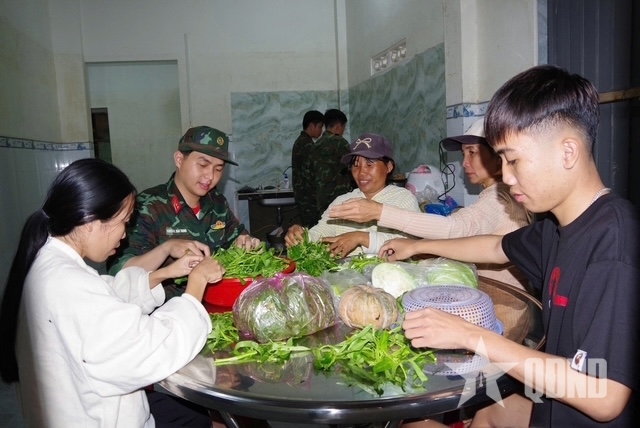
At the construction site of a house for a local resident in Phu Dien hamlet, neighbors arrived early in the morning to lend a hand as soon as the soldiers began work. Some brought fresh vegetables, others brought produce from their gardens, freshly caught stream fish, or bundles of firewood for cooking. Simple smiles and firm handshakes warmed the makeshift kitchen, dispelling the chill of early mornings and easing fatigue after hours of hard labor.
|
|
 |
|
Soldiers and civilians prepare meals together for the troops. |
Local residents expressed their appreciation through small but heartfelt gestures. They shared meals, helped prepare food, and offered words of encouragement so that soldiers could maintain their strength while continuing to support the community. Such sincere care made officers and soldiers feel welcomed and motivated, as if they were among family members rather than strangers on a mission.
Short breaks at the construction sites became moments of meaningful interaction. Soldiers and villagers gathered around cups of green tea, asking about one another’s health, families, and hometowns. These simple conversations helped bridge distances, reinforcing mutual understanding and trust. Many soldiers shared that this warmth and kindness inspired them to work even harder to ensure houses were completed as soon as possible for the affected families.
Although the floods swept away property and left behind pain and loss, they also revealed the resilience of community bonds. Officers and soldiers were warmly received, with women helping with cooking and young people joining construction efforts. For the troops, this was not merely an assigned mission but an expression of kinship and shared responsibility with the people.
|
|
 |
|
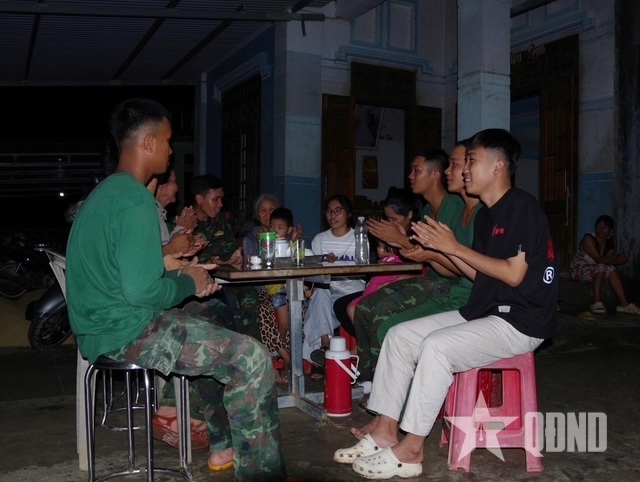
Soldiers and residents of Hoa Thinh commune take part in cultural exchanges. |
In the evenings, when construction sites quieted down, areas where soldiers were stationed came alive with singing and music. Soldiers and villagers gathered for cultural exchanges, singing songs about their homeland and country, easing the fatigue of a long working day. At dawn the next morning, they met again, continuing their efforts to rebuild houses.
The sturdy houses gradually rising in Hoa Thinh commune stand as vivid proof of the effectiveness of “Quang Trung Campaign” and the enduring bond between the military and the people. They also highlight the noble qualities of Uncle Ho’s Soldiers, always standing shoulder to shoulder with the people in times of hardship, working for peace, stability, and the well-being of the community.
Translated by Tran Hoai