At the event, the museum’s Director Senior Colonel Le Vu Huy stressed that over the past seven decades, the museum, with the Army Museum Construction Committee as its predecessor, has grown into a typical national and military cultural institution and a key component of the military’s organizational structure responsible for Party and political work.
    |
 |
|
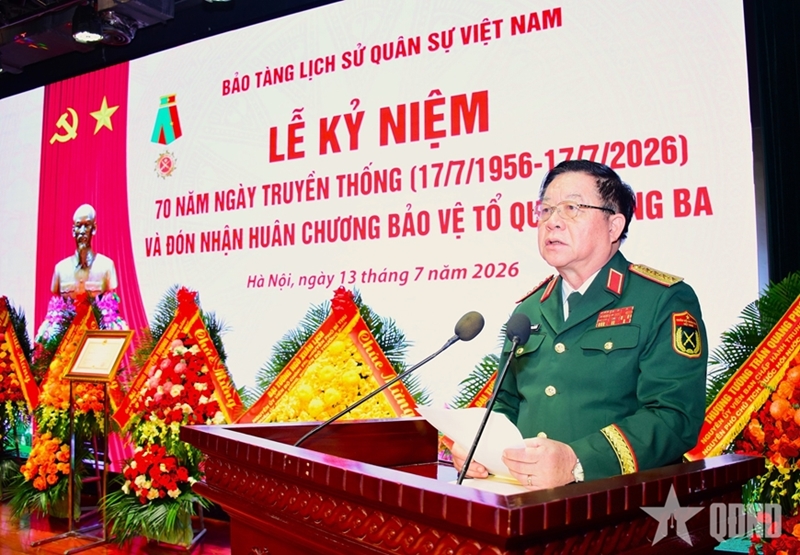
General Nguyen Trong Nghia speaks at the event. |
He highlighted the dedication and sacrifice of generations of staff who collected and preserved invaluable artifacts documenting the nation's struggle for independence and the combat history of the Vietnam People's Army.
The official underlined that the museum's collections hold not only historical, scientific, and artistic values but also serve as a living testament to Vietnam's struggle for independence, patriotism, revolutionary heroism, and aspiration for peace.
Through research, collection, exhibitions, and public education, the museum has promoted patriotism and historical awareness, strengthened political stance, built firm ideological foundation in the military, and supported efforts to counter hostile and wrongful viewpoints, signs of “peaceful evolution,” and “depoliticization” of the military while reinforcing the Party's direct and absolute leadership over the military in all aspects.
|
|
 |
|
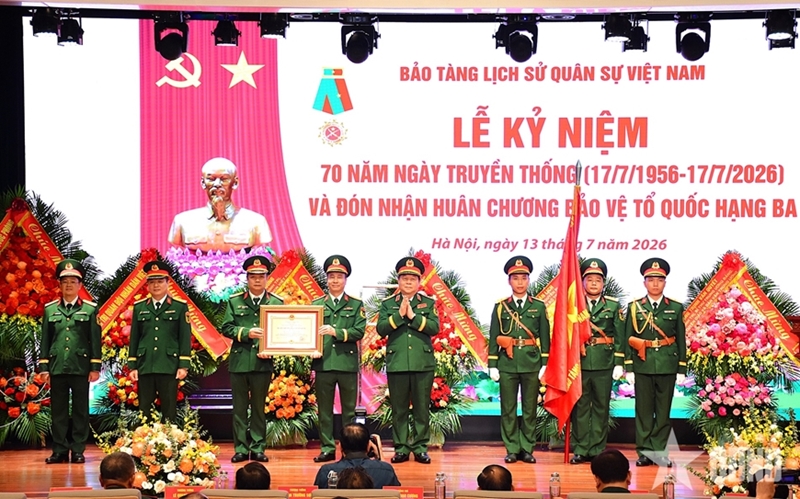
Gen. Nghia hands over the Third-Class Fatherland Protection Order to the Vietnam Military History Museum. |
At the ceremony, Senior Colonel Dinh Xuan Hoa, Deputy Secretary of the Party Committee and Deputy Director of the museum, read a letter of commendation from Deputy Prime Minister and Minister of National Defense General Phan Van Giang to the museum's officers and personnel.
In his speech, Gen. Nghia praised the museum for its achievements and affirmed its role as a key national institution for preserving, researching, exhibiting, and promoting Vietnam's military history and cultural values.
He called on the museum to continue implementing higher-level policies, directions on cultural development coupled with defense consolidation and Fatherland protection; strengthen political and historical education; and uphold the traditions of Uncle Ho's soldiers while wholeheartedly serving military personnel, the public, and international visitors.
Gen. Nghia asked it to uphold its standing as a leading museum in the military and in Vietnam with growing regional and international recognition. He urged it to innovate its research, conservation, and exhibitions, promote digital transformation, interactions, and adopt technologies such as virtual reality and artificial intelligence to make its collections more engaging for domestic and international visitors.
Translated by Mai Huong