Immediately after the issuance of Decision 457 and guidance from the Amnesty Advisory Council, the Department of Criminal Investigation, the standing agency for amnesty under the Ministry of National Defense, gave advice to the defense ministry’s leadership to issue a decision establishing the Steering Committee on Amnesty and to promulgate a plan for implementing the State President’s decision within the military.
    |
 |
|
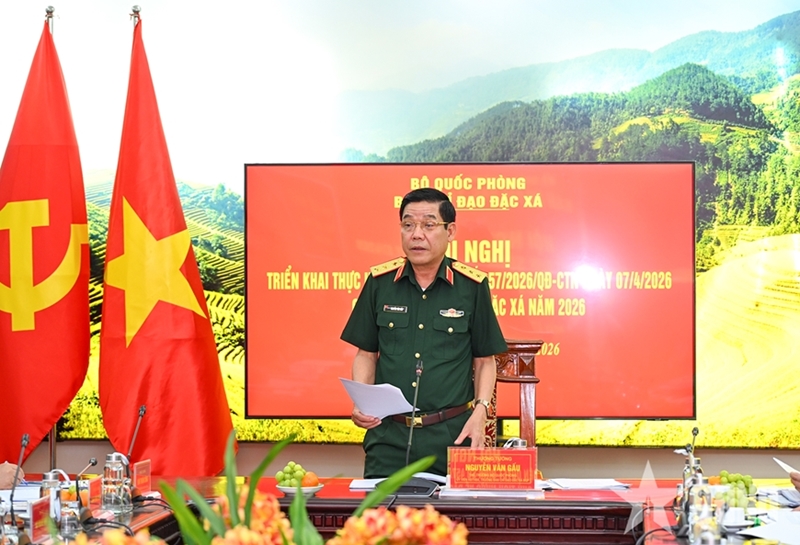
Senior Lieutenant General Nguyen Van Gau speaks at the conference. |
The Department of Criminal Investigation has disseminated 2026 amnesty documents to relevant agencies and directed military prisons to publicly post Decision 457. This ensures inmates can study and understand the specific eligibility criteria. Currently, units are urgently compiling dossiers and lists of eligible candidates following procedures and guidance from the Amnesty Advisory Council.
At the conference, Senior Lieutenant General Nguyen Van Gau requested the Department of Criminal Investigation and the Ministry’s Steering Committee on Amnesty to uphold a high sense of responsibility. He emphasized strict, objective, and fair implementation, ensuring no eligible individual is overlooked and no ineligible person is recommended. Additionally, he called for strengthened communication to help inmates understand the humanitarian and lenient policies of the Party and the State. This encourages offenders to acknowledge their wrongdoing, make compensation, and strive for eligibility, thereby fostering public consensus for the Party’s and State’s rehabilitation and reintegration policies.
* On the same day, Senior Lieutenant General Nguyen Quang Ngoc, Deputy Minister of National Defense, chaired a working session with the General Department of Logistics and Technical Services and relevant agencies to implement key tasks related to fuel supply assurance in 2026.
|
|
 |
|
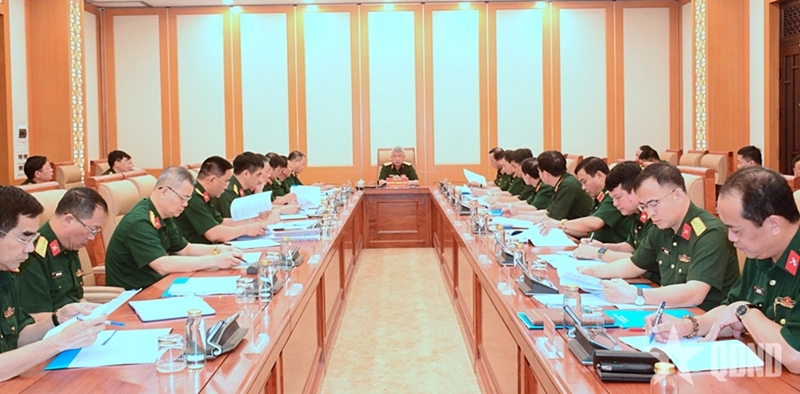
Senior Lieutenant General Nguyen Quang Ngoc chairs the working session. |
The General Department of Logistics and Technical Services has directed the Department of Petrol and Oil to study and implement solutions for improving fuel supply efficiency. The military fuel sector has ensured timely provision of fuels for the armed forces' routine and unscheduled tasks, including combat readiness, disaster response, and search and rescue, with a focus on key missions like A50, A80, and national defense reserves.
Since early 2026, despite supply challenges from the Middle East conflict, the sector has pro-actively synchronized measures to maintain fuel security. By monitoring global and domestic markets, the unit secured sources and conducted procurement in compliance with regulations to ensure budget efficiency.
Concluding the session, Senior Lieutenant General Nguyen Quang Ngoc requested the logistics and technical sector to track fuel price fluctuations and advise on supply assurance for defense tasks. He emphasized strict adherence to the Prime Minister's Directive No.09/CT-TTg regarding energy conservation, energy transition, and electric transportation development, alongside centralized procurement.
The defense leader also called for pro-active sourcing to ensure sufficient military supply while promoting digital transformation in storage and distribution management. Additionally, he highlighted the importance of defense diplomacy within the sector and strengthened cooperation with the Vietnam National Industry - Energy Group (Petrovietnam) for specialized fuel research and production.
Translated by Chung Anh