    |
 |
|
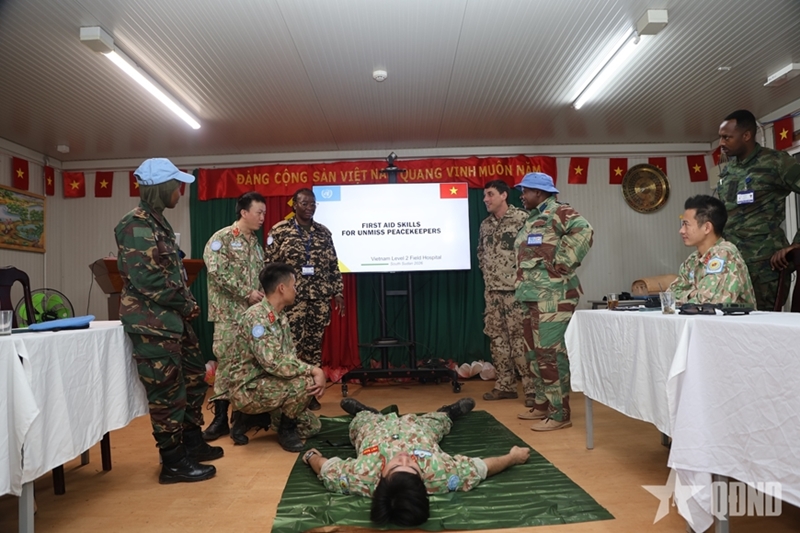
Instructors demonstrate basic first aid techniques during the course. |
The course was designed based on the operational realities of peacekeeping forces in South Sudan, focusing on equipping participants with essential knowledge and practical skills to effectively provide initial emergency care before professional medical personnel arrive at the scene.
During the training, instructors from the hospital provided an overview of the role of first aid in a peacekeeping environment, emphasizing the significance of the “Golden hour” in saving lives. They also highlighted the responsibility of every UNMO officer in protecting the lives of fellow peacekeepers, minimizing secondary injuries, and supporting the recovery process.
This is one of the regular training activities organized by the hospital for peacekeepers serving in Bentiu of the Northern Sector.
|
|
 |
|
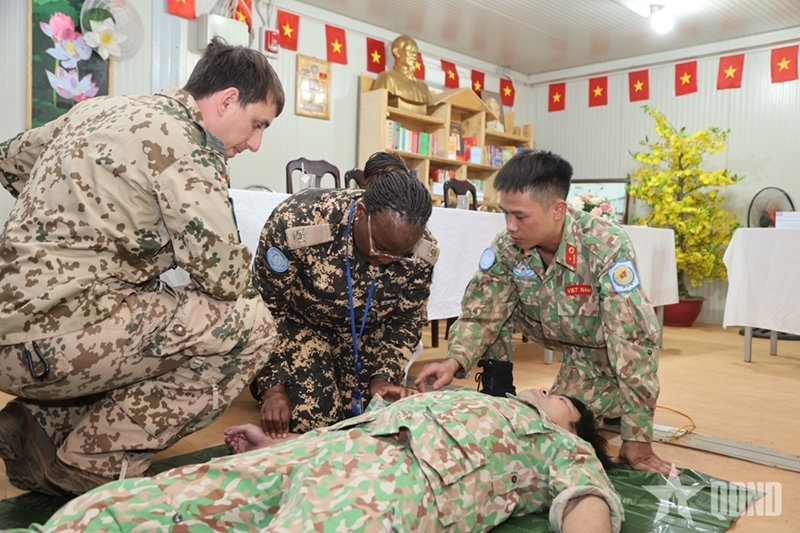
A scenario during the exercise |
The trainees were instructed on safe scene assessment and approach procedures; identification of threats arising from armed conflicts, unexploded ordnance, and environmental hazards; application of tactical casualty care procedures following the DRCABC/MARCH principles; control of severe bleeding using pressure bandages and tourniquets; fracture immobilization; management of unconscious casualties, cardiac arrest, and airway obstructions; as well as common medical emergencies in South Sudan such as heatstroke, heat exhaustion, severe dehydration, snakebites, and insect stings.
One of the topics that attracted interest from participants was casualty evacuation in operational and peacekeeping environments. Instructors explained how to recognize life-threatening conditions requiring the activation of CASEVAC procedures (the evacuation of casualties from the scene using available means of transport). They also introduced methods for preparing and transmitting emergency medical evacuation requests in accordance with the U.N.’s 9-Line reporting format.
In addition, the trainees were provided with opportunities for practical exercises, scenario-based simulations, and hands-on training, thereby improving coordination and rapid response capabilities. After the course, the trainees could apply their knowledge in the unique operational environment of UNMISS.
|
|
 |
|
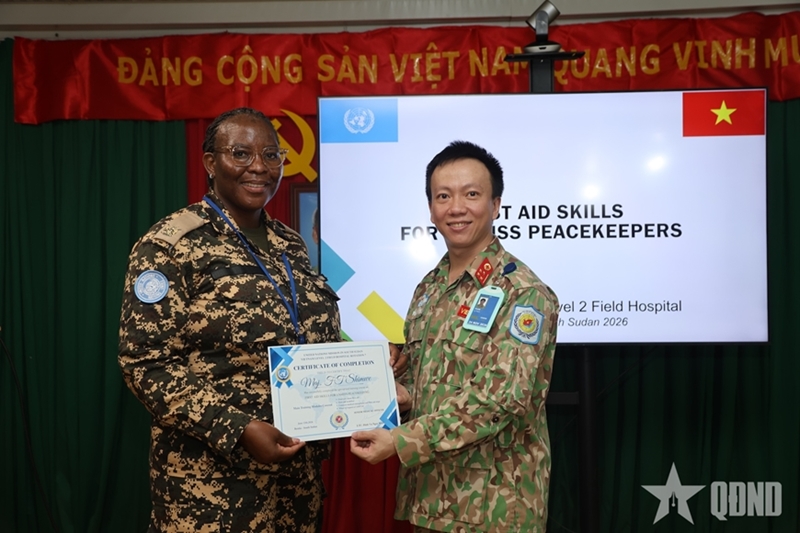
Participants receive certificates upon completion of the course. |
Representing the participating UNMO officers, Senior Captain Muchayeverwa DHABU, Head of the UNMO Team, affirmed that the course was extremely important for military observers, who frequently operate outside base camps and therefore require first aid skills, casualty response procedures, and medical evacuation knowledge.
Translated by Quynh Oanh