    |
 |
|
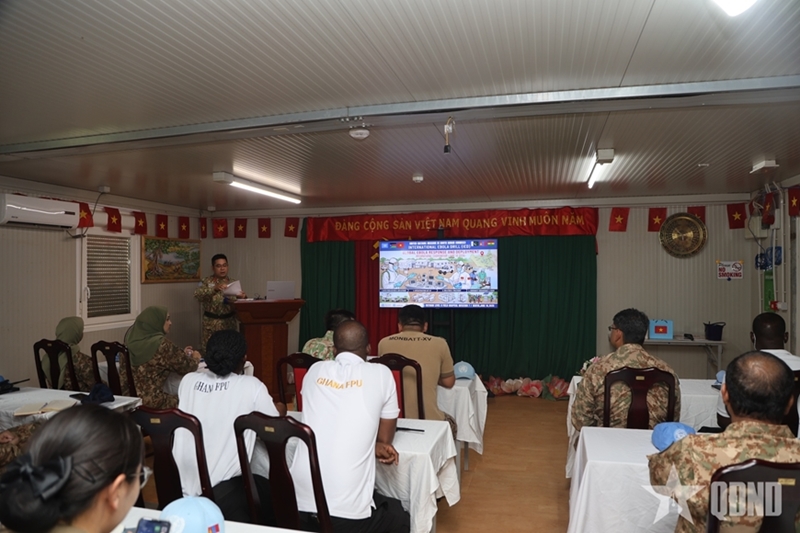
An overview of the seminar |
This activity demonstrated the pro-activeness, responsibility, and response readiness of the Vietnamese military medical force against public health risks that could impact the mission's operations.
According to the latest notifications updated by the UNMISS medical system, although South Sudan has not recorded any cases of Ebola virus disease (EVD), the situation in neighboring countries is under close surveillance. The complex developments of the disease in these nations indicate that the risk of regional transmission persists, particularly given the frequent migration, community interaction, humanitarian activities, and international travel among countries in East Africa.
Against that backdrop, preparedness and response capability remain a top priority for U.N. peacekeeping units. The L2FH Rotation 7 has implemented a range of coordinated measures to enhance its ability to promptly detect, isolate, and safely manage suspected cases of highly infectious diseases.
|
|
 |
|
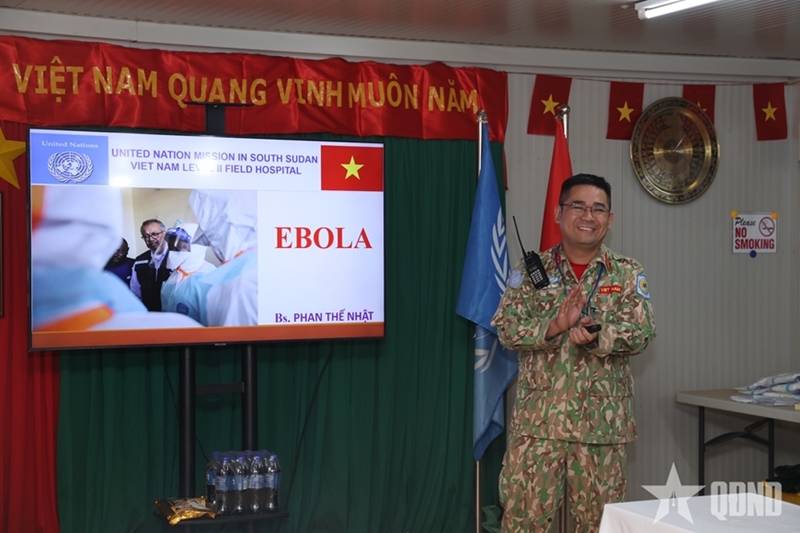
Medical staff of the L2FH Rotation 7 shares expertise at the seminar. |
As soon as epidemiological alerts emerged in the region, the hospital's leadership directed the maintenance of regular information updates from the Force Medical Officer (FMO), the World Health Organization (WHO), and relevant U.N. specialized agencies to timely adjust response plans.
Moreover, the hospital has pro-actively reviewed its infrastructure, reinforced infectious disease isolation facilities, refined patient screening and triage procedures, and conducted inventories of personal protective equipment (PPE), disinfectants, and infection prevention and control supplies, replenishing stocks where necessary.
All plans have been developed based on the principles of pro-activity and rigor, ensuring maximum safety for both patients and medical personnel.
|
|
 |
|
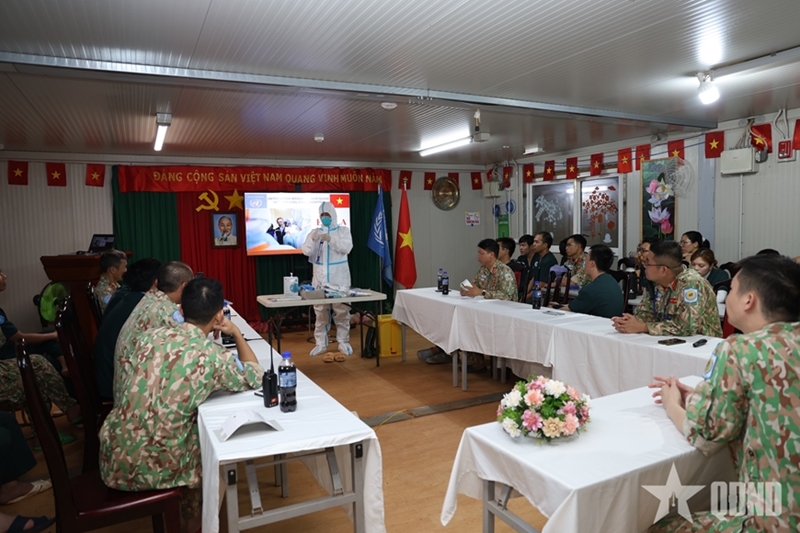
Training on key skills for responding to Ebola outbreaks at L2FH Rotation 7 |
A notable feature of the training program is that it is not limited to medical personnel but extends to all officers and staff members of the unit. This approach reflects the hospital’s view that disease prevention and control is a collective responsibility, with every individual playing an important role in identifying potential risks and ensuring the safety of the community.
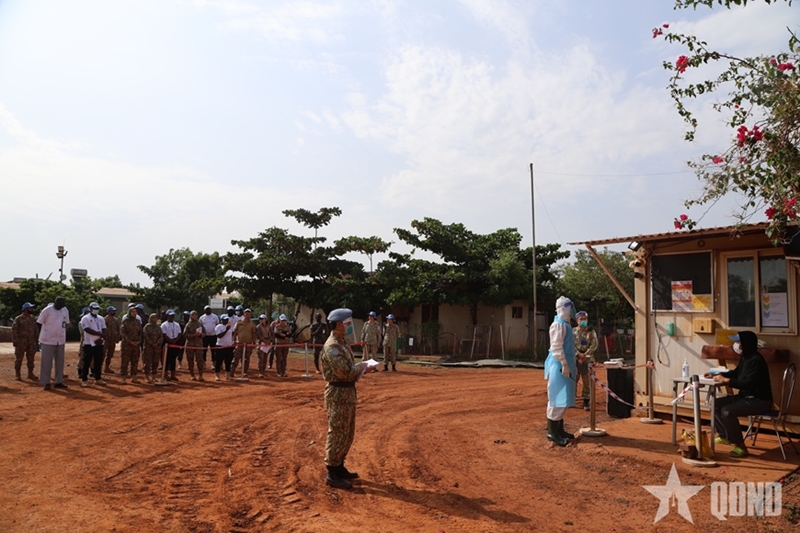
Building on the outcomes of the seminar, the hospital has conducted a series of practical exercises based on a simulated scenario involving a suspected Ebola patient at the mission base. The entire response process has been tested and evaluated under realistic operational conditions.
|
|
 |
|
Exercise on Ebola outbreak response |
Beyond strengthening its own internal capabilities, the hospital has pro-actively shared professional reference materials, health communication posters, screening procedures, and infection prevention and control protocols with other medical units across the mission. This practical activity has contributed to enhancing coordination and building a common medical response network within the multinational environment of the U.N.
Translated by Quynh Oanh