    |
 |
|
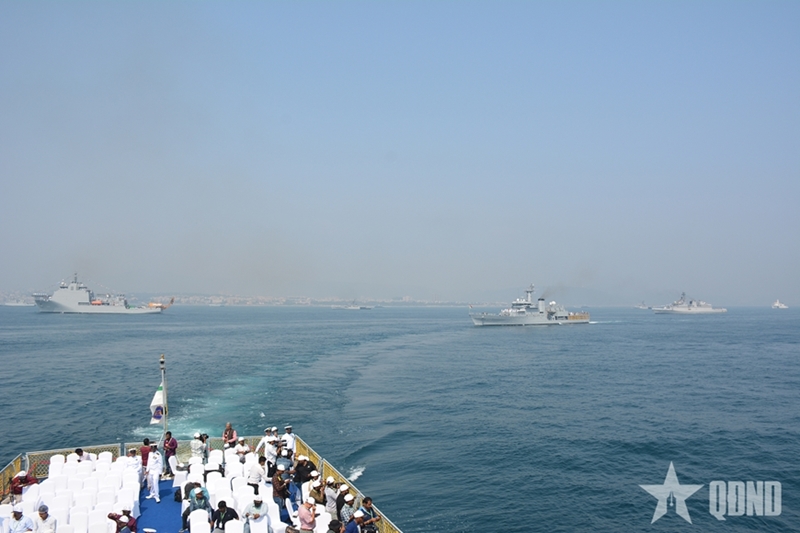
Journalists watching the International Fleet Review from the Indian Navy patrol vessel INS Sukanya |
With luggage and small gifts from home, I departed for India, a 5,000-year-old cradle of civilization renowned for its cultural and religious diversity. This rising global power hosted a busy diplomatic schedule in Visakhapatnam, where I joined 28 participants for the International Fleet Review and the Multilateral Naval Exercise MILAN 2026, held from February 15 to 25.
|
|
 |
|
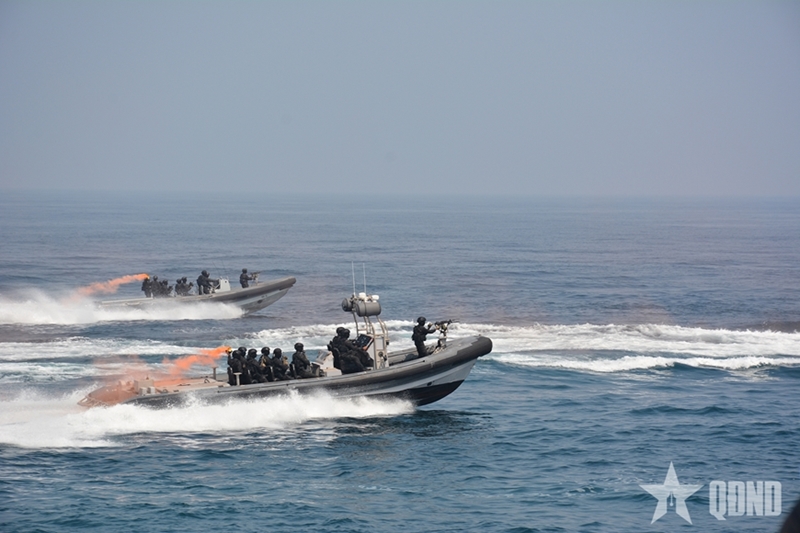
Indian ships and aircraft appear during the International Fleet Review |
Hosted by the Indian Navy, these events served as major defense diplomacy activities to strengthen maritime cooperation. The Vietnam People’s Navy participated in both. It was a proud moment as “Vietnam” echoed across the sea, with the red flag and yellow star flying in a multinational formation to convey a message of peace and regional stability.
Indian President Droupadi Murmu stated that the gathering of diverse ships and sailors demonstrated unity, reflecting the theme “Connecting across the oceans.” Guided by the philosophy “Vasudhaiva Kutumbakam” (“the world is one family”), she emphasized that maritime order must rely on shared responsibility among partners.
|
|
 |
|
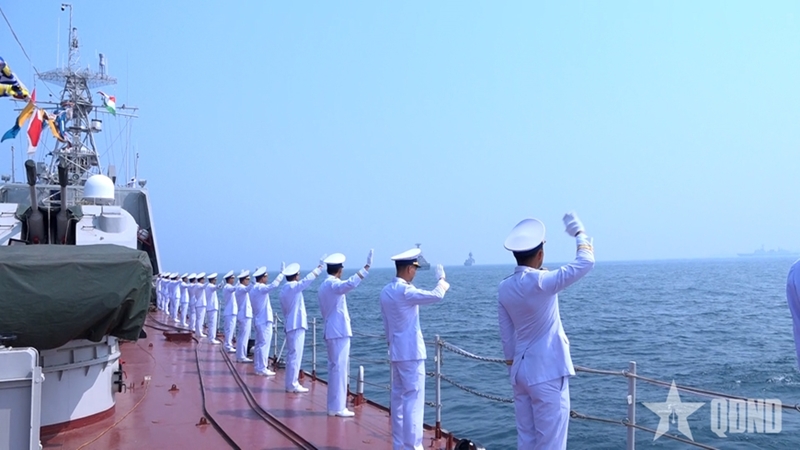
In the international fleet formation, Ship 17 of the Vietnam People’s Navy performed the ceremonial salute to the President of India according to naval protocol. |
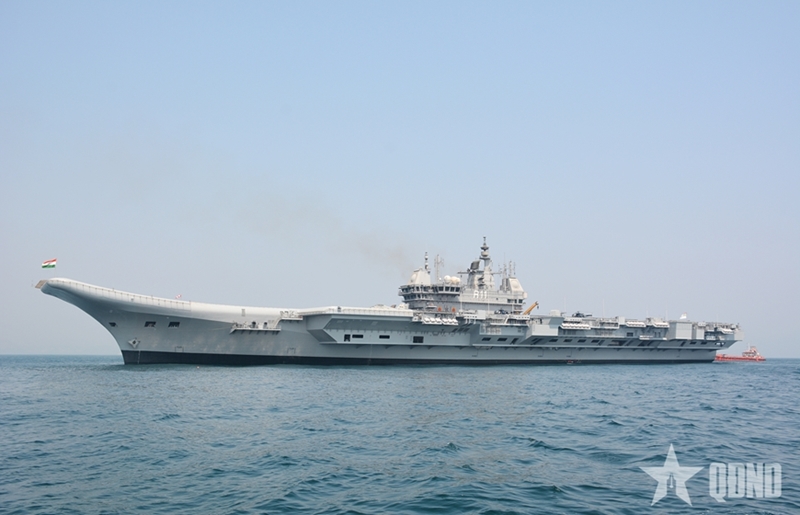
Following the review, we visited INS Vikrant, India’s first domestically built aircraft carrier. Meaning “brave” or “powerful,” the ship symbolizes India’s move toward military modernization and indigenous technology. After a 30-minute boat ride from Visakhapatnam, the massive 45,000-ton steel structure appeared on the horizon.
|
|
 |
|
Aircraft carrier INS Vikrant |
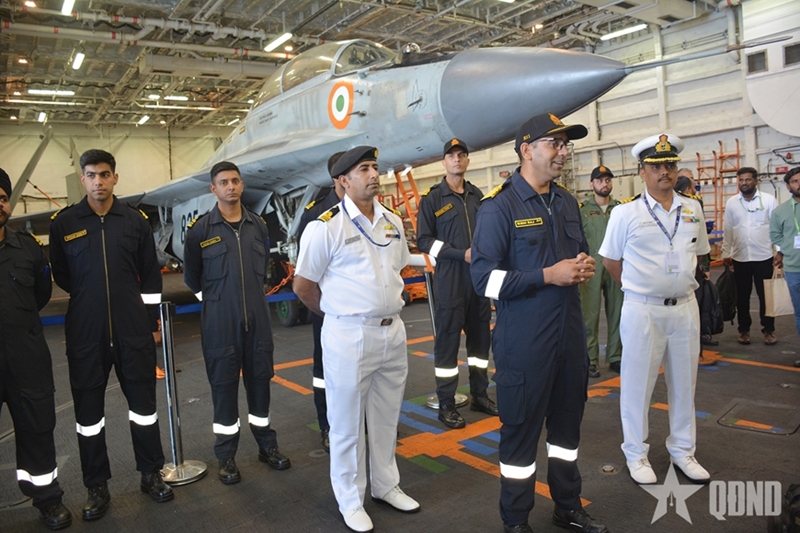
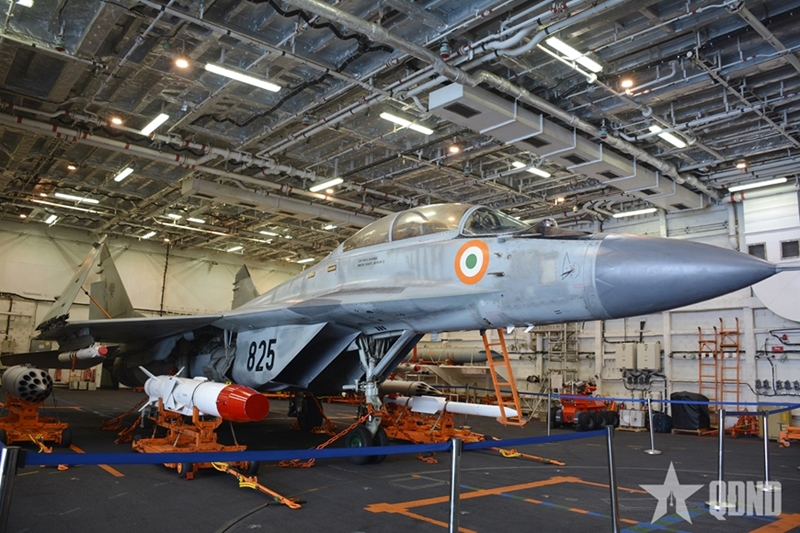
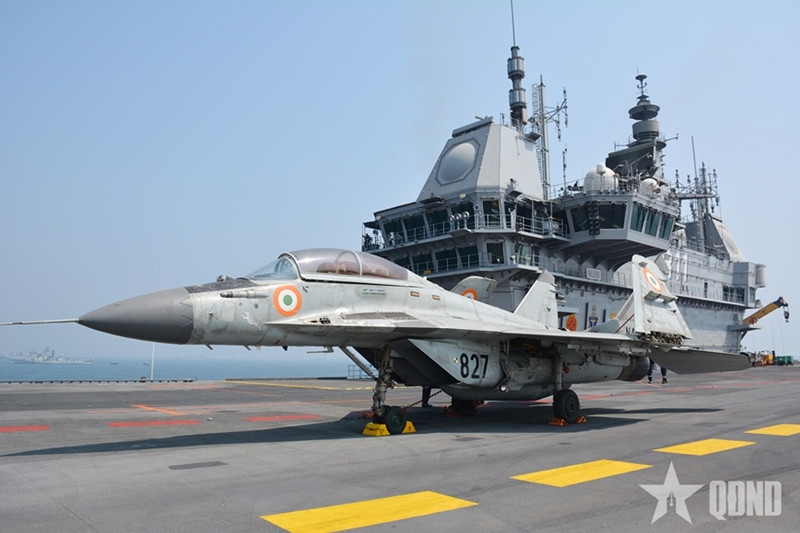
Onboard, journalists were briefed on security and photography restrictions before entering the aircraft hangar, which accommodates up to 20 aircraft. We observed a MiG-29K fighter secured to the deck and used one of two elevators to reach the flight deck. Stretching 262.5 meters long, roughly two football fields, the deck can hold about 30 aircraft.
|
|
 |
|
Officers and sailors aboard INS Vikrant brief journalists on the ship and security regulations. |
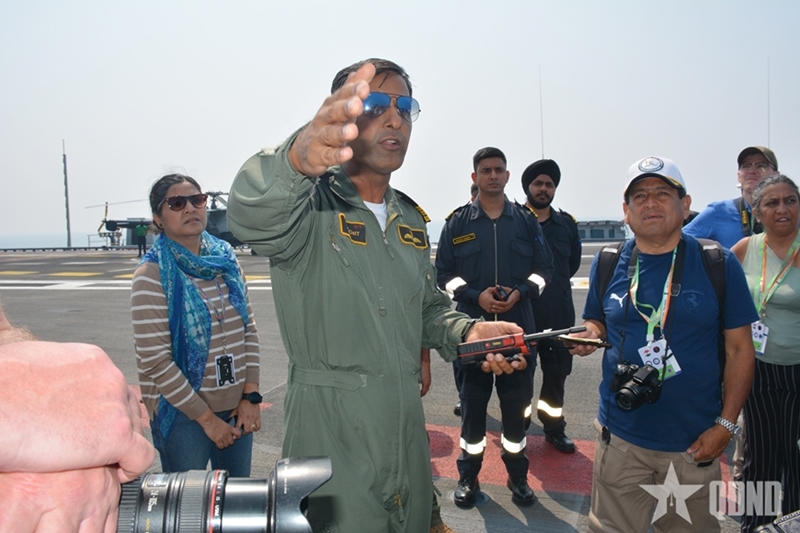
INS Vikrant utilizes a ski-jump takeoff system (STOBAR), where planes launch using engine power. For landings, pilots must catch one of three arresting wires with a tail hook. Despite the technical difficulty, the carrier achieved 1,000 successful arrested landings by early March 2026.
|
|
 |
|
A MiG-29K fighter jet in the hangar |
|
|
 |
|
Aircraft parking on the flight deck |
|
|
 |
|
An Indian pilot explains the aircraft carrier takeoff and landing mechanisms to journalists. |
Functioning as a “floating city,” INS Vikrant features 2,300 compartments for 1,700 personnel, including a medical center with a CT scanner and kitchens preparing 5,000 meals daily. After a briefing and a buffet of traditional Indian flavors, we returned to shore with souvenirs from the crew. The visit left many wishing for more time aboard this remarkable warship.
By Anh Thu
Translated by Tran Hoai