The event, organized by the municipal Department of Agriculture and Environment, was accompanied by exhibitions, demonstrations and live crafting activities showcasing traditional handicrafts from May 8–10 at the heritage site.
Addressing the ceremony, Vice Chairman of the Hanoi People’s Committee Nguyen Xuan Luu stressed that each craft village serves as a “living museum”, preserving folk knowledge, master craftsmanship and the creative spirit of the Vietnamese people.
    |
 |
|
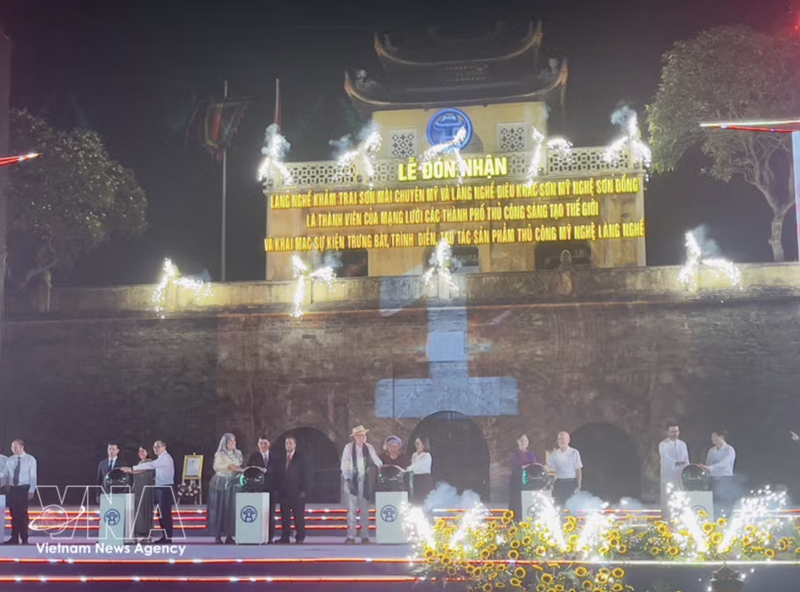
Delegates perform the opening ceremony ritual at the event held at the Thang Long imperial citadel on the evening of May 8. |
The recognition of Chuyen My and Son Dong craft villages as members of the World Crafts Cities network represents international acknowledgement of the cultural value, artisanal techniques, creativity and sustainable vitality of Vietnam’s traditional craft villages, he said.
The recognition also opens up opportunities to promote the image of Vietnam, its people and culture to the international community, while fostering cultural exchange, developing craft village tourism, expanding export markets and enhancing the global brand value of Hanoi’s handicrafts.
Luu noted that Hanoi remains committed to strengthening international cooperation, preserving and promoting traditional crafts, supporting innovation and design, developing brands, training human resources and improving the competitiveness of the capital’s handicraft products.
Congratulating the event, Dr Darlie Oommen Koshy, Vice President of the World Crafts Council AISBL, said Chuyen My and Son Dong craft villages have demonstrated that handicrafts belong not only to the past, but remain an active part of contemporary life, continuing to create livelihoods and drive economic growth.
Therefore, he stressed, handicrafts should be recognized as an essential component of the global creative economy.
On this occasion, a delegation from the council will visit Hanoi’s craft villages, historical sites and cultural heritage locations to exchange experiences in handicraft development, while organizing trade networking and commercial promotion activities.
|
|
 |
|
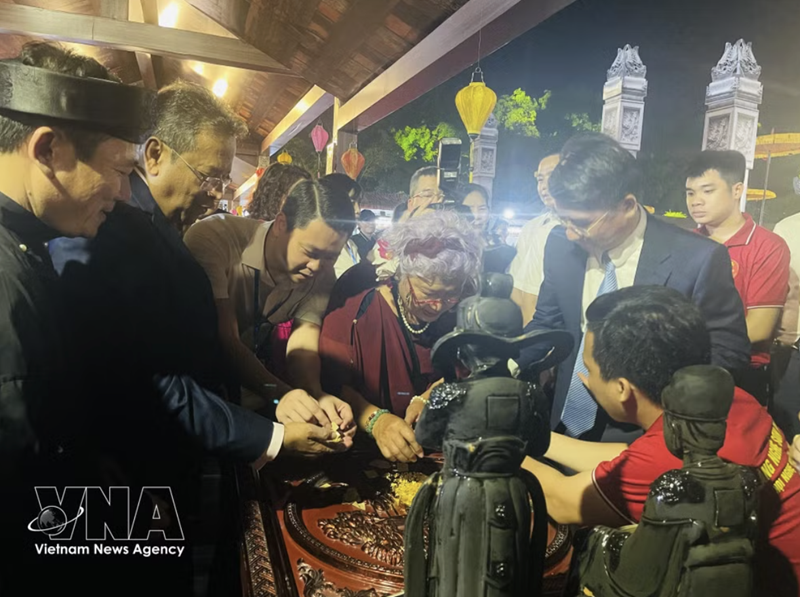
Delegates visit the craft village exhibition space at the event. |
Hanoi currently has 337 officially recognized traditional craft villages. The city has worked on the promotion of craft village heritage in connection with tourism development, ecological agriculture and sustainable rural economic growth.
In 2024, Bat Trang ceramic village and Van Phuc silk village were admitted to the same network. With the addition of Chuyen My and Son Dong villages, Hanoi now has four craft villages recognized by the World Crafts Cities, making Vietnam the country with the second-highest number of recognized members worldwide after Iran.
The World Crafts Council, established in 1964 and headquartered in Kuwait, is a non-profit international organization dedicated to preserving and promoting traditional handicrafts worldwide. Over the past six decades, it has recognized 83 world craft villages across 34 countries. Hanoi is the first locality in Vietnam to receive its recognition.
Source: VNA