From digitizing artifacts to opening up access
The Southern Women’s Museum has digitised 1,113 artifacts, but only 113 are available to the public. Thousands more are waiting for an exhibition system to be built under an expansion project. The museum aims to finish the system in 2027, allowing the full collection to be viewed online, its Deputy Director Pham Thi Dieu said.
Do Thi Anh Tuyet, Vice Chairwoman of the Tan Dinh ward People’s Committee, said the ward plans to digitize Ngoc Hoang Pagoda, a national-level architectural and artistic heritage site, in phases, followed by three city-level sites. Digitizing heritage and cultural data is part of the ward’s “digital Tan Dinh ward, digital neighborhoods” plan.
    |
 |
|
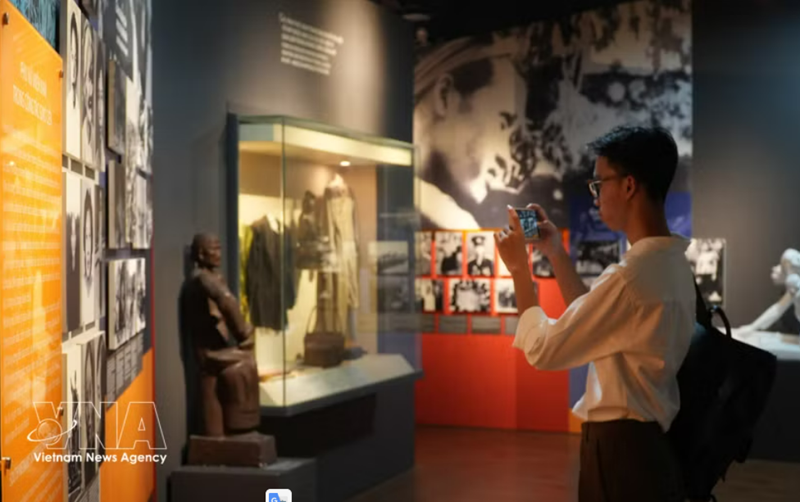
The Southern Women’s Museum scans and digitizes more than 1,000 artifacts for display using hologram technology |
Pham Thi Khanh Ngan, Chief of the Office of the Department of Cultural Heritage at the Ministry of Culture, Sports and Tourism, said the national system is designed to link information across heritage sites, museums, artifacts, intangible cultural heritage and documentary heritage.
The database could build on existing records, adding inventory, recognition and registration data, along with drawings, images, documentary films and 3D models, she said. That would let heritage information serve management, research and education while gradually opening new forms of online public access, she said.
New visitor experiences powered by reliable data
At the War Remnants Museum, digital data is used both to manage artifacts and serve visitors. Its Deputy Director, Lam Ngo Hoang Anh, said the museum has digitized all artifact records and standardized 130 pages of descriptive terminology to support the description, classification, and retrieval of items.
The museum also runs two automated ticket-control gates and an audio guide with 119 content points in 10 languages.
|
|
 |
|
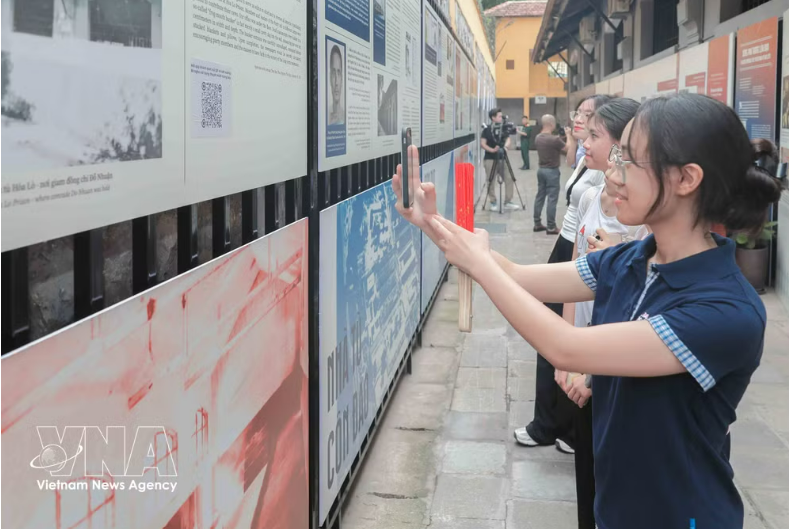
Visitors scan QR codes to experience the digitalized exhibits. |
It uses 3D scanning, online exhibitions and digital projections to widen access to historical evidence. Visitors can explore content by interest and examine details that are hard to see in conventional displays. The online space also reaches those who can’t visit in person.
Christopher Bryson from Infinite Muse pointed to the potential of pairing heritage data with immersive technology and artificial intelligence. 3D models and interactive spaces let the public view artifacts and sites from multiple angles, while AI can help with archival searches, content preparation and answering questions based on information curated and verified by specialists.
Nguyen Minh Nhut, Deputy Director of the Municipal Department of Culture and Sports, said heritage digitization is a new preservation approach that demands strict data and technology standards. Data must come from a lawful source, be created properly from the outset, be complete and consistent, and be shareable and reusable.
Source: VNA