Viet Nam’s contribution to global development agenda
According to Bui Hoai Son, Viet Nam’s initiative stems from its own development experience. Through war, reconstruction, Doi Moi (Renewal), and international integration, the country has learned that economic growth, while essential, is not the ultimate goal. Without adequate attention to cultural values, material prosperity can coexist with fragmented collective memory, unequal opportunities, declining trust, and environmental degradation. Patriotism, community spirit, compassion, adaptability, and creativity have helped sustain Viet Nam through its most difficult periods.
The initiative also reflects President Ho Chi Minh’s thought on culture’s guiding role. It signals a shift from preserving culture as a legacy of the past to promoting it as a force for shaping the future. Culture should not be treated as a sector that receives investment only after economic development but as an integral part of the development process.
    |
 |
|
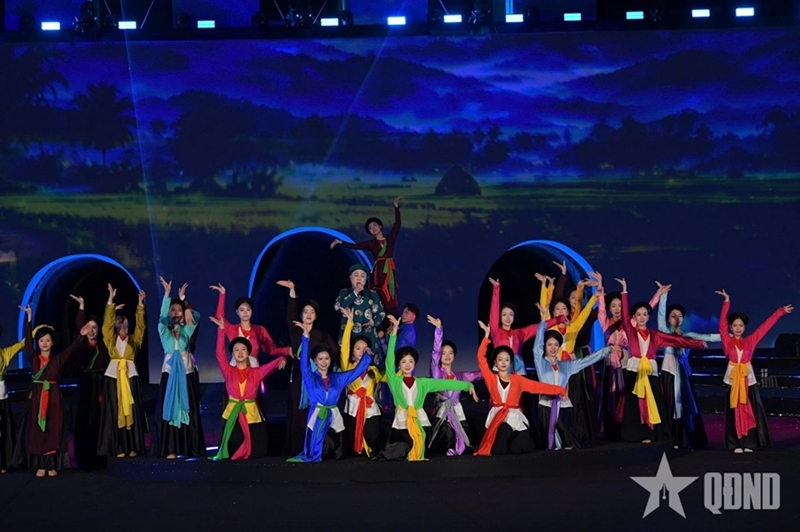
Artistic performances at the opening ceremony of the World Culture Festival in Hanoi, October 2026 |
Bui Hoai Son noted that the initiative addresses a gap in the global development agenda. Although the United Nations’ Agenda for Sustainable Development 2030, adopted in 2015, established numerous Sustainable Development Goals, culture was not given a standalone goal commensurate with its cross-cutting role.
Amidst conflict, climate change, population displacement, inequality, and digital transformation, culture can foster dialogue, strengthen communities, protect diversity, create livelihoods, and enhance social resilience. While countries have different circumstances, they share the need to preserve their identities while pursuing development that puts people first.
Nearly four decades after the World Decade for Cultural Development (1988–1997), the new international decade marks a shift in priorities. Whereas the earlier challenge was to incorporate culture into the concept of development, the current task is to embed it in institutions, resource allocation, evaluation indicators, and concrete policy decisions. This shift gives Viet Nam’s initiative its contemporary relevance and potential to unite countries around a common agenda.
From Resolution No.80-NQ/TW to decade of action
The initiative conveys a clear message that sustainable development must have cultural depth and put people at its center. The 2027–2036 decade provides a framework for integrating culture into development policies, protecting heritage and cultural diversity, promoting education and creativity, developing cultural industries, expanding cooperation, mobilizing resources, building capacity, and sharing experience. The United Nations Educational, Scientific and Cultural Organization (UNESCO) has been designated as the coordinating body for developing an action plan with countries and partners.
Bui Hoai Son emphasized that this vision closely aligns with Viet Nam’s development policy, particularly Politburo Resolution No.80-NQ/TW, dated January 7, 2026, on the development of Vietnamese culture. The resolution identifies cultural and human development as the foundation, an important endogenous resource, a major driving force, a pillar, and a regulating mechanism for rapid and sustainable development. This approach places culture at the heart of development, enabling it to shape the quality of growth, guide behavior, and enrich the meaning of progress.
|
|
 |
|
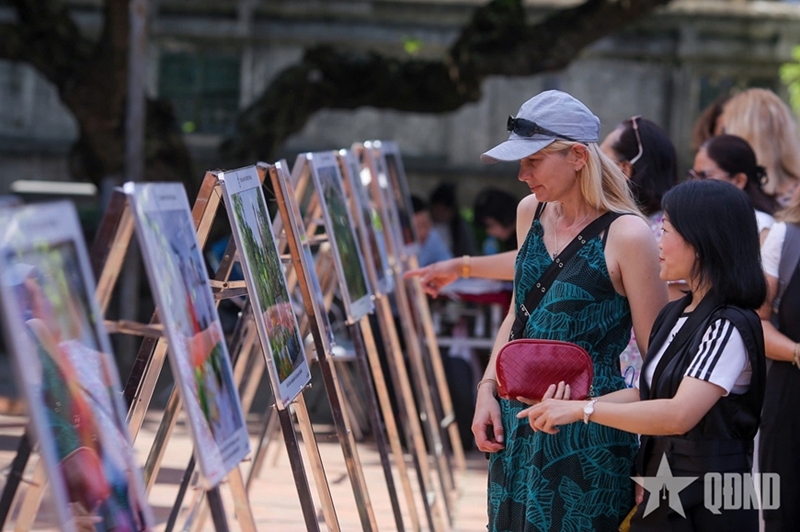
Visitors at the “Hanoi in My Eyes” photo exhibition at the Van Mieu – Quoc Tu Giam in Hanoi, October 2026 |
Resolution No.80-NQ/TW also affirms that investment in culture is investment in sustainable development and the nation’s future, with the people serving as both creators and beneficiaries of culture. These principles align with the International Decade’s emphasis on putting people first, ensuring access to cultural life, respecting diversity, and enabling culture to contribute to economic, social, and environmental objectives. Internationally, the initiative reflects Viet Nam’s commitment to pro-active integration and responsible contribution to addressing global challenges.
According to Bui Hoai Son, cultural policy should be evaluated not only by its ability to create jobs, foster creative enterprises, and expand markets for high-value-added products and services, but also by access to culture, equity among regions, the preservation of community languages, the quality of the cultural environment, and human development. This is the humanistic dimension that Viet Nam can contribute to international discussions on sustainable development.
Turning initiative into model for implementation
The Deputy Head of the Commission for Information and Education argued that securing international approval is only the first step; translating the initiative into practice will determine its lasting value. To become a model for implementing the International Decade, he said that Viet Nam should take concrete, sustained, and measurable action at home. The 2027-2036 period should be considered an opportunity to link the implementation of Resolution 80 with a 10-year national action program featuring clear responsibilities, timelines, resources, and evaluation mechanisms.
A key priority is integrating culture into development governance. Urban planning, education policies, tourism strategies, rural development, and digital transformation should all consider their effects on cultural identity, collective memory, creative spaces, and public access to cultural life. These considerations should be incorporated into policy evaluation rather than merely mentioned in explanatory documents. Viet Nam should also develop indicators to assess culture’s contribution to sustainable development, covering both economic outcomes and less tangible social values.
Pilot projects could demonstrate how heritage preservation can support community livelihoods, how creative cities can combine public spaces with technology and the arts, and how heritage and arts education can benefit children. Digital cultural initiatives could also help people in mountainous and remote areas access cultural resources. Each model should establish tangible benefits for local people, ensure genuine community ownership, and demonstrate its ability to continue and expand beyond the project period.
The initiative also requires stronger participation from businesses, artists, researchers, social organizations, and young people. The State should create institutions, but it cannot and should not substitute for society’s own creative capacity. Public-private partnerships, cultural industries, intellectual property protection, support for creative enterprises, and greater opportunities for disadvantaged groups should all be encouraged.
|
|
 |
|
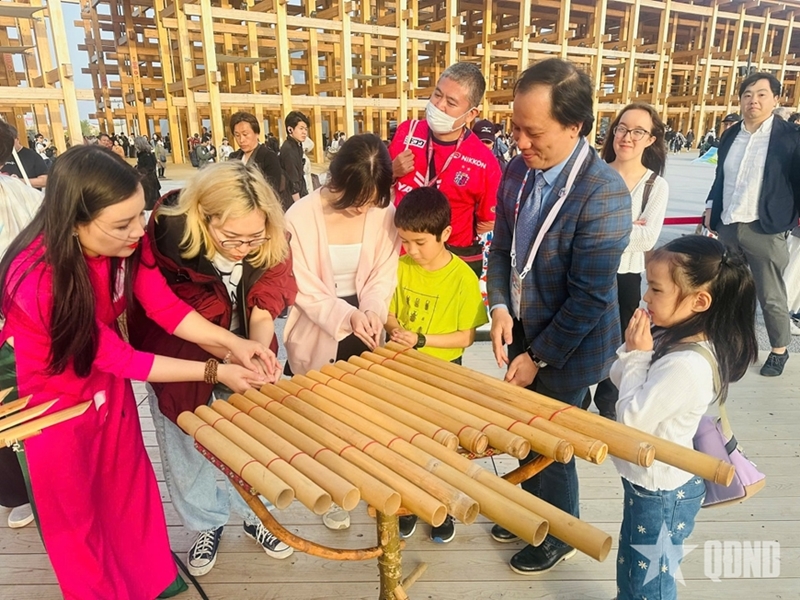
Visitors experience the K'long Pút instrument of the Central Highlands ethnic communities at the World Expo in Osaka, Japan, in 2025. |
Bui Hoai Son cautioned that if the decade is remembered only for conferences and slogans, it will miss its greatest opportunity to unlock the creative potential of millions of people.
Viet Nam has been widely recognized for its achievements in implementing the Millennium Development Goals, particularly poverty eradication. The valuable lesson is not to replicate a particular model but to combine political commitment, consistent policies, society-wide mobilization, and a focus on improving people’s lives. The same applies to culture. To inspire the world, Viet Nam must first deliver changes that its own people can experience in schools, rural communities, cities, workplaces, and digital spaces.
Ultimately, Bui Hoai Son stressed that the initiative’s success should not be measured in 2036 simply by the number of conferences held or policy documents issued. More meaningful results would include greater cultural access for younger generations, more sustainable heritage preservation, better livelihoods for creative professionals, a stronger voice for disadvantaged communities, and development decisions that increasingly respect human dignity, cultural identity, and well-being.
Translated by Tran Hoai