October 12, 2026 | 23:31 (GMT+7)
Supporting livelihoods in Thanh An
PANO - Thanh An island commune holds an important position in maritime defense and security, and, as a maritime outpost, it contributes to safeguarding the gateway to Ho Chi Minh City’s major seaport system.
Given the harsh climate and the difficulties faced by local residents, the Party Committee and chain-of-command of the Ho Chi Minh City Military Command have always paid due attention to social welfare and livelihood support, thereby strengthening military-civilian ties.
Recently, the Ho Chi Minh City Military Command coordinated with relevant agencies and localities to organize a mass mobilization program in Thanh An island commune. The program presented 50 gifts to policy families and provided support for cataract treatment for 60 people and myopia surgery for 20 others, with a total cost of more than VND 900 million. Since early 2026, the command has coordinated the implementation of various social welfare activities and construction of practical facilities for local residents, with a total value of more than VND 3.7 billion, helping them overcome difficulties and stabilize their lives.
    |
 |
|
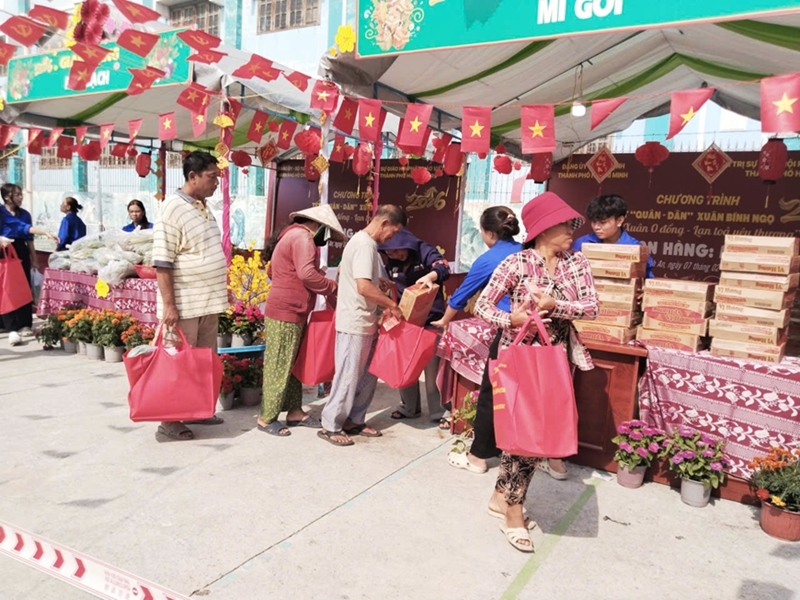
A “Zero-VND Stall” jointly organized by the Ho Chi Minh City Military Command serves local residents in Thanh An island commune. |
As most Thanh An residents rely on the sea for their livelihoods, military units stationed on the island have maintained close ties with local people and supported fishermen in production and offshore fishing. The companionship of the command and municipal agencies has helped improve living standards, raise residents’ awareness of law compliance, and maintain security and social order, encouraging local people to join troops in safeguarding the Fatherland’s sea and islands.
Livelihood support is increasingly shifting from individual assistance toward sustainable development models. Notably, the sea-based livelihood development model targets disadvantaged households and those in need of job transitions. Support measures include providing capital and production equipment, as well as guiding local people in aquaculture, preservation, and product consumption. The establishment of cooperative production groups helps reduce costs, increase product value, improve the capability to respond to risks, and create stable jobs for local people.
Meanwhile, military units maintain mobile healthcare programs, providing free medical examinations and medicines and connecting local medical facilities with those on the mainland to help residents access specialized medical services.
Translated by Minh Anh