The project is being implemented by the Institute of Human, Family and Gender Studies under the Vietnam Academy of Social Sciences, with the discussion taking place during a hybrid seminar held in Hanoi on June 26.
    |
 |
|
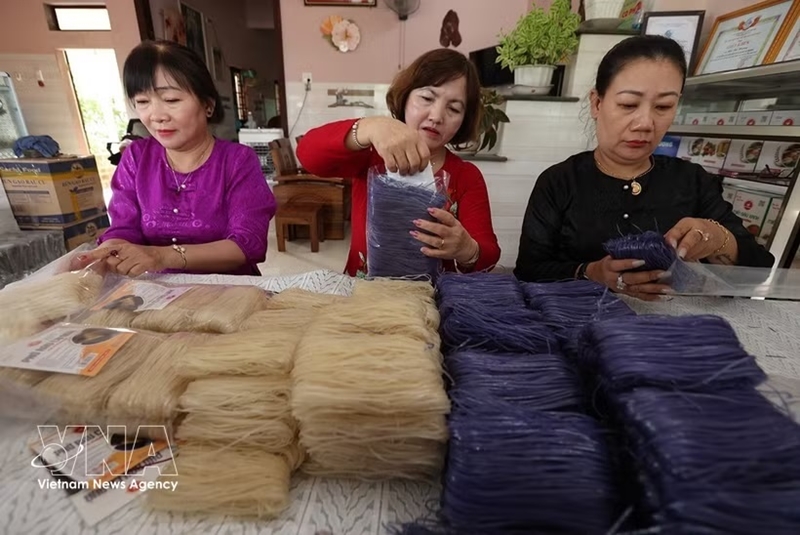
Facts have shown that older people possess extensive production knowledge accumulated over many years and play an important role in sustaining community livelihoods and protecting local ecosystems. (Photo for illustration) |
Opening the seminar, Dr. Tran Thi Hong, Deputy Director of the institute, said the region is facing multiple challenges, including population ageing, climate change, biodiversity loss and shifts in agricultural systems and rural livelihoods.
According to her, older people in rural communities are often viewed as the vulnerable in the face of climate change. However, facts have shown that they possess extensive production knowledge accumulated over many years and play an important role in sustaining community livelihoods and protecting local ecosystems.
Hong said the project adopts a human rights-based approach, recognizing older people not merely as beneficiaries of support but as active stakeholders with the right to participate in policymaking, environmental governance, climate adaptation and sustainable development.
Dr. Phan Thanh Thanh, the project leader, said the research combines a human rights-based approach with active ageing and socio-ecological resilience frameworks. Under this approach, older people are regarded as holders of knowledge, experience and capacity to contribute to biodiversity restoration, water resource management, preservation of indigenous crop varieties, climate-adaptive farming and the development of sustainable agri-food systems.
The project will focus on clarifying the roles, levels of participation and barriers affecting their continued contributions to household livelihoods, agricultural production, community governance and ecosystem protection. Based on the findings, the research team will propose recommendations to strengthen the elderly’s participation in climate adaptation policies and programs across the Lower Mekong region.
During the seminar, Vietnamese, Thai and Cambodian researchers exchanged perspectives on national research contexts and discussed issues relating to the impacts of climate change on old people’s livelihoods and the role of indigenous knowledge in adapting to environmental change.
The delegates further agreed on the roadmap for upcoming research activities, coordination mechanisms among partners, and approaches to data collection and sharing to ensure both the progress and quality of the project.
Source: VNA