    |
 |
|
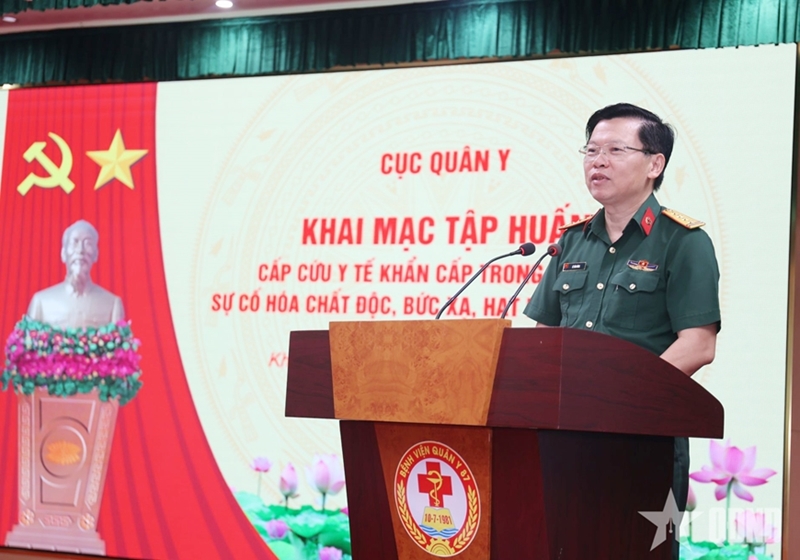
Sr. Col. Le Van Dong speaks at the opening ceremony. |
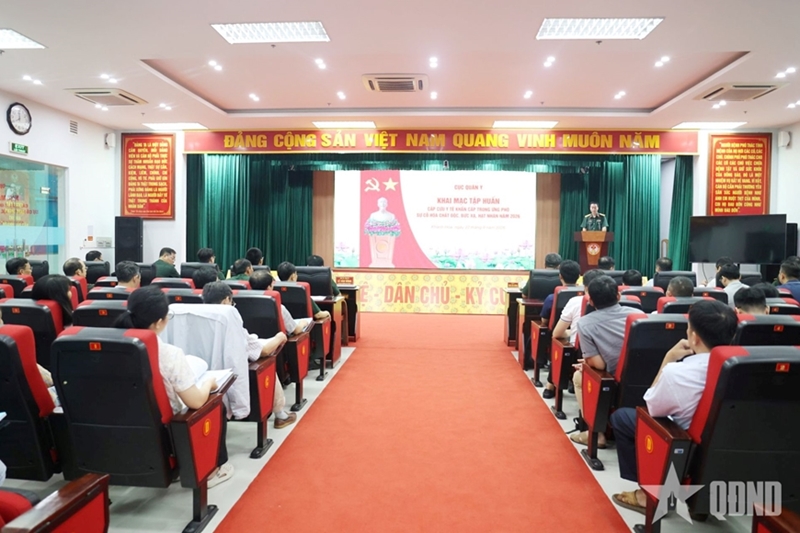
The opening ceremony was attended by Senior Colonel Le Van Dong, Deputy Director of the Military Medicine Department, and delegates from the Khanh Hoa provincial Military Command, local civil health and science authorities, and relevant military medical institutions.
Running until September 24, the three-day course brings together 65 trainees, including military medical staff, local health workers, and officers in charge of radiation safety in Khanh Hoa province. During the course, trainees will study and receive updates on civil defense law, as well as the legal framework and organizational system for responding to CRN incidents in Viet Nam. Instructors for the course come from the Department of Search and Rescue under the General Staff of the Viet Nam People’s Army, Military Hospital 103 under the Military Medical Academy, and the Military Institute of Radiobiology and Oncology.
|
|
 |
|
An overview of the opening ceremony |
Addressing the event, Senior Colonel Le Van Dong, Head of the Organizing Panel, emphasized that toxic chemical, radiological, and nuclear incidents require medical forces to be highly proficient in emergency care, as well as proficient in force organization and command coordination. He stressed the need for strict compliance with safety regulations, warning that a single operational error could endanger not only the victims but also the rescue forces themselves.
In addition, he required the organizing panel to run the course methodically and ensure safety for personnel and equipment. He urged the instructors to thoroughly analyze practical scenarios to impart skills closely aligned with real-world missions. Meanwhile, trainees must strictly observe military discipline, master standard operating procedures, and avoid complacency, taking shortcuts, or acting carelessly during practical exercises.
|
|
 |
|
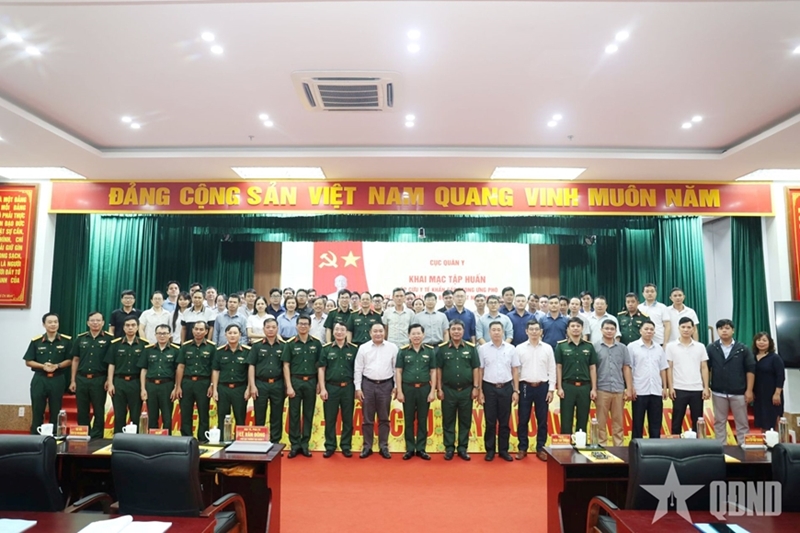
Delegates and trainees pose for a group photo. |
Upon completion of the course, qualified trainees will be granted certificates by the department. After returning to their units, they will serve as core personnel advising Party committees and chains-of-command at all levels in developing plans and maintaining high readiness to respond effectively to local CRN incidents.
Translated by Duc Bien