September 10, 2026 | 23:31 (GMT+7)
Department of Military Medicine organizes training program on disaster medical response
PANO - On September 9, the Department of Military Medicine under the General Department of Logistics and Technical Services (GDLT), in coordination with the Military Medical University, organized a training program on medical response to disasters in 2026.
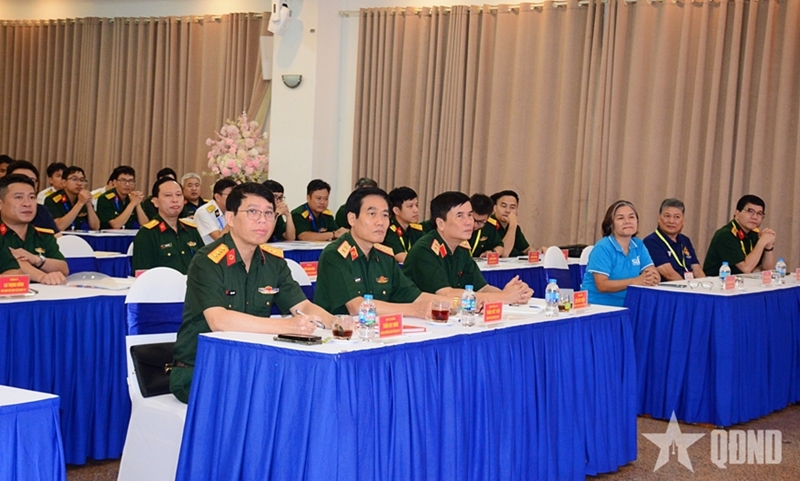
GDLT Political Commissar Lieutenant General Do Van Thien and Director of the Military Medical University Lieutenant General Tran Viet Tien attended the opening ceremony.
    |
 |
|
Leaders of the GDLT, the Military Medical University, and delegates attend the opening ceremony. |
The program focused on equipping participants with knowledge and skills across the complete disaster medical response cycle, prioritizing force organization, command and control, and response coordination.
|
|
 |
|
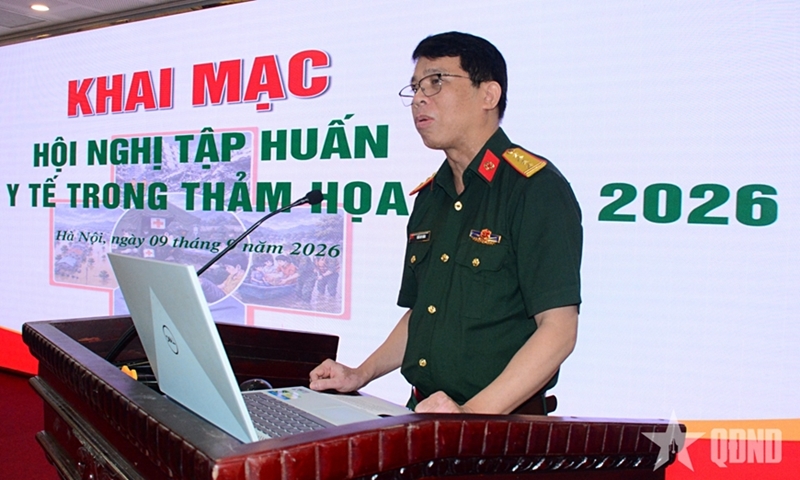
Senior Colonel Tran Duy Hung delivers the opening speech. |
Training contents included the organization of mobile military medical sections and coordination work; planning, command and control in emergency situations and disasters; rapid assessment of medical needs; casualty triage; pre-hospital medical responses; and hands-on casualty triage exercises using forms and procedures for disaster emergency medical teams, as well as treatment of several common disaster-related emergencies.
|
|
 |
|
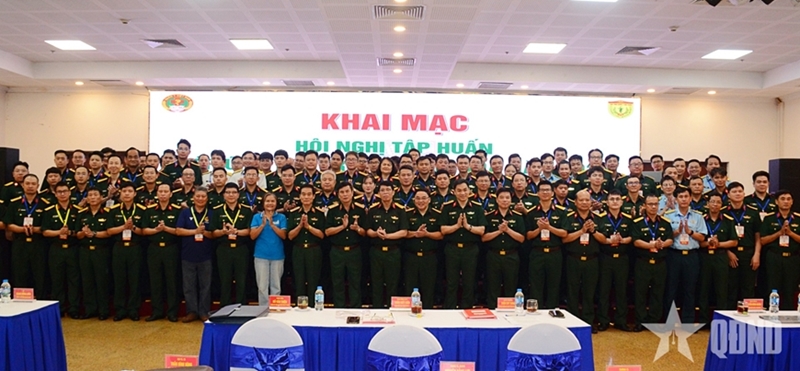
Delegates pose for a group photo. |
Addressing the event, Deputy Director of the Department of Military Medicine Sr. Col. Tran Duy Hung emphasized that in recent years, climate change, extreme weather, natural disasters, pandemics, accidents, and non-traditional security threats have become increasingly complex and unpredictable. He noted that these challenges require all nations to possess effective prevention and response tools to minimize their impact on human health, with the military consistently serving as the core and frontline force in all situations.
|
|
 |
|
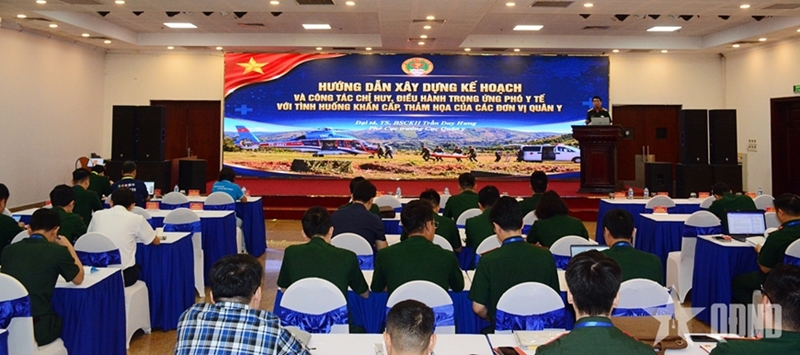
Trainees study the topic on guidelines for plan development, command, and management in medical responses to emergency situations and disasters. |
Therefore, military medical officers and personnel should be equipped with firm political stance, command and coordination capabilities, and the ability to handle emergencies, including receiving, triaging, providing first aid, transporting and delivering initial and specialized treatment to casualties.
Translated by Hai Son