Through mechanisms like information exchange, joint patrols, and hotlines, both sides have promptly detected and prevented numerous law violations. These efforts maintain border stability while building a border of peace, friendship, cooperation, and development.
Strengthening coordination in border management and protection
The Vietnam-China border, spanning complex land and sea terrains, facilitates economic exchange but also presents transnational crime risks. To counter this, the Vietnam Border Guard has actively enhanced cooperation with Chinese counterparts to protect the border and maintain order.
Guided by bilateral legal documents, coordination mechanisms are maintained from the Vietnam Border Guard Command to local units. Regular talks and delegation exchanges allow both sides to assess situations, share expertise, and align on strengthening coordination.
At the grassroots level, Vietnamese border stations meet regularly with Chinese partners to manage residents, combat crime, and respond to incidents. These exchanges ensure close communication and prompt action regarding emerging issues.
Joint patrols are a primary cooperative effort. In 2025, the Vietnam Border Guard and Chinese forces conducted 35 joint patrols involving 2,610 personnel. These operations involve inspecting markers and identifying violations for immediate local resolution, bolstering sovereignty and crime prevention.
Hotlines also remain effective, enabling rapid information exchange and timely handling of security incidents. This mechanism ensures many cases are resolved early, preventing escalation.
Beyond land, maritime coordination continues in adjacent waters. Units of the Vietnam Border Guard and Chinese authorities regularly exchange intelligence on maritime security, coordinating responses to vessel violations, smuggling, and trade fraud.
Coordinated efforts against transnational crime
In addition to border management and protection, the Vietnamese border guards and China’s border management and protection forces work closely together to combat trans-national crimes, such as smuggling, human trafficking, illegal entry and exit, and the illegal trade and transportation of narcotics.
    |
 |
|
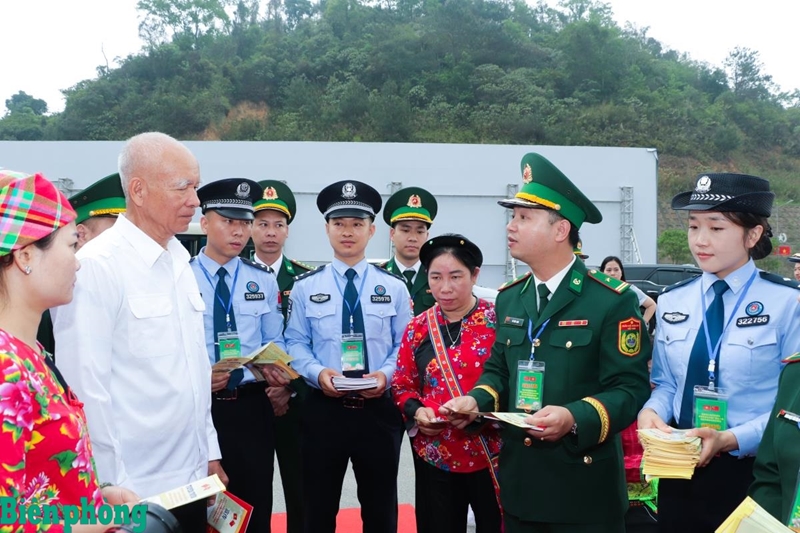
Vietnamese and Chinese young officers distribute leaflets with legal information to residents in the area of Huu Nghi International Border Gate. |
Through regular information exchange, both sides have detected numerous cross-border criminal networks. Upon identifying violations, authorities promptly notify each other and coordinate verification and enforcement to apprehend offenders under national laws and bilateral agreements.
This coordination ensures border violations are handled swiftly, maintaining security to support local socio-economic development. Alongside operations, twinning activities between units strengthen crime control. Currently, Vietnamese border guards and China’s border management forces maintain 84 pairs of twinned border stations.
These partnerships facilitate regular information exchange and coordinated patrols to address incidents promptly. Such exchanges provide a practical channel for building trust and mutual understanding between the two countries' border protection forces.
|
|
 |
|
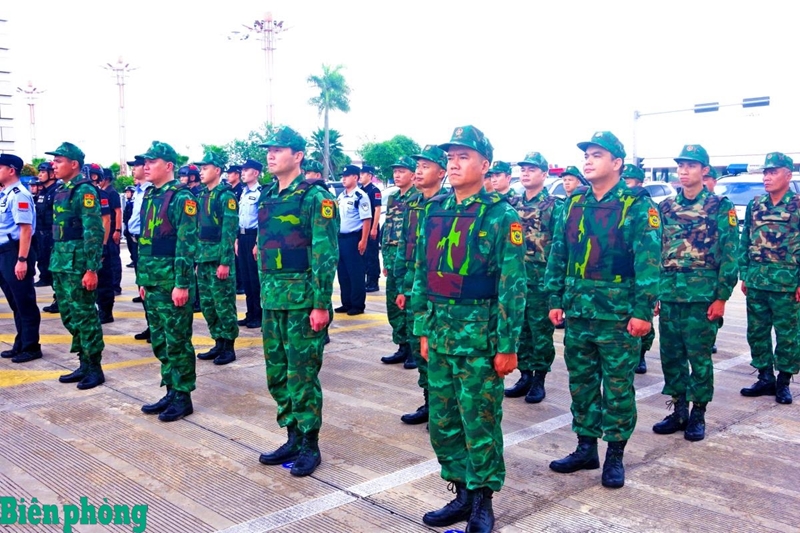
Vietnamese and Chinese young officers coordinate in organizing a joint emergency response drill. |
Another important initiative is the twinning model for residential communities located on both sides of the border. Currently, there are 72 pairs of twinned residential clusters along the Vietnam - China border. These partnerships help promote people-to-people exchanges while raising awareness among local residents of legal regulations and their responsibility in protecting borderlines and border markers.
From practical experience at the grassroots level, Lieutenant Colonel Vu Minh Chien, Head of Xuan Truong Border Post under the Cao Bang Provincial Border Guard, emphasized the importance of maintaining close coordination between border forces.
According to him, Xuan Truong Border Post regularly conducts meetings, exchanges information, and organizes joint patrols with units in Guangxi, China. Through this coordination mechanism, the two sides promptly notify each other of developments and exchange information related to border management and protection.
This cooperation has helped detect and handle many cases related to illegal entry and exit, human trafficking, smuggling, and other law violations in border areas. Maintaining regular talks, joint patrols, and information exchanges has not only contributed to maintaining security and order in the border region but also strengthened mutual understanding and trust between the border management and protection forces of the two countries.
Translated by Tran Hoai