African mornings turn scorching early. In Bangui, the capital of the Central African Republic, the red dirt road to the U.N. Equipment Management Section is often shrouded in dust. Inside a neat office, Lieutenant Colonel Nguyen Huy Tuan arrives before hours to check electronic files on his tablet. As an equipment staff officer at MINUSCA, Tuan previously served as a vessel assistant for the Logistics and Technical Services Division under Brigade 169, Naval Region 1 Command.
    |
 |
|
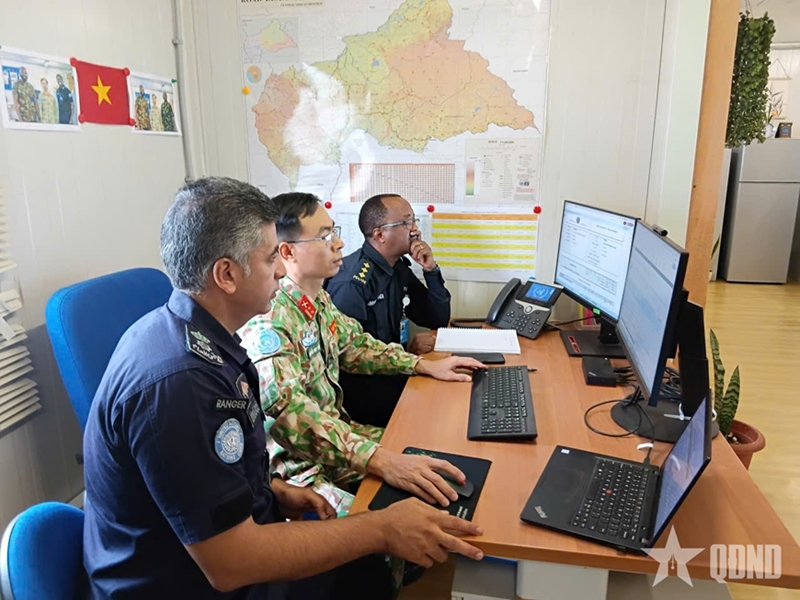
Lt. Col. Nguyen Huy Tuan (center) guides his colleagues in preparing inspection reports. |
“On my first day, it felt like entering a different world,” he recalled. A former naval technical officer, he was seasoned by long sea voyages and the rigorous discipline of maintaining ship combat readiness. Yet, the Central African Republic presented an entirely new challenge.
His lasting first impression was not the 40-degree heat or the barbed-wire fences, but the warm smiles of international colleagues. Tuan vividly remembers his department head, a veteran Nepalese colonel, shaking his hand firmly. “The Equipment Management Section comprises many cultures, but here, we are one family,” the colonel said, before offering a final piece of advice, “Work hard, ask questions, and ensure you leave this mission with no regrets.”
|
|
 |
|
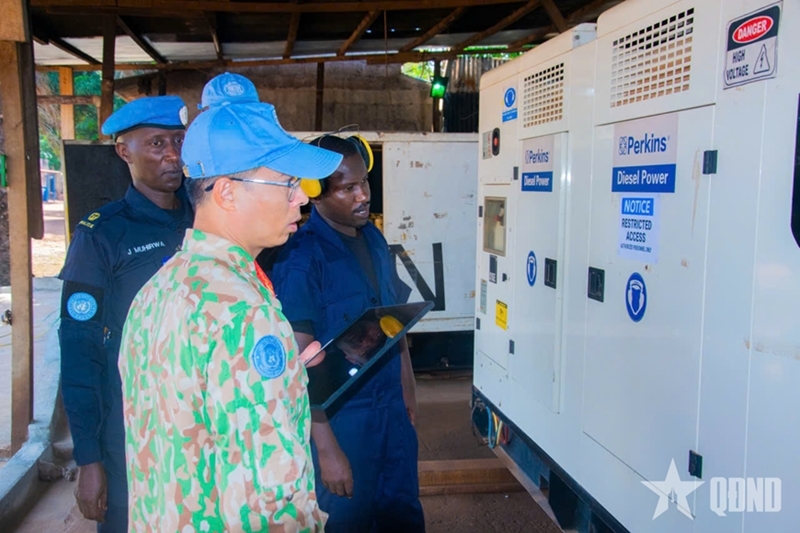
Officer Tuan uses a tablet to inspect the generator. |
Guided by a Philippine team leader, Tuan quickly gained confidence. While she valued his technical expertise, she emphasized that MINUSCA required adaptability and respect for diversity. Tuan joined a diverse Equipment Management Section comprising 26 members from 21 countries, including many civilian experts.
As part of Bangui Inspection Team No.1, Tuan inspects equipment from troop-contributing units. Since these reports determine millions of dollars in U.N. reimbursements, his work demands absolute objectivity and transparency. "There is no room for subjectivity," Tuan noted.
With over 15,000 personnel from 22 countries deployed across 114 locations, the workload is immense. Tuan’s team alone manages 12 units at 26 sites. During inspections, which begin daily at 9:30 a.m., members verify items ranging from specialized vehicles to logistics warehouses.
Though initially assigned simple tasks, Tuan’s meticulousness soon allowed him to handle complex inspections independently. Now responsible for units from Bhutan, Portugal, and Nepal, he proactively assists experienced colleagues to master specialized management software.
|
|
 |
|
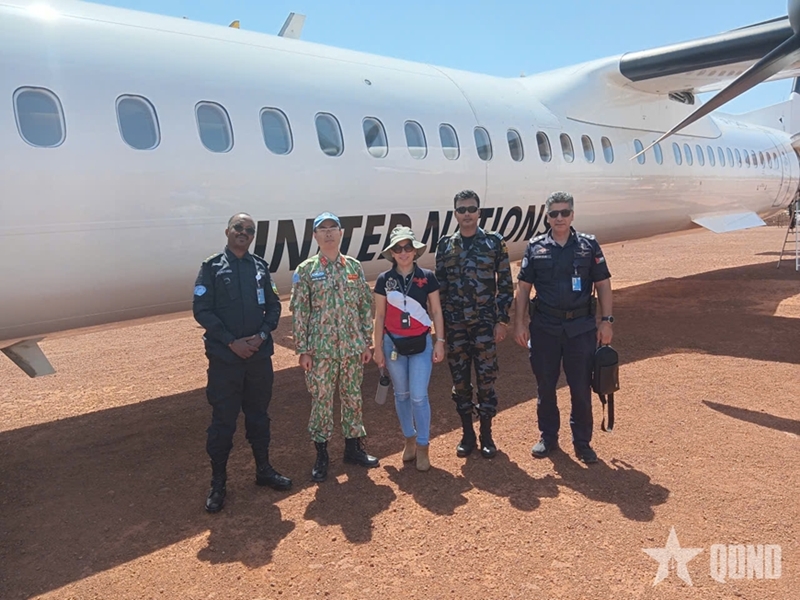
Lt. Col. Nguyen Huy Tuan (second from left) and colleagues from Bangui Inspection Team No.1 fly from Bangui to N’dele province to conduct equipment inspections. |
He often drove alone to remote camps via rough, potholed roads lined with dilapidated houses. He always carried a tablet connected to UCMS, the U.N.’s modern equipment management system, where real-time data and inspection reports were automatically shared. Having mastered this technology, he helped replace traditional paperwork with digital efficiency.
When the team was short-staffed, he managed documentation for ten units while training six international colleagues to use UCMS. Today, many civilian experts in the Equipment Management Section still affectionately call him "the Vietnamese instructor."
In the Central African Republic, Tuan lives modestly amid frequent shortages. He cooks on a gas stove, washes clothes by hand, and collects water drop by drop during prolonged power outages. Beyond the camps, he witnesses extreme poverty at local markets and faces constant threats from armed conflict, malaria, and crime.
|
|
 |
|
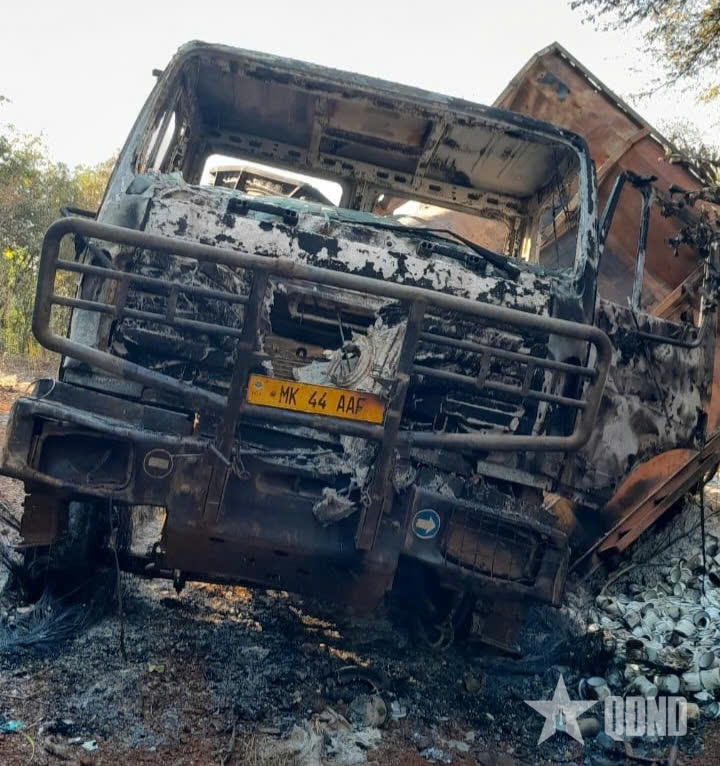
A convoy of the International Committee of the Red Cross is robbed and burned, causing fatalities in the Central African Republic, highlighting the constant security risks faced by international personnel working there. |
In 2025, one of Tuan’s teammates contracted severe malaria, losing 20kg, while another was robbed. Such hardships deepened his respect for the courage required of "blue beret" soldiers.
As his mission at MINUSCA nears its end, colleagues gathered for farewell photos. To international peers, the Vietnam People’s Army officer left a lasting impression of professionalism, humility, and helpfulness.
From the distant land of the Central African Republic, mired in poverty and conflict, Tuan is preparing to return home. He shared that the mission gave him the opportunity to work in a multinational environment and to engage with experts from many continents, along with unforgettable experiences of conflict, war, and poverty. These experiences have made him, like other Vietnamese blue berets, cherish even more and feel proud of contributing in a small way to the U.N. peacekeeping mission.
By My Hanh
Translated by Mai Huong