    |
 |
|
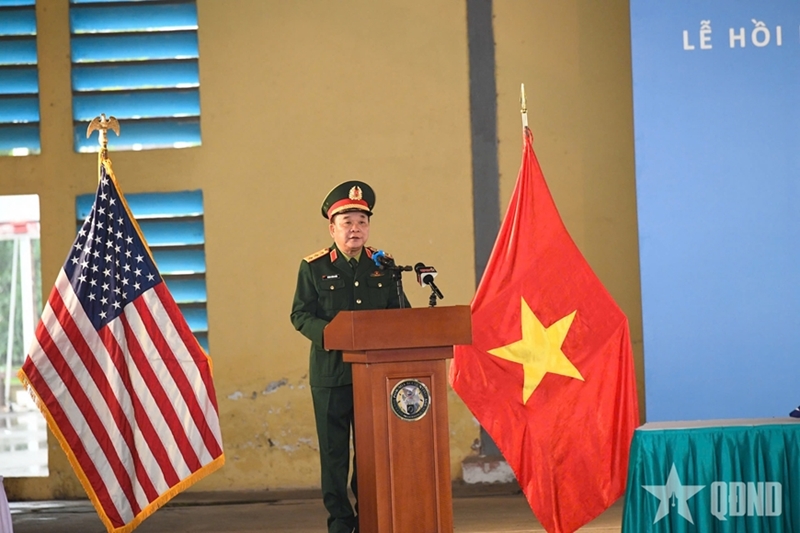
Sr. Lt.Gen. Hoang Xuan Chien speaks at the event. |
The event not only demonstrated Vietnam’s humanitarian spirit, sense of responsibility, and goodwill in addressing the consequences of war, but also contributed to promoting the sustainable development of Vietnam - U.S. relations.
Attending the ceremony on the Vietnamese side were Deputy Defense Minister Senior Lieutenant General Hoang Xuan Chien; Deputy Minister of Foreign Affairs Ambassador Dang Hoang Giang; representatives of the Vietnam Office for Seeking Missing Persons; and leaders of relevant units under the Ministry of National Defense, the Ministry of Foreign Affairs, and the Ministry of Public Security.
|
|
 |
|
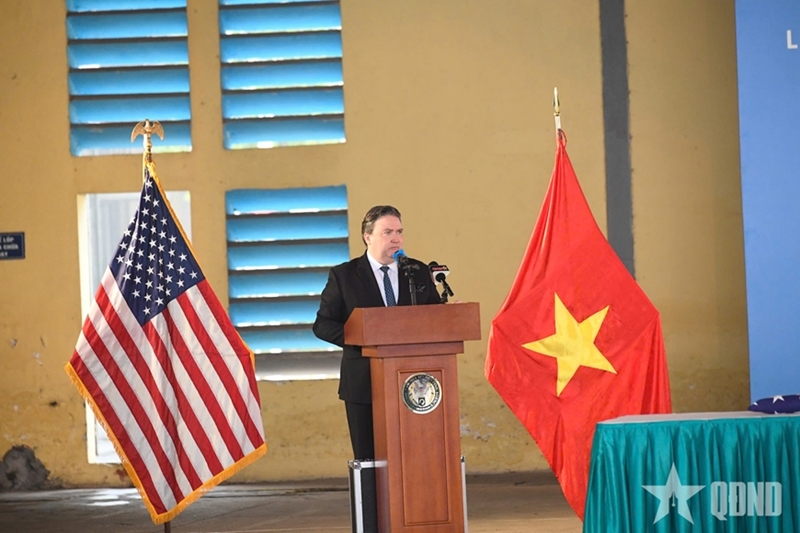
U.S. Ambassador to Vietnam Marc Knapper speaks at the event. |
|
|
 |
|
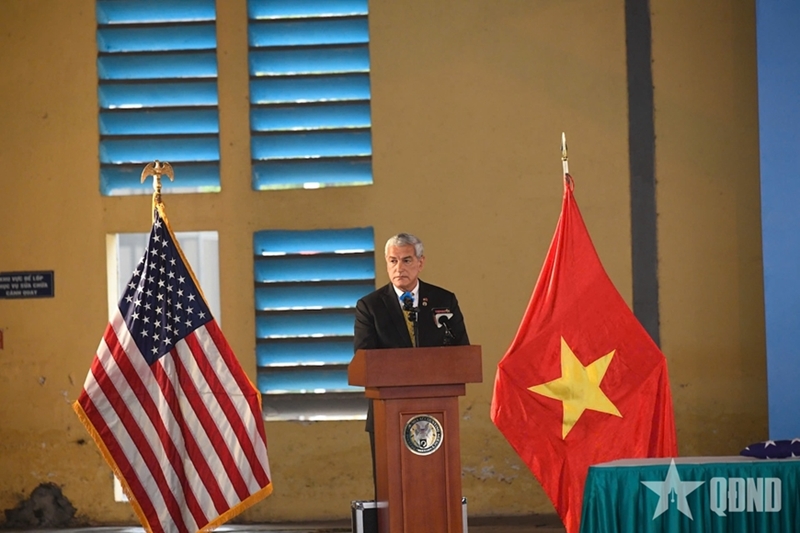
DPAA Director Kelly McKeague |
On the U.S. side were U.S. Ambassador to Vietnam Marc Knapper; Kelly McKeague, Director of the Defense POW/MIA Accounting Agency (DPAA); along with representatives of the U.S. Embassy and the U.S. MIA Office in Hanoi.
The ceremony was one of the significant events marking the close of 2025, a year commemorating the 30th anniversary of the establishment of Vietnam - U.S. diplomatic relations (1995–2025), the 40th anniversary of the first joint activities to search for U.S. MIA servicemen (1985–2025), and the 50th anniversary of the end of the war in Vietnam (1975–2025). It marked a long journey of promoting healing, normalization, and development of Vietnam - U.S. relations.
|
|
 |
|
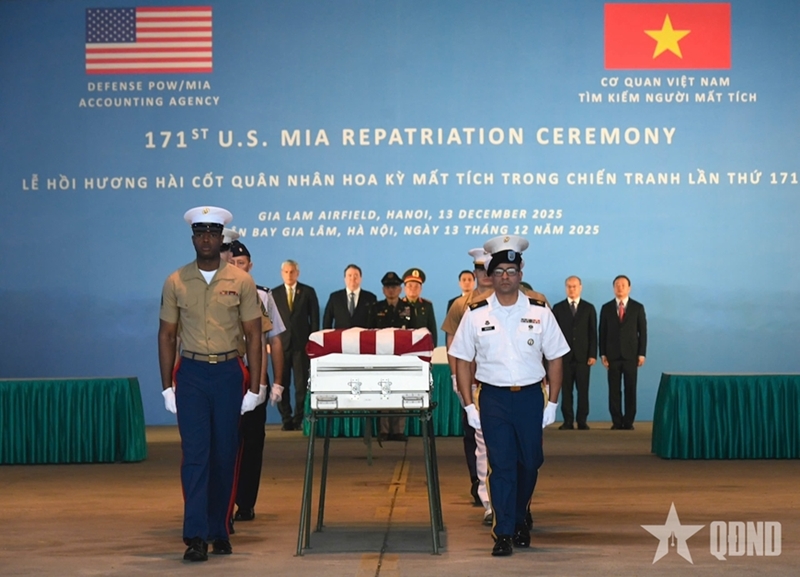
Overview of the 171st repatriation ceremony of remains of U.S. MIA servicemen |
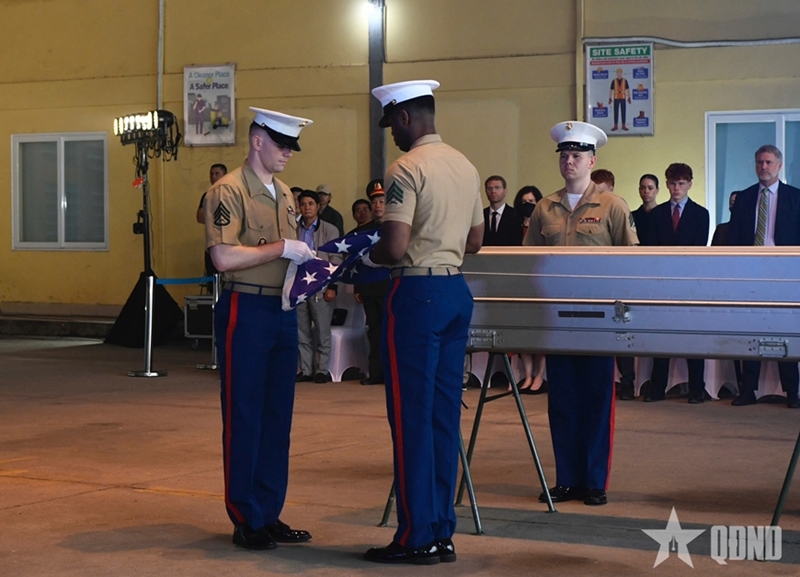
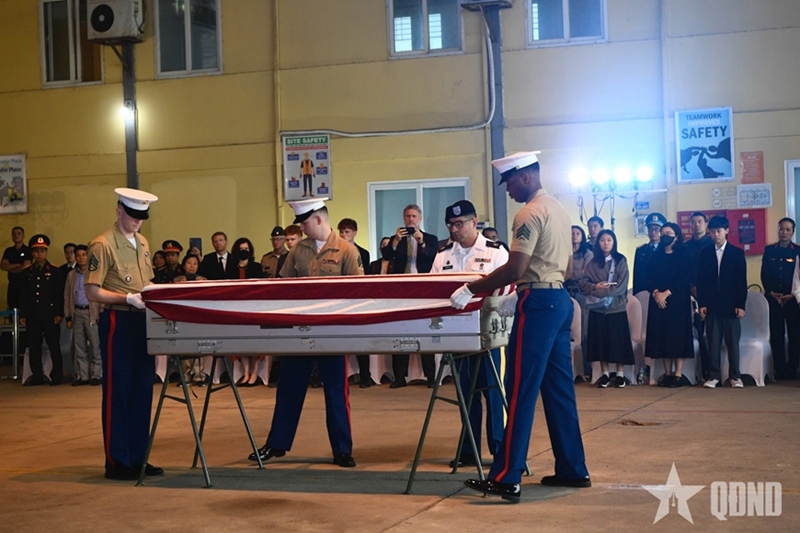
At the ceremony, Vietnam handed over to the U.S. one casket containing remains. This was the result of a recent unilateral search effort conducted by Vietnam in Lao Cai province. Previously, on December 5, the remains sample had been examined by Vietnamese and U.S. forensic experts, who preliminarily concluded that it could be related to a U.S. servicemen member missing in action during wartime in Vietnam. The remains will be transferred to a forensic laboratory in Hawaii for further analysis and verification.
On behalf of the U.S. Government and people, Ambassador Marc Knapper expressed sincere appreciation to the Vietnamese Government for its strong and enduring commitment to this humanitarian effort, affirming that it stands as evidence of the close cooperation between the peoples of the two countries and lays an important foundation for the normalization process and the advancement of bilateral relations.
|
|
 |
|
At the ceremony, Vietnam hands over one casket containing remains to the U.S. |
DPAA Director Kelly McKeague expressed gratitude for the strong sense of responsibility demonstrated by the Vietnam Office for Seeking Missing Persons in carrying out this humanitarian mission. He particularly emphasized that Vietnam is one of only two countries among the 46 countries where DPAA conducts MIA operations that possesses the capacity to carry out unilateral search activities in the most difficult and hazardous areas.
McKeague said that last month he visited Arlington National Cemetery in the U.S. and attended the funeral of a U.S. Navy pilot whose remains were recovered in Vietnam in November last year. The service member’s identity had been confirmed and the remains returned to the family, even though his wife and two children had already passed away. His alive son and daughter decided to bury their father’s remains alongside their mother and the two deceased children. Through this story, he underscored the profound significance of MIA activities, affirming that U.S. families with loved ones missing in war deeply appreciate and value the efforts and support of the Vietnamese Government in this work.
Speaking at the ceremony, Vietnamese Deputy Defense Minister Hoang Xuan Chien shared that, rising above the pain of war, Vietnam has fully cooperated in the search for U.S. MIA servicemen from the very early days, based on humanitarian principles. Quoting Party General Secretary To Lam’s statement, “We cannot choose the past, but we can choose how we view the past, in order to choose the future,” General Chien expressed confidence that, with goodwill and efforts from both sides, they will jointly address the consequences of war while expanding cooperation. This, he said, is the best way to heal wounds on the land, on bodies, and in hearts, and to build a brighter future for Vietnam - U.S. relations.
|
|
 |
|
The remains will be transferred to a forensic laboratory in Hawaii for analysis and identification. |
He affirmed that Vietnam will continue to closely coordinate and create the most favorable conditions for activities to search for U.S. MIA servicemen, as it has done for nearly half a century. At the same time, he called on the U.S. to further increase resources and expand the implementation of projects supporting Vietnam in clearing unexploded ordnance, addressing dioxin contamination, assisting people with disabilities and war victims, and searching for, recovering, and enhancing forensic identification capacity for the remains of Vietnamese soldiers missing or unaccounted for.
Translated by Tran Hoai