Located in Vinh Hai commune, the reserve covers more than 106,646ha, including core, buffer and transition zones. In September 2021, Nui Chua National Park was recognized by UNESCO as a world biosphere reserve.
The area boasts more than 1,500 plant species and 766 animal species, including over 50 species listed in the Red Data Books of the world and Vietnam. Its marine ecosystems include coral reefs, seagrass beds, intertidal zones and mangroves.
    |
 |
|
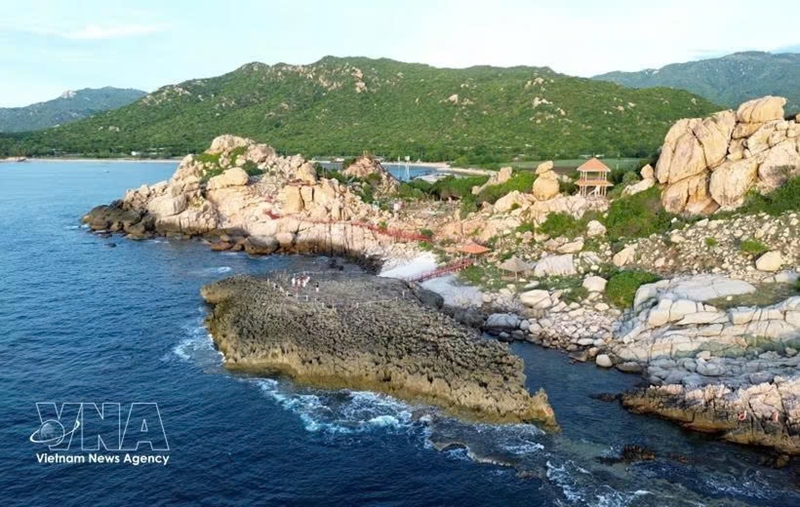
Rai Cave is located in the Nui Chua National Park in Vinh Hai commune, Khanh Hoa province, which is part of the Nui Chua World Biosphere Reserve. |
With hot and sunny weather year-round and low rainfall, the biosphere reserve is considered one of Vietnam’s driest and harshest climatic areas. Its unique landscape combines forests, sea and semi-desert areas, creating distinctive ecosystems and earning it the reputation of a unique “thorny plant steppe” in Vietnam.
The reserve also features more than 40km of coastline, sea turtle nesting grounds and the country’s largest nearshore coral reef, home to 350 species. Its pristine beaches and natural attractions, including Hang Rai, Binh Tien, and Nuoc Ngot, enhance its tourism potential.
Tran Van Tiep, Director of the Nui Chua – Phuoc Binh National Park, said Khanh Hoa province had established a dedicated management board to strengthen conservation while developing the reserve into a leading eco-tourism destination.
According to Tiep, in addition to environmental education and public awareness campaigns, the management board is coordinating with relevant agencies to develop a comprehensive biodiversity database and formulate management plans for endemic, endangered and rare terrestrial species.
The reserve is also participating in assessments under the National Action Plan for Marine Turtle Conservation, he noted.
Other ongoing initiatives include training programs to strengthen conservation capacity, surveys of seagrass ecosystems and the launch of a captive breeding program for the silver-backed chevrotain, the only hoofed mammal species endemic to Vietnam.
It has also proposed a “green wall” model to combat desertification and soil erosion, contributing to the net zero goal in the province’s arid southern areas.
Meanwhile, the management board is expanding botanical gardens, plant nurseries and marine wildlife rescue facilities to conserve endangered genetic resources and restore forest cover. Comprehensive biodiversity surveys are also being carried out to produce updated ecological maps that will support future conservation planning.
The buffer zone is home to Raglay and Cham ethnic communities and ethnic Chinese residents, who maintain distinctive cultural traditions and livelihoods including salt making, farming, animal husbandry and the production of traditional musical instruments.
To create livelihoods for residents, the local authorities are promoting community-based ecotourism, nature conservation tourism and experiential tourism. These activities generate income, raise environmental awareness and help reduce pressure on the reserve’s core zone.
According to Nguyen Thanh Trung, Director of the Tourism and Environmental Education Centre under the Nui Chua – Phuoc Binh National Park Management Board, the park welcomed more than 105,000 visitors in the first six months of 2026.
The reserve is currently undergoing zoning adjustments to ensure consistency with legal regulations and UNESCO’s biosphere reserve model, while better connecting its forest, marine and coastal ecosystems, contributing to enhancing ecological resilience, conserving rare genetic resources while promoting tourism, scientific research and environmental education, and facilitating resource management and climate change adaptation.
The management board said the reserve has still faced difficulties, particularly a lack of resources for investment and technical assistance. It called for continued support from relevant ministries and organizations to ensure effective management and sustainable development in the time to come.
Source: VNA