According to Chairman of the provincial People's Committee Pham Hoang Son, the province will pursue a people-centered smart city model driven by science, technology, innovation and digital transformation to improve public services, urban management and competitiveness.
    |
 |
|
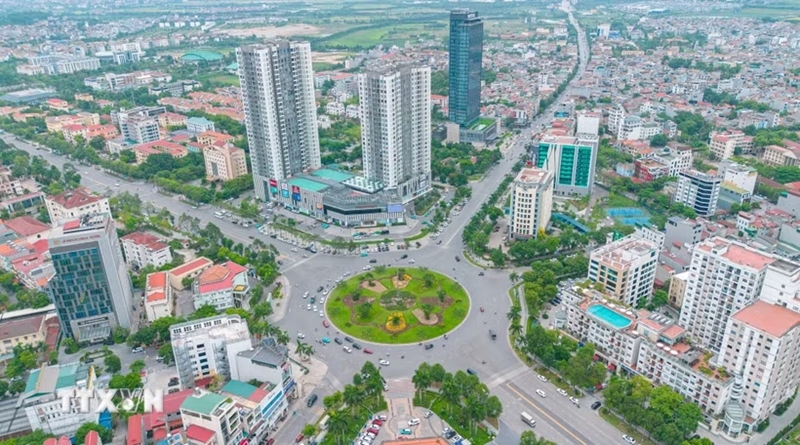
A bird-eye view of Bac Ninh |
By 2030, Bac Ninh plans to establish a data-driven smart governance model, operate an integrated smart city operations center (IOC), and incorporate City Information Modelling (CIM) into urban planning, with the long-term goal of developing a digital twin of the province.
The province will prioritize digital infrastructure and smart services in healthcare, environmental management, water supply and wastewater treatment, waste management, transport and other essential sectors, while ensuring interoperability, open APIs and cybersecurity by design.
To achieve its target, Bac Ninh will establish a provincial smart city coordination council, introduce a regulatory sandbox for innovative technologies, and accelerate investment in digital infrastructure, including 5G, cloud computing, the Internet of Things (IoT) and artificial intelligence (AI).
The province also plans to expand smart applications in transport, energy, public lighting, water management, healthcare, education, agriculture, tourism and smart industrial parks.
Bac Ninh is already among Vietnam's leading localities in smart city development. It has established an integrated smart operations center, deployed smart urban management solutions in key urban areas, and achieved 100% mobile coverage, with 5G services reaching more than 92% of the population. The province has also launched pilot IOC scenarios for real-time governance across sectors including public administration, healthcare, education, transport and socio-economic management.
Source: VNA