Moving from fragmented management to integrated governance of national development space and resources marks the second great transformation Vietnam needs to enter a new era, he said, adding that the targets are developing-country status with modern industry and upper-middle income by 2030, followed by developed, high-income socialist economy by 2045.
Administrative restructuring would be hollow if administrative borders continue to shackle development mindset through fragmented, localized decision-making, the top leader warned.
Fragmented management of national development space means governing territory through compartmentalized logic, sliced by administrative lines or single sectors. The result is overlapping authority, regional disintegration, wasteful use of national resources, weak connectivity, and piecemeal allocation of capital and land that blocks the rise of major growth poles. It also drives up logistics costs, erodes competitiveness, and stalls strategic national infrastructure.
    |
 |
|
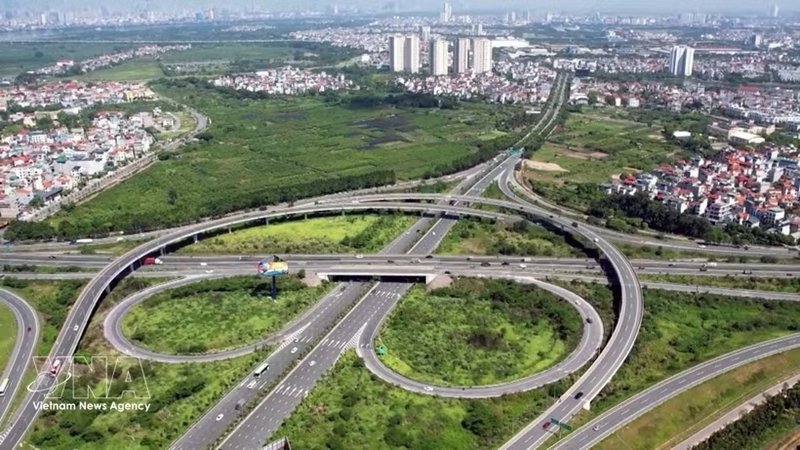
Unified governance identified as new source of national strength (Photo for illustration) |
Vietnam’s approach to managing space and resources has evolved across development stages to match changing realities.
Starting with the 6th National Party Congress, the mindset about land and space anchored tightly to food security, with primacy placed on farm output and self-sufficiency.
From the 8th through 11th congresses, the mindset pivoted sharply toward enabling rapid expansion. Land became a capital source fueling infrastructure, luring investment, expanding urban areas, and carving out industrial parks and export processing zones.
Under the 12th and 13th congresses, planning philosophy leaned decisively toward sustainability, long-term returns, and balancing economic, social, and environmental goals. Land was reclassified as an internal-strength asset, a special national resource to be managed under the socialist-oriented market mechanism.
Spatial planning broadened beyond land allocation into organizing development regions based on connectivity, comparative edges, climate resilience, and multi-sector integration. Still, governance remained largely fragmented, even as the constraints of administrative boundary logic became sharper.
The 14th National Party Congress introduced a new spatial vision that breaks free of administrative borders and the physical surface. It adopts a multi-layered architecture spanning underground space, surface territory, maritime domain, low-altitude airspace, high-altitude airspace, outer space, and digital space. Land is no longer just a tangible physical asset but carries data, multi-dimensional spatial, ecological, and innovation values.
Governance is increasingly displacing the old notion of management in describing how the state administers society - a change in terminology that signals a fundamental rethinking of how political authority is conceived and exercised. Rather than a top-down issuer of administrative commands, the state is recast as a coordinating hub that harmonizes different layers of administration, sectors, and stakeholders across the entire socio-political system.
Integrated governance drives regional connectivity, leverages regional advantages, and aligns national planning with the creation of economic corridors and cross-provincial, cross-regional growth poles. That framework supports more synchronous, sustainable development while ensuring efficient use of land, natural resources, and other strategic assets.
Integrated governance also unlocks new growth poles with the power to generate spillover effects for neighboring localities, replacing the practice of investing solely on administrative jurisdictions.
Governing beyond administrative lines yields concrete gains, including lower logistics costs, larger and more integrated markets, and stronger global competitiveness. Citizens would benefit from more coordinated transport, urban, and industrial development. Faster expansion in key economic zones would create more jobs and higher incomes, while those in rural, remote, and disadvantaged areas would gain better access to public services and economic opportunities through improved infrastructure links.
A pressing imperative is for officials to renew their mindset so they fully grasp the new governance model. They must be able to design regional linkage policies that transcend traditional boundaries, run government bodies effectively, and coordinate shared resources across localities and sectors.
They are expected to demonstrate strategic vision and practical capability, coupled with a readiness to innovate, act, and shoulder responsibility in the national interest, placing country-level development above narrow local concerns.
Source: VNA