Lawmakers later held group discussions on the draft Law on the Prevention of the Proliferation of Weapons of Mass Destruction, the draft law revising nine military and defense laws, and the revised Law on Law Dissemination and Education.
    |
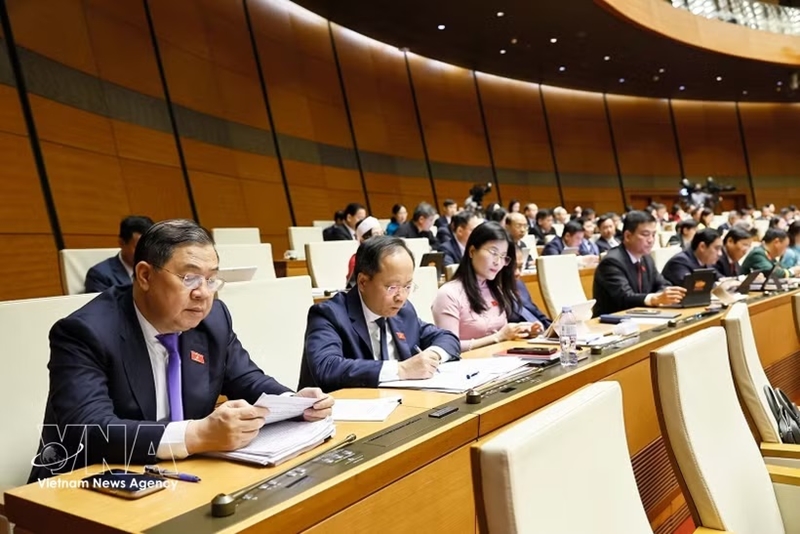 |
|
N.A. deputies at the discussions |
The draft law amending the nine military and defense laws is designed to institutionalize the Party’s policy on restructuring the political system under the two-tier local government model while promoting decentralization, streamlining administrative procedures and ensuring the consistency of the legal framework.
The revisions focus on reorganizing local military structures into a leaner and more efficient system by restructuring commune-level military commands and regional defense commands to align with the new administrative model. They also amend urgent provisions to ensure the uninterrupted operation of State agencies and organizations, strengthen decentralization, address practical implementation issues and maintain the constitutional consistency of the legal system.
In the afternoon, legislators discussed the revised Petroleum Law, amendments to the Law on State Compensation Liability, and a draft N.A. resolution introducing special mechanisms and policies for handling legal violations related to the State economy, the private sector, and the application of science and technology, innovation and digital transformation.
The draft resolution comprises three chapters and 13 articles. It defines acts not involving corruption, actions taken in the public interest, damage and its remediation, socio-economic benefits for localities and the country, resolved complaints and denunciations, violations related to the State and private sectors, and violations involving science and technology, innovation and digital transformation.
The resolution is proposed to remain in effect for three years. Where the suspension of criminal proceedings to allow remediation extends beyond the resolution's expiry, the suspension may continue until the approved period ends, but for no longer than two additional years.
Source: VNA