Recognizing divisive plots of hostile forces
First of all, hostile forces often attempt to influence the political system from the outside. They exploit sensitive issues such as democracy, human rights, ethnicity, religion, territorial sovereignty, anti-corruption, administrative reform, land policies, and social welfare to distort the nature of events. A specific incident, a localized implementation flaw, or a temporary hardship in people’s lives can be manipulated, exaggerated, and attributed to the very nature of the regime. Consequently, they sow the false perception that the Party and the State neglect people’s interests; the Viet Nam Fatherland Front and mass organizations do not represent people; and development policies serve only a select few. This “tactic” aims to erode trust and weaken the close-knit relationship between the Party, the State, and the people.
    |
 |
|
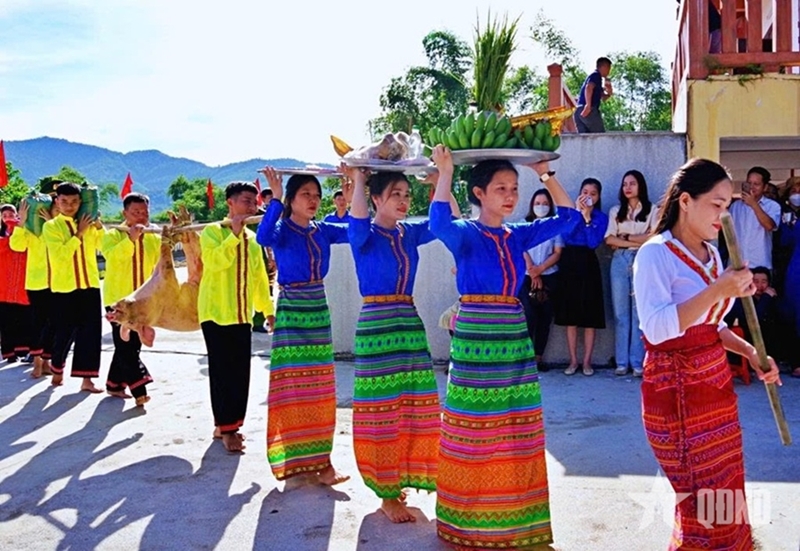
Chut ethnic people in Rao Tre Village (Phuc Trach Commune, Ha Tinh Province) during a traditional festival |
Another dangerous plot is to incite division among classes, strata, ethnicities, religions, and regions. On cyberspace, it is not difficult to find information deliberately pitting the rich against the poor, urban areas against rural ones, lowlands against highlands, domestic citizens against overseas Vietnamese, and religious followers against non-believers. These allegations are often disguised under the cover of “social criticism” or “protecting vulnerable groups,” but in essence, they deepen differences, blur similarities, and shatter the foundation of social consensus. While the consistent viewpoint of the Party and State is to respect and ensure the legitimate and lawful rights and interests of all classes of people, hostile forces deliberately bring an image of opposition and conflict to cause dissatisfaction and skepticism.
Notably, the plot to divide the great national unity bloc is also tied to promoting internal “self-evolution” and “self-transformation.” They seek to influence a part of officials and Party members showing signs of degradation, wavering, and a lack of political resolve; they exploit shortcomings and flaws in personnel work, social management, and the handling of violations to incite psychological doubt and deny the Party’s leadership role.
In the ideological, political, and theoretical fields, hostile forces frequently reject Marxism-Leninism and Ho Chi Minh’s thought; distort the Party’s renewal guideline; deny the country’s development achievements; belittle the Party’s leadership; and demand “political pluralism” and a “multi-party regime” with the intention of altering the political foundation of the regime.
|
|
 |
|
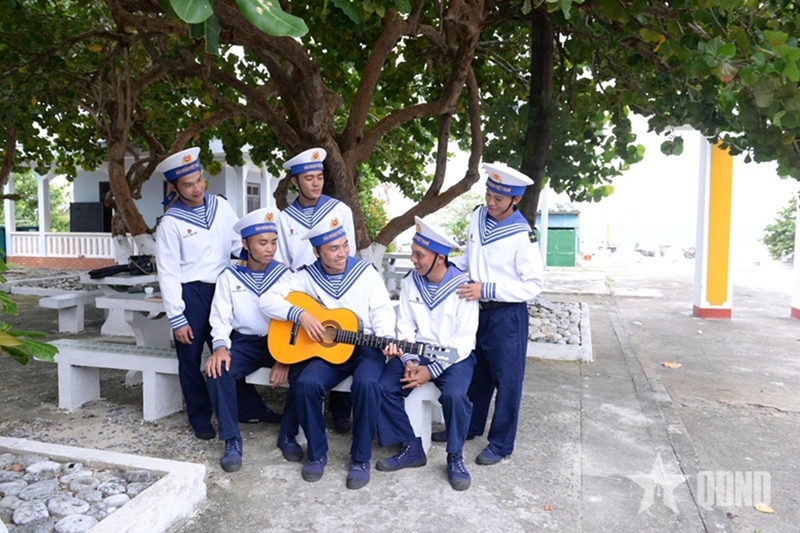
Soldiers on Song Tu Tay Island during a break |
Heightening vigilance against malicious tactics
Hostile forces, reactionary elements, and political opportunists thoroughly utilize the internet, social networks (Zalo, Facebook, TikTok...), and new media forms for subversive propaganda. They praise and cheer each other in a scripted “battle array,” targeting the cognition and psychology of the crowd. They maximize overseas broadcasting, press, and publishing systems, as well as social networks, to spread harmful and toxic information in the form of “blurring the lines between truth and falsehood.” They create video clips and reports with interfaces similar to those of the Viet Nam Television and some mainstream press and broadcasting agencies to broadcast news. Their trick is to use clickbait headlines to strike the curiosity of many people.
The strategic, long-term goal of hostile forces is to undermine the ideological foundation from its roots. They understand that if people’s trust in the Party and the State is weakened, they will have favorable conditions to promote “peaceful evolution,” “self-evolution,” and “self-transformation” internally. While in the past, this plot was carried out through traditional methods such as propaganda and ideological sabotage via books, newspapers, magazines, leaflets, flyers, slogans, reactionary radio stations, or word-of-mouth, currently, hostile forces adjust their methods and tactics of propaganda and ideological sabotage in new directions.
Cyberspace, especially popular social networks with a large user base such as YouTube, Facebook, and TikTok, is thoroughly exploited to post a vast amount of information, documents, and anti-State propaganda content; cyberspace is considered the leading front, gaining an early foothold on the “battlefield,” deliver information to as many subjects as possible, and at a certain level and time, this activity has achieved certain successes. Accordingly, thousands of websites and social networks have been established to promote organizations and spread ideological sabotage propaganda; tens of thousands of articles have been posted, attracting thousands of followers, comments, and shares. The content is often meticulously staged, combining edited images and videos to fabricate and smear the prestige of Party leaders and deny the achievements of the Vietnamese revolution.
|
|
 |
|
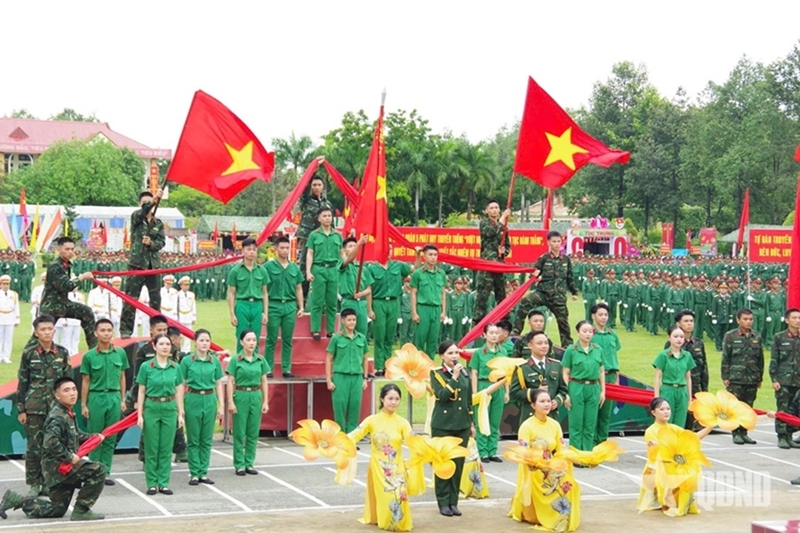
Cultural and artistic activities celebrate major national and military holidays at Division 5, Military Region 7. |
Most alarmingly, artificial intelligence, deepfake technology, and digital editing tools integrated on social networking platforms are also thoroughly used to cut, edit, and create short films, conversations, and fabricated images that distort the truth related to high-ranking leaders of the Party and State with an authenticity of up to 70-80%, causing misconceptions among the masses and attracting attention and interaction on cyberspace. Simultaneously, less popular social networks (X, Reddit, Threads...) with high security and anonymity, as well as private groups, messaging applications, or livestreaming channels, are created to spread information at a fast speed, making it difficult for functional agencies to verify and handle. This is a new form of information warfare, requiring society to have a higher identifying and protecting capacity than before.
Besides, complex and sensitive domestic issues are taken advantage of to inflate and deepen loopholes and weaknesses for counter-revolutionary propaganda. Cyberspace, “hot” and sensitive cases of public interest, and important political events are thoroughly exploited to distort the Party’s guidelines and policies, and the State’s laws, exploiting issues of democracy, human rights, and religious freedom in Viet Nam; the Party is falsely accused of internal conflicts and power struggles. Misinformation about the sentence execution of arrested and handled subjects is disseminated to falsely accuse Viet Nam of “discriminating” against inmates committing national security crimes, or false information about the protection of the sea and islands is spread to incite dissatisfaction and skepticism among the masses. At the same time, patriotism and the curiosity of young people and intellectuals are exploited to provide conflicting information, causing misconceptions among the masses; thereby inciting the masses to protest, riot, and rehearse for “color revolutions” and “street revolutions.”
In addition, free training classes on law and foreign languages are opened to integrate the screening of films and the distribution of documents with anti-Party and anti-State content, such as the VOICE organization having a foreign language and law training program for domestic subjects in the Philippines. Domestic opposition elements are used as “living witnesses” to falsely accuse our Party and State of suppressing dissidents and “stifling freedom and democracy”. The Viet Tan terrorist organization brings domestic subjects to testify before the U.S. Congress on press freedom; competitions, conferences, and seminars are organized, campaigns to sign “open letters,” “petitions,” and “declarations” are mobilized, along with campaigns lobbying foreign politicians to intervene and exert pressure on Viet Nam regarding democracy and human rights. The Boat People SOS Committee (BPSOS) organizes English classes and training courses on “civil society” and “laws” to connect and entice domestic law-violating subjects to go abroad to testify, falsely accusing the Vietnamese State of suppressing religion and violating democracy and human rights.
Furthermore, several media channels are linked and domestic subjects are used as forces to collect and provide news, and give interviews on sensitive and complex issues, loopholes, and shortcomings in the implementation of economic, social, and environmental development guidelines and policies. Concurrently, radio stations, TV channels, and electronic newspapers combined with social media channels are established to conduct ideological sabotage propaganda. Typically, the Viet Tan terrorist organization uses the website and radio station called “Chan troi moi” combined with the Facebook social network with over 2.1 million followers as its main propaganda channel. Moreover, advertising programs based on Facebook’s policies are launched by Viet Tan to promote their information pages to more users, thereby creating and increasingly expanding an “allied network,” preparing forces, inciting protests, and implementing “color revolutions” when opportunities arise.
|
|
 |
|
The Women’s Union and Youth Union chapters of the Department of Policy and Society under the General Department of Political Affairs present gifts to pediatric patients at the Radiotherapy and Radiosurgery Department under the Military Central Hospital 108, on the International Children’s Day, June 1. |
Finally, the pretexts of “suggestions” and “social criticism” are abused to oppose the Party’s guidelines and policies, and the State’s laws. Debate forums are created under the guise of “social criticism” to propagate “civil society,” recommending amendments to Article 4 and Article 25 of the Constitution to eliminate the Party’s leadership, and integrating issues of freedom of speech and freedom of association. Notably, ahead of National Party Congresses, elections of National Assembly deputies, and Central Committee meetings, cyberspace is thoroughly exploited by hostile forces to spread false rumors, fabrications, and distortions about personnel work to cause panic and suspicion, create internal conflicts, and reduce the trust of officials, Party members, and the people in the Party’s organizational and personnel work; even requesting external intervention in internal affairs.
It can be seen that the dangerous nature of plots attacking the ideological foundation on cyberspace is the origin of other subversive activities in the style of “small rain lays great dust,” not only attacking directly but also indirectly, creating a domino effect, causing false information that has been and is seriously impacting national security, reducing the trust of a segment of officials, Party members, influential people on cyberspace, and the masses in the Party’s leadership and the State’s management and administration, causing skepticism and panic in public opinion; impacting and accelerating the process of internal “self-evolution” and “self-transformation,” degrading the political qualities of a segment of officials and Party members, and creating overt trends opposing the Party and State, and defying laws and discipline.
(To be continued)
Translated by Minh Anh