However, certain ill-intentioned individuals and hostile organizations continue to intensify efforts to undermine Viet Nam on the cultural and ideological front through increasingly sophisticated means. They seek to exploit cultural and artistic products as a “weapon” to advance their agenda, aiming to influence public perception and accelerate “self-evolution” and “self-transformation.”
Undermining culture - Key objective of hostile forces
The cultural and ideological sphere has long been a fiercely contested front where hostile forces, reactionary elements, and political opportunists have continuously sought to undermine Viet Nam. Their ultimate objective is to erode public confidence in the Party and the political system, thereby advancing their strategy of “peaceful evolution” and creating political and social instability.
    |
 |
|
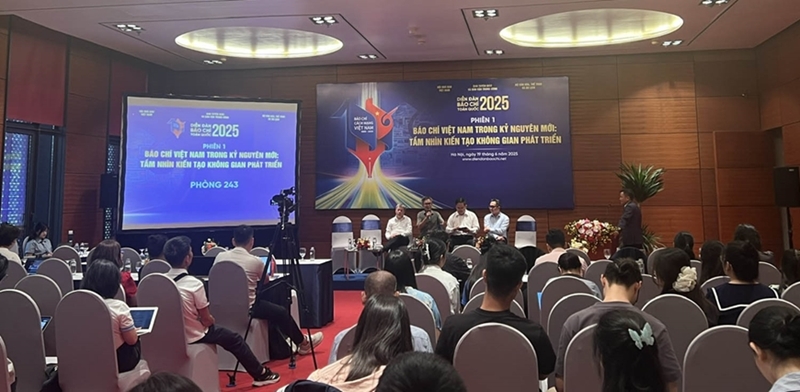
At a discussion session held as part of the National Press Forum 2025 |
Their methods are diverse. They create and disseminate cultural products that promote political doctrines opposed to Marxism–Leninism, seek to diminish the significance of Ho Chi Minh’s Thought, use cultural works to portray Viet Nam's social realities negatively to incite public discontent, and introduce foreign cultural values as part of a strategy of “cultural infiltration.” In particular, they frequently criticize Viet Nam's system of cultural governance in an attempt to portray the country as failing to guarantee freedom of expression and artistic creativity, as well as cultural rights more broadly.
Freedom of expression and artistic freedom are universally recognized rights, yet they are also highly sensitive in political, legal, and cultural contexts. Consequently, these issues are often exploited by hostile forces, reactionary groups, and political opportunists, who distort them, treat them as absolute, or deliberately detach them from Viet Nam's historical background, political system, and specific national circumstances.
A common tactic employed by hostile forces is to equate all forms of content regulation with “censorship,” and to portray the enforcement of laws against unlawful conduct as the suppression of creative freedom. From an isolated incident, they attempt to draw sweeping conclusions about the nature of the entire system. From an administrative decision that may legitimately be open to debate, they conclude that Viet Nam does not respect human rights. In the online environment, such simplistic and polarized interpretations often spread more rapidly than comprehensive legal analyses.
According to Associate Professor, Dr. Bui Hoai Son, a full-time member of the National Assembly's Committee for Culture and Society, the issue should be presented with both academic and legal precision. He noted that it would not be accurate to claim categorically that Viet Nam has no mechanisms whatsoever for regulating content. The Press Law clearly stipulates that the press is not subject to prior censorship before printing, transmission, or broadcasting. However, in the fields of cinema, publishing, and several other cultural sectors, regulatory mechanisms remain in place, including editorial review, publication registration, film classification, distribution licensing, legal deposit requirements, post-publication inspection, and the handling of legal violations.
|
|
 |
|
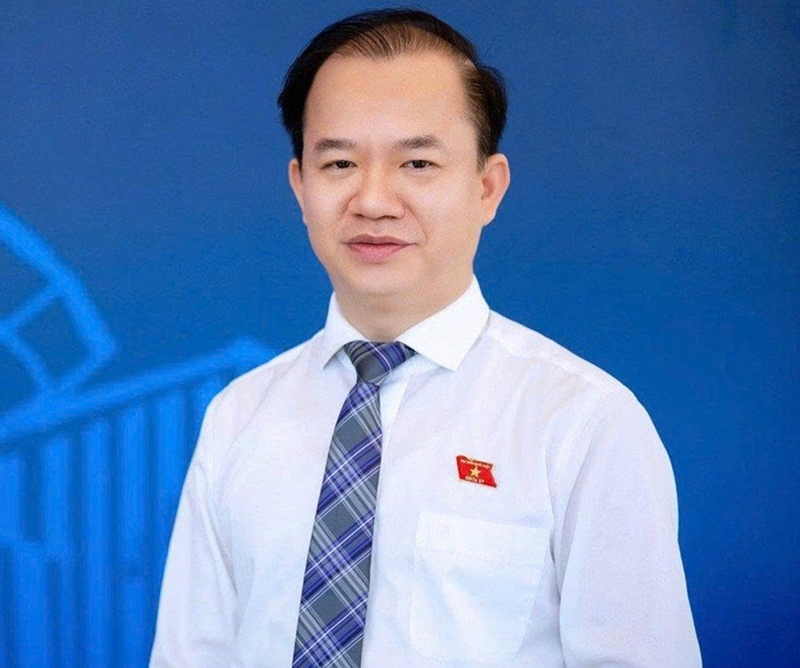
Assoc. Prof., Dr. Bui Hoai Son (Photo courtesy of the interviewee) |
“What must be distinguished is arbitrary ideological censorship from lawful content regulation. Film age classification, protecting children from harmful content, preventing the incitement of violence or hatred, and safeguarding personal dignity, reputation, and privacy are not practices unique to Viet Nam. They are normal responsibilities of any state in balancing one person's freedoms with the rights and safety of others,” Assoc. Prof. Dr. Son emphasized.
Today, in many countries around the world, audiovisual media services are prohibited from carrying content that incites violence or hatred. They are also required to implement measures to protect minors and ensure accessibility for persons with disabilities. The Convention on the Rights of the Child calls on countries to facilitate children's access to diverse sources of information while establishing appropriate guidelines to protect them from harmful information and materials.
In conclusion, it is essential to remain vigilant against distorted narratives concerning cultural rights in Viet Nam. Assessing and evaluating culture, a field that is often shaped by subjective perceptions, requires adherence to the Marxist-Leninist methodology of objectivity, comprehensiveness, historical specificity, and development. Without careful analysis and sound judgment, and by hastily following certain strands of public opinion, one can easily fall into the sophisticated traps laid by hostile forces, reactionary elements, and political opportunists.
Cultural rights being increasingly better protected
In recent years, both awareness and the practical implementation of human rights in the cultural sphere in Viet Nam have made significant progress. Cultural rights are increasingly recognized not only as the right to access and enjoy cultural products, but also as the right to participate in cultural life, engage in creative activities, preserve cultural identity, and benefit from cultural creation.
|
|
 |
|
Assoc. Prof., Dr. Vu Thi Phuong Hau (Photo courtesy of the interviewee) |
According to Assoc. Prof., Dr. Vu Thi Phuong Hau, President of the Institute of Culture and Development under the Ho Chi Minh National Academy of Politics, one of the most notable achievements in this field is the gradual improvement of the legal framework to better meet the demands of cultural development in the new context. A series of specialized laws governing culture, the arts, and cultural heritage have been enacted, helping to close legal gaps and enhance the effectiveness of state governance. Supported by this legal framework, many cultural programs and activities have achieved encouraging results. The cultural life of the people has become increasingly rich and diverse. A wide range of cultural products and services has been created, produced, distributed, and made available on the market, meeting the varied demands of the public. Cultural heritage has been better preserved and promoted. The cultural industries have received growing attention and have begun contributing to the country's gross domestic product (GDP). Meanwhile, international cultural cooperation has expanded, helping to enhance Viet Nam's cultural soft power on the global stage.
A particularly significant milestone was the approval of the National Target Program on Cultural Development for the 2025–2035 period, with a minimum budget allocation of VND 122.25 trillion for the 2025–2030 phase. The program addresses long-standing funding constraints, thereby creating more favorable conditions for the realization of cultural rights. It has also significantly expanded creative spaces and improved public access to cultural products.
Online distribution channels, e-commerce platforms, and social media are helping books reach the public more quickly and more extensively than ever before. Not only businesses engaged in the cultural sector, but also Vietnamese and foreign artists alike have affirmed that Viet Nam offers an open environment for artistic expression.
|
|
 |
|
Russian singer, actress, and model Sonya Firsova (Photo courtesy of the interviewee) |
Russian singer, actress, and model Sonya Firsova shared that for her, it is completely reasonable to respect certain cultural norms. After all, when you visit a new country, you should learn about its culture and traditions. It is a matter of respect, and she believes many foreigners do the same, "When in Rome, do as the Romans do." She has lived and worked as an artist in Viet Nam, and she has never felt that her artistic expression was restricted.
Individuals and organizations operating in the cultural sector interviewed by People's Army Newspaper also agreed that the legal prohibitions governing cultural activities are not incompatible with the rights to artistic creation and dissemination. Freedom of artistic expression is a fundamental right; however, like most other human rights, it is not an absolute or unlimited right.
The provisions in Viet Nam's Law on Cinema and Law on Publishing prohibiting content that incites wars of aggression, violence, or ethnic hatred; infringes upon personal honor, dignity, or privacy; violates children's rights; undermines national sovereignty; or weakens the great national unity bloc are grounded in the legitimate objectives of protecting the public interest and the rights of others. The Law on Publishing clearly specifies prohibited content and acts, while also establishing the accountability of competent authorities for issuing unlawful decisions that cause damage. Meanwhile, the Law on Cinema further strengthens safeguards by requiring the protection of children and minors, promoting gender equality, and imposing sanctions on the distribution of films that fail to comply with the statutory film classification system.
Nevertheless, many observers believe that further efforts are needed to strengthen the protection of cultural rights by shifting from a regulatory approach toward one that enables people to fully exercise those rights. In this view, the State should not only prevent harmful or unlawful activities but also proactively create the space, opportunities, and resources necessary for positive, innovative, and constructive cultural development. This requires the continued refinement of the legal framework to ensure greater clarity, consistency, and predictability. Concepts relating to prohibited content should be accompanied by specific legal criteria to minimize overly broad interpretations or inconsistent enforcement.
|
|
 |
|
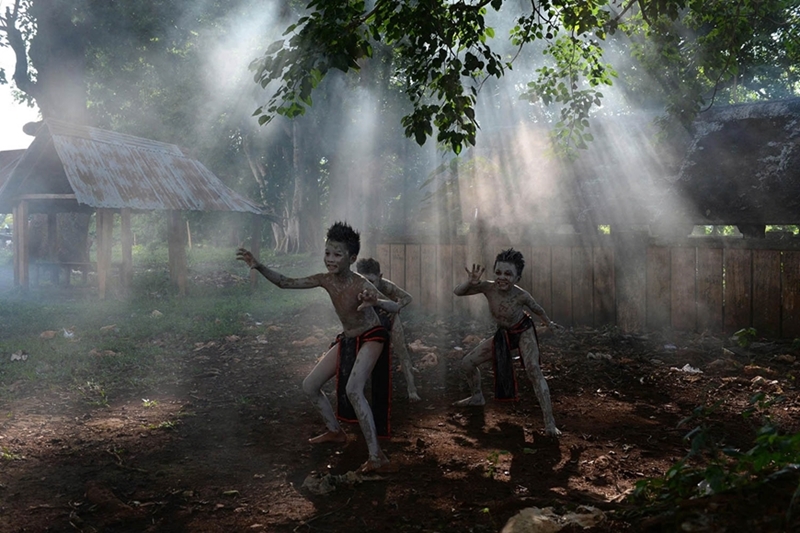
Cultural traditions and customs of ethnic minority communities in Gia Lai are being actively preserved and passed on to younger generations. |
According to Assoc. Prof., Dr. Hau, the National Assembly should enact a dedicated Law on Cultural Rights to fully implement Viet Nam's international commitments and constitutional provisions concerning cultural rights, and address the current fragmentation of regulations governing cultural rights.
(To be continued)
Translated by Quynh Oanh