The summit, held under the theme “Reinvest in Peace for Shared Prosperity and Lasting Stability,” brings together 90 member states and governments, associate members, and observers of the International Organization of La Francophonie (OIF).
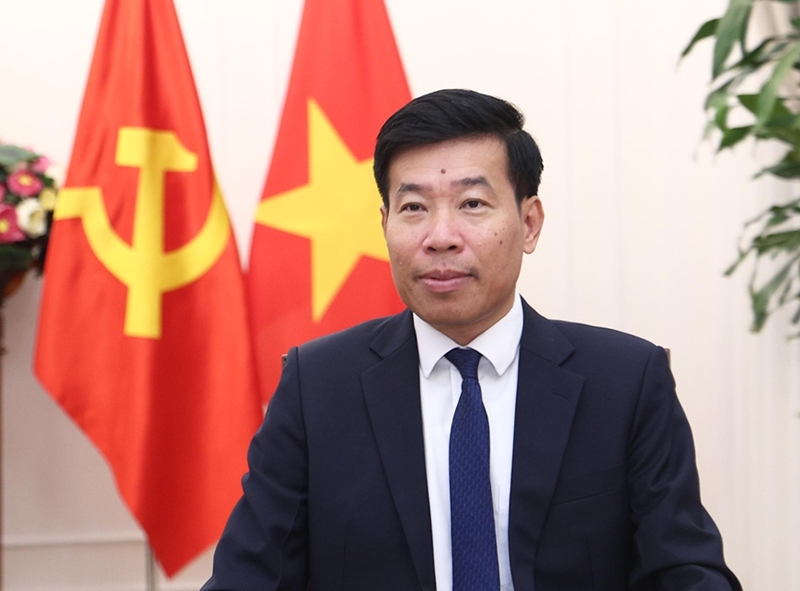
Ahead of the visit, Deputy Minister of Foreign Affairs Nguyen Manh Cuong spoke to the press about its significance, Viet Nam’s contributions to the Francophonie, and the country's priorities and expectations for future cooperation.
The deputy minister emphasized that the visit holds significant importance in both multilateral and bilateral terms.
    |
 |
|
Deputy Minister of Foreign Affairs Nguyen Manh Cuong (Photo: Ministry of Foreign Affairs) |
At the multilateral level, following Viet Nam’s participation in the 19th Francophonie Summit in France in 2024, General Secretary and State President To Lam’s attendance at the 20th summit reaffirms Viet Nam’s consistent commitment to the Francophonie. It also reflects the country's foreign policy of independence, self-reliance, resilience, multilateralization and diversification of external relations, and pro-active and active international integration, in line with the spirit of the 14th National Party Congress.
Through its participation, Viet Nam aims to work with other members to promote dialogue, strengthen solidarity, and expand cooperation with partners in support of national development. General Secretary and State President To Lam is expected to attend summit sessions, share Viet Nam’s views on major issues facing the Francophonie, and deliver remarks at the opening session of FrancoTech, an initiative promoting economic, scientific, technological, and innovation cooperation among member countries.
At the bilateral level, the summit holds special significance as Cambodia is hosting the event for the second time in the Asia-Pacific region, following the 7th Francophonie Summit in Ha Noi in 1997. General Secretary and State President To Lam’s participation demonstrates Viet Nam’s regard for and support of Cambodia as the host country. Meetings and exchanges with Cambodian leaders are also expected to further consolidate political trust, strengthen coordination at regional and international forums, and deepen the two countries’ good-neighborliness, traditional friendship, comprehensive cooperation, and long-term sustainable partnership.
The visit will also provide an opportunity for the Vietnamese top leader to meet with leaders from numerous Francophone countries, particularly those in Africa, to discuss major orientations for strengthening substantive and effective cooperation between Viet Nam and these countries.
Regarding Viet Nam’s role in the Francophonie, Deputy Minister Nguyen Manh Cuong highlighted the country's active and responsible contributions to deepening the organization's agenda and expanding its areas of cooperation.
A major milestone was the 7th Francophonie Summit, held in Ha Noi in 1997. As the first summit hosted in Asia, it also marked the election of the OIF's first Secretary-General. At the event, Viet Nam proposed promoting economic cooperation, helping expand the organization's activities beyond traditional areas such as language and culture into economic and social development.
Since then, Viet Nam has continued to serve as a bridge for Francophone cooperation in the Asia-Pacific region. It has promoted cooperation in education, training, research, and human resource development; participated in developing and implementing cooperation strategies and programs; and contributed resources and personnel to Francophone institutions.
Ha Noi is currently home to the OIF's Asia-Pacific Regional Office, while the Asia-Pacific Francophone Center is based in Ho Chi Minh City. Both institutions play an important role in promoting French-language education and Francophone cooperation across the region.
At the upcoming summit, Viet Nam will focus on two main priorities. The first is working with other members to uphold peace and stability, promote dialogue and confidence-building, and seek peaceful solutions to disagreements and disputes based on international law, the United Nations Charter, and the fundamental principles of international relations.
The second is aligning Francophone cooperation more closely with the development needs of member countries. Alongside traditional strengths in language, culture, and education, cooperation should expand into economics, science, technology, innovation, and human resource development. The ultimate goal is to translate cooperation priorities into concrete programs and tangible outcomes that deliver practical benefits to the people.
Regarding Viet Nam’s messages and expectations for the future of Francophone cooperation, Deputy Minister Nguyen Manh Cuong noted that the summit's theme highlights the close relationship between peace and development, a message General Secretary and State President To Lam is expected to share at the event.
Having experienced war and worked hard to rise and develop, Viet Nam deeply understands the value of peace. Peace and stability are prerequisites for development, while sustainable and inclusive development that benefits all people provides the foundation for lasting peace.
In this context, the Francophonie offers a platform for cooperation among members with diverse geographical, cultural, and development backgrounds who share common values of peace, solidarity, and dialogue. This diversity provides a strong foundation for enhancing connectivity and mobilizing the participation and contributions of members to joint efforts for peace and development.
Viet Nam expects the 20th Francophonie Summit to generate fresh momentum for reforming the organization's activities and identifying practical and feasible cooperation priorities for the future. Hosting the summit in the Asia-Pacific region also presents an opportunity to strengthen connections between Francophone members in Asia and their counterparts in Africa, Europe, and other regions.
Viet Nam stands ready to work with other members to build a united, dynamic, and people-centered Francophonie in which diversity serves as a strength for cooperation and development.
Translated by Quynh Oanh