These are achievements more precious than gold, realizing the determination of the Party and State in Vietnam in guaranteeing and promoting human rights... praised by many countries and international organizations. However, there are still plots and tricks by hostile and reactionary forces to spread biased and unobjective views, deliberately presenting a distorted picture to undermine Vietnam’s prestige, divide the great national unity bloc, and sabotage Vietnam’s diplomatic relations with other countries and partners.
This series of articles in the People’s Army Newspaper will highlight outstanding achievements in guaranteeing and promoting human rights in Vietnam, while exposing the plots and tricks of hostile forces on this issue.
Part 1: Objective evidence rebutting all false allegations
The Party and State consistently hold the view that economic development must go hand in hand with ensuring social progress, equity, and human rights. Outstanding achievements in economic development, poverty reduction, expanding social security, and improving the quality of education, healthcare, and people’s lives serve as objective evidence, rejecting all one-sided judgments.
Economic development better guarantees human rights
Among all rights, the right to life is the most important natural, fundamental, and inherent human right, affirming that every individual born has the right to protected life, and that no one shall be arbitrarily deprived of life. The bombs and bullets of wars deprived millions of Vietnamese of that right.
    |
 |
|
Children visit the exhibition of national achievements themed “80-year Journey of Independence - Freedom - Happiness,” in September 2025. |
Moreover, the “500-day Campaign,” a large-scale campaign launched to search for, collect, and identify the remains of martyrs lacking information (from March 15, 2026, to July 27, 2027), serves as a poignant reminder that roughly 230,000 grave remain unidentified. Many families are still waiting to welcome the remains of their loved ones returning from battle, even though the war ended decades ago. The consequences of war in Vietnam are extremely severe, hindering economic development and the enjoyment of people’s rights. Emerging from war, the renovation process led by the Party over the past 40 years has brought the country a new position and strength, and Vietnam’s prestige in the international arena is increasingly enhanced.
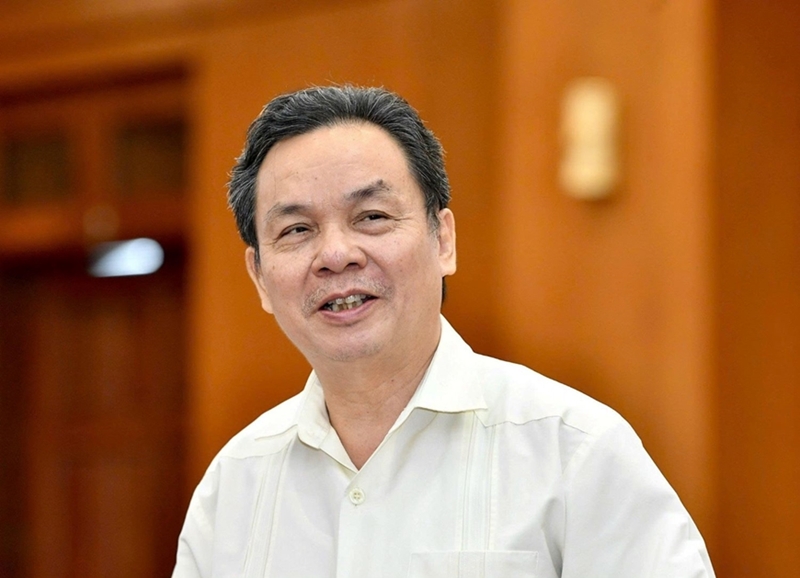
However, despite the nation’s current standing, stature, and international prestige, hostile forces still falsely claim that Vietnam has achieved many economic successes, but has not fully guaranteed human rights. Refuting this distorting allegation, Prof., Dr. Hoang Van Cuong, Vice Chairman of the State Council for Professors, Vice President of the Vietnam Economic Association, and President of the Hanoi Economic Association, emphasized that when discussing human rights, the most important thing is not just to look at legal declarations but to look at the actual lives of the people.
Over the past four decades, Vietnam has made a very strong developmental leap. Per capita income increased from about USD 100 at the beginning of the Doi moi (renewal) process to more than USD 5,000 in 2025. Vietnam has transformed from a poor, underdeveloped country to a middle-income country, and recently, the World Bank officially upgraded Vietnam to the upper-middle-income group.
|
|
 |
|
Prof., Dr. Hoang Van Cuong, Vice Chairman of the State Council for Professors, Vice President of the Vietnam Economic Association, and President of the Hanoi Economic Association |
That achievement cannot be denied. More importantly, Vietnam is steadfast in a development model where economic growth always goes hand in hand with social equity. Development fruits are not concentrated in one segment, but are distributed relatively harmoniously through policies on social security, education, healthcare, and poverty reduction. Vietnam’s development model shares many similarities with the concept of inclusive development, where all people have the opportunity to develop, enjoy development fruits, and no one is left behind. That is a very specific approach to guaranteeing human rights.
Social equity is the goal
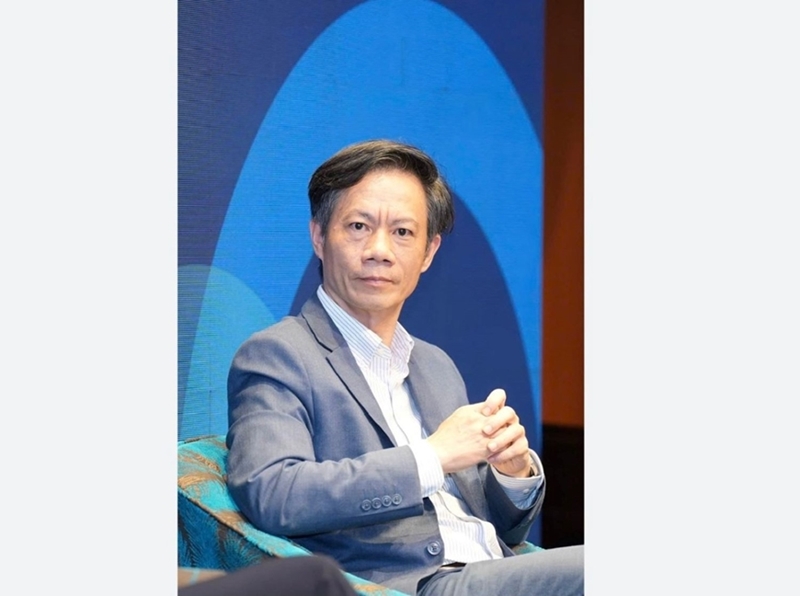
Dr. Le Duy Binh, Director of Economica Vietnam, an organization specializing in development consulting, economic research, and policy analysis, argued that economic development associated with social progress, equity, and guaranteeing human rights is not only a policy orientation, but also a consistent principle in Vietnam’s development model. Therefore, the outstanding significance of the system of strategic resolutions issued by the Party recently is to continue to concretize and develop that mindset in the new context.
Accordingly, the resolutions issued in a short time have a very close connection, creating a synchronized, complementary system of solutions for the country’s development process. Within this framework, institutions are the foundation, science-technology and innovation are the driving force, businesses are the important force creating wealth, and humans are the highest goal of development.
|
|
 |
|
Dr. Le Duy Binh, Director of Economica Vietnam |
According to Dr. Le Duy Binh, achievements in economic growth, poverty reduction, employment expansion, social security development, and improving the quality of basic services are clear evidence that those policies have been put into practice.
First of all, there are achievements in economic development. From an economy with a low starting point, Vietnam has maintained a positive growth rate for many decades, bringing the economic scale from about USD 8 billion in 1986 to more than USD 510 billion in 2025; per capita income increased from under USD 100 before the renovation to USD 5,026 in 2025. Especially in the new development stage, Vietnam’s economy continues to show resilience and adaptability, with new growth drivers gradually promoting efficiency. In 2025, Vietnam’s gross domestic product (GDP) achieved a growth rate of 8.02%, placing it among the high-growth group in the region; in the first six months of 2026, the economy continued to maintain positive growth momentum with an increase of 8.18% over the same period.
More importantly, economic growth has created resources to expand investment in education, healthcare, infrastructure, and social security. The economy currently provides jobs for more than 52 million workers, with the unemployment rate maintained at about 2-3% for years. Vietnam also achieved outstanding milestones in poverty reduction. The poverty rate decreased from over 50% in the early 1990s to about 1.93% according to the multidimensional poverty line for the 2022-2025 period. This achievement is evaluated by the World Bank, Asian Development Bank, and United Nations as a bright spot in inclusive and sustainable development.
Parallel to that is the constant expansion of the right to access basic social services. The system of social insurance, health insurance, and unemployment insurance is increasingly expanded; numerous policies supporting people in difficult circumstances, the elderly, wounded soldiers, and vulnerable groups are implemented effectively.
|
|
 |
|
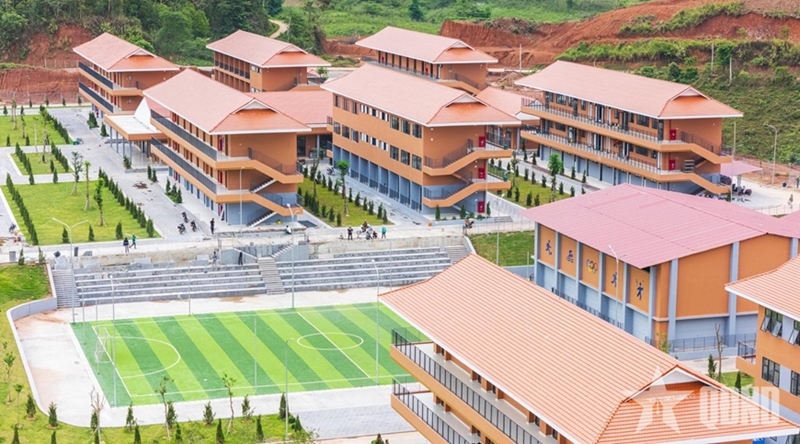
Si Pa Phin inter-level school (Dien Bien province), inaugurated on January 31, 2026, is the first project completed in a campaign to build 248 border schools, affirming the commitment to improving public knowledge and social security. |
One of the points people feel most clearly recently is that the new policies on tuition fee exemption and reduction, along with learning cost support for students, have created more conditions for all children, regardless of economic background or living area, to have a more equal opportunity to access education. In the healthcare sector, policies aimed at enhancing universal health care, expanding access to health services, improving the quality of medical examination and treatment, and strengthening preventive medicine have received great attention from the public.
Regarding essential infrastructure, nearly 99.9% of households have access to electricity, making Vietnam one of the countries with the fastest electrification rate in the world; 98.7% of households have access to hygienic water sources. In the telecommunications and digital transformation sector, nearly 99.9% of the population is covered by 4G, about 25.5% of the population is covered by 5G, while roughly 85% of households have fiber optic connections and over 90% of households have home internet.
These results indicate that Vietnam’s development model not only aims at economic growth but also places humans at the center of the development process. Economic growth is closely linked to job creation, poverty reduction, expanding social security, and improving the quality of education, healthcare, and public services, thereby gradually raising the living standards and quality of life for the people.
People’s happiness is the highest measure
Although Vietnam’s achievements in guaranteeing human rights have been recognized by reality and many international organizations, there remains one-sided, unobjective information. Refuting these judgments, Dr. Le Duy Binh affirmed that when assessing the guarantee of human rights in any country, it is important to rely on objective, comprehensive criteria, including the legal system, the implementation of international commitments, and especially the actual results that people enjoy. One cannot merely look at a few isolated phenomena or evaluate matters in a one-sided way, separating legal regulations from development reality.
First of all, Vietnam has step by step built and perfected the legal system regarding human rights. The 2013 Constitution devotes a separate chapter to stipulating human rights, as well as basic rights and obligations of citizens. On that basis, many important laws in the fields of labor, education, healthcare, social insurance, access to information, belief, and religion have been promulgated, amended, and supplemented, establishing an increasingly complete legal basis to guarantee and promote people’s rights.
Internationally, Vietnam always strictly implements commitments on human rights, actively participates in international conventions, and constantly improves the legal system in line with common international standards. This demonstrates Vietnam’s sense of responsibility and pro-activeness in the integration process.
|
|
 |
|
Officers and soldiers of Muong Leo Border Post pound “banh giay” (round sticky rice cakes) with residents of Sam Quang village, Muong Leo commune, Son La province. |
However, the value of legal regulations is only truly affirmed when materialized in life. Therefore, the most convincing evidence lies in the socio-economic development achievements that people directly enjoy. In Vietnam, every citizen is provided conditions to develop, enjoy the fruits of growth, and experience an increasingly better life as analyzed above. These are concrete results reflecting that human rights are guaranteed in practice.
Another objective piece of evidence is the Human Development Index (HDI) published annually by the United Nations Development Program. Unlike indicators that solely reflect the scale or rate of economic growth, the HDI assesses the level of development of a country across three core aspects: Health and longevity, education level, and living standards. The fact that Vietnam constantly improves this index shows that development achievements have been and are being translated into people’s quality of life, aligning with the perspective of placing people at the center of development.
Naturally, like any country, Vietnam still faces issues that need to continue to be improved. The important thing is that the country always seeks to learn, frankly acknowledges limitations, continues to reform institutions, improves the effectiveness and efficiency of State governance, elevates the quality of public services, and expands development opportunities for all citizens. This stands as a consistent approach to ensuring that human rights are increasingly better guaranteed.
(To be continued)
Translated by Minh Anh