A report presented by Office 701 highlighted that during the 2021–2025 period, under the leadership and direction of the Party, State, Government, Ministry of National Defense, ministries, sectors, and localities, along with the efforts of military and civilian agencies and effective cooperation with foreign governments and international organizations, the work of addressing post-war UXO and toxic chemical/dioxin consequences in Vietnam was implemented comprehensively and synchronously, achieving many important results.
    |
 |
|
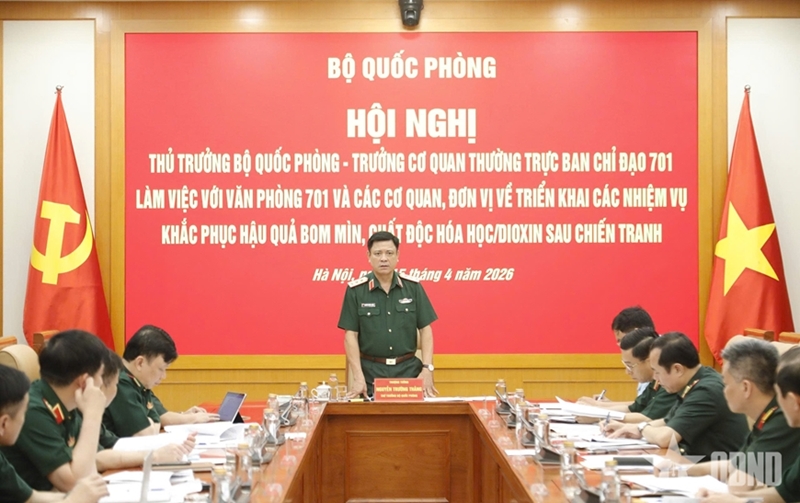
The working session is chaired by Deputy Defense Minister Sr. Lt. Gen. Nguyen Truong Thang. |
However, the work still faces numerous challenges, including limitations in equipment, machinery, technology, resources, and finance; changes in international aid policies; and the complex nature and large scale of the tasks.
At the session, delegates reviewed the implementation progress of key tasks in 2026, clarified shortcomings and their causes, and identified major tasks and solutions to remove bottlenecks and ensure progress in line with targets set by the Government and the Ministry of National Defense.
|
|
 |
|
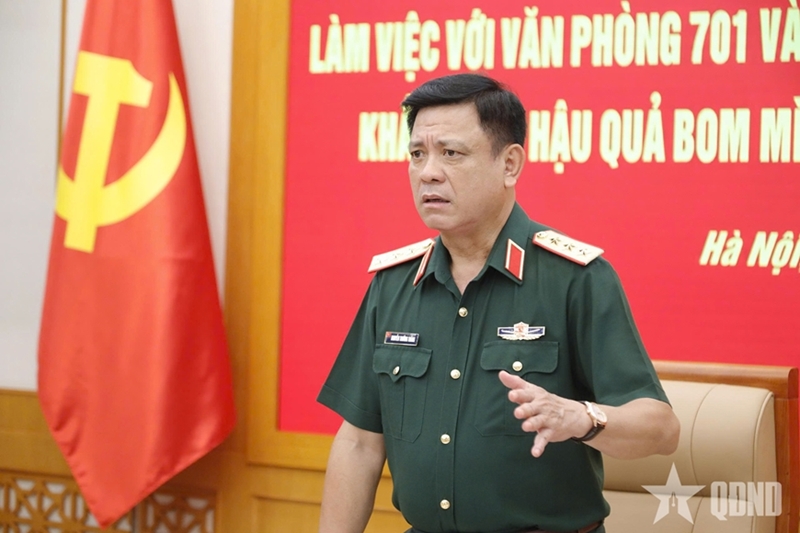
Sr. Lt. Gen. Nguyen Truong Thang delivers remarks at the session. |
Concluding the meeting, Gen. Thang appreciated the proactive coordination of military units with central and local authorities, as well as international partners, in effectively implementing UXO clearance and toxic chemical remediation.
He emphasized that 2026 is a pivotal year for implementing tasks in the 2026–2030 period, stressing that addressing post-war UXO and toxic chemical/dioxin consequences is an urgent and highly humanitarian mission. He called for determined efforts to achieve the goals of completing nationwide UXO clearance by 2045; completing dioxin treatment at hotspots such as Bien Hoa and Phu Cat Airports by 2030; and ensuring that 100 percent of severely affected victims receive healthcare and medical treatment.
Accordingly, relevant agencies and units were urged to continue effectively implementing Party guidelines, State policies, and directives from the Ministry of National Defense; improve awareness and responsibility; refine legal frameworks; and expand international cooperation to mobilize resources, equipment, and advanced technologies.
He also requested the continued implementation of ongoing projects and the development of new initiatives. In 2026, priority will be given to supporting housing for children of resistance war participants exposed to toxic chemicals, strengthening infrastructure and capacity, and promoting the application of science, technology, and digital transformation to accelerate UXO clearance and toxic chemical remediation, as well as improve medical support for victims.
Translated by Trung Thanh