Carrying forward revolutionary traditions
Nguyen Phich commune has undergone a significant transformation. Over the past 51 years, local authorities and residents have rebuilt their community, turning a war-ravaged area into a steadily developing rural locality.
Veteran Huynh Trung Ngon from Hamlet 2 recalled that despite intense attacks by U.S. and the Saigon regime's forces, local troops and residents remained steadfast in defending and liberating their land. Today, rural roads have been upgraded and expanded, many are equipped with lighting, and schools and medical stations have been built to better serve the community.
    |
 |
|
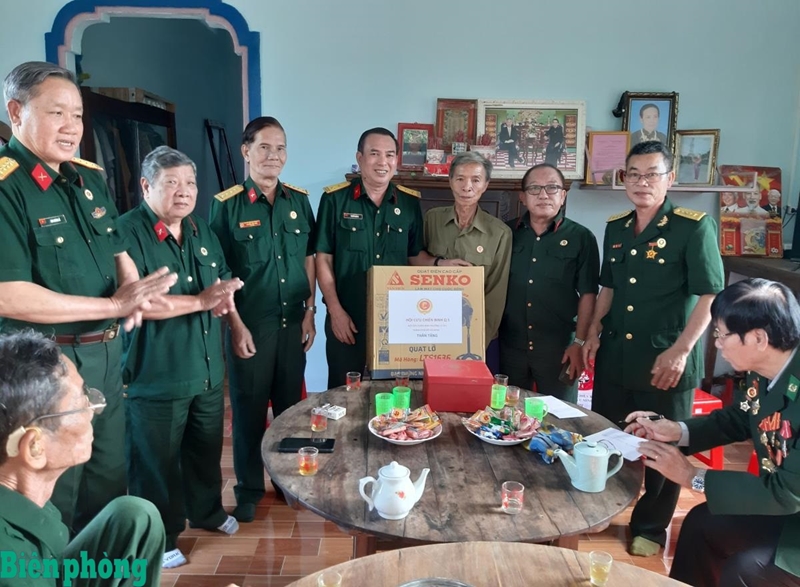
At the handover of a house to veteran Nguyen Van Kiem |
The commune now features Melaleuca and hybrid acacia plantations alongside fields growing various crops and fruits, notably local and Cavendish bananas exported to Japan and the Middle East. Veteran Nguyen Van Ut from Hamlet 19 noted that improved transportation has helped farmers avoid unsold goods and price pressure. Banana cultivation generates about VND 40–50 million per household annually.
After the war, residents focused on transforming barren land into green fields and villages. Doan Viet Khoa, Secretary of the Party Committee of Nguyen Phich commune, stated that in 2025, the commune effectively utilized national target program funds to develop infrastructure and production models. It also promoted forest-based economic development and livestock models, including shrimp farming and biosecure poultry, supported by more than VND 6.2 billion from the sustainable poverty reduction program. Additionally, 211 houses were built for policy-beneficiary families, poor households, and ethnic minorities. Average per capita income has exceeded VND 70 million per year, while the poverty rate has fallen to 1.1%.
Revolutionary base area renewed
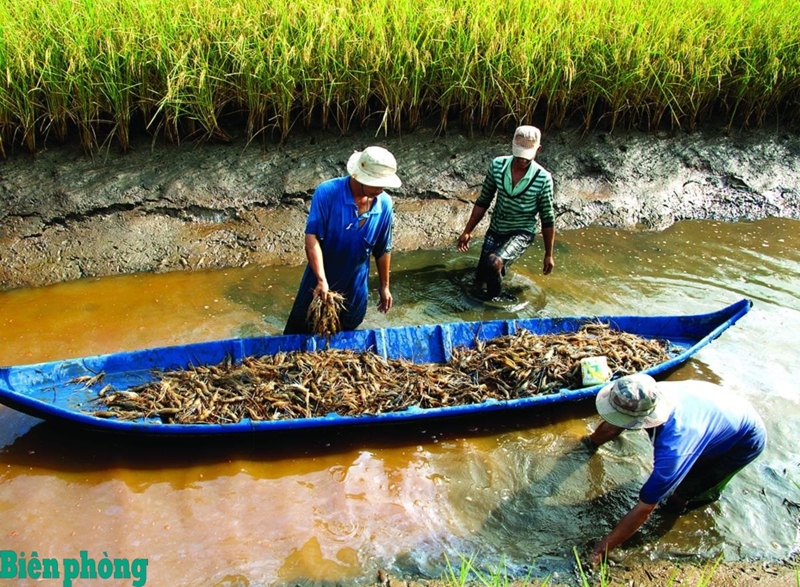
In Khanh Hung commune, another former revolutionary base, post-war recovery has transformed a once acidic, low-lying wasteland into a prosperous countryside. Chairman of the People’s Committee of Khanh Hung commune Ho Song Toan stated that all inter-hamlet roads have been paved, and temporary houses have been replaced with permanent structures. Electricity, Wi-Fi, and television are now available in most households. The shrimp–rice farming model has developed strongly, with annual shrimp output reaching tens of thousands of tons, supported by modern irrigation systems.
More than 3,000 households have accessed loans totaling over VND 73.8 billion. In 2025, the commune mobilized more than VND 800 million to build 13 new houses for disadvantaged households and completed a housing program for 130 households ahead of schedule. The commune now has only 34 poor households (0.45%), with 18 hamlets completely free of poverty.
Le Van Thanh from Kenh Moi hamlet stated that infrastructure and living conditions have improved significantly, and his family has actively supported local development efforts.
|
|
 |
|
An effective economic development model of Ca Mau people |
From a province once heavily devastated by war, Ca Mau has made steady progress through unity. Ngo Vu Thang, Vice Chairman of the Provincial People’s Committee, stated that the province has narrowed the development gap with other regions, with rising incomes now among the highest in the area. The number of poor households has decreased to 3,456 (0.63%). Infrastructure has improved significantly, with roads now reaching all commune centers and key transport routes fully connected.
With continued efforts from local authorities, residents, and businesses, Ca Mau aims to become a strong, green, and sustainable growth hub in the Mekong Delta. By the end of 2027, the province targets at least 70% of poor, near-poor, and ethnic minority households achieving sustainable poverty alleviation.
Although the war ended decades ago, historical sites and revolutionary landmarks in Ca Mau continue to flourish alongside the region’s transformation. Progress is reflected not only in infrastructure and economic indicators but also in the preservation of historical memory and the continuation of the revolutionary spirit.
Translated by Tran Hoai