Drang Phok hamlet in the border commune of Buon Don lies deep within the old-growth forest of Yok Don National Park. The area is home mainly to generations of E De and M’nong ethnic minority residents. In this region, promoting legal awareness and maintaining security and social order require flexible and effective approaches.
Village elder Y Mok Hra, born in 1958 and a member of the E De ethnic group, has actively participated in protecting the border while regularly encouraging local residents to safeguard border and border markers. Through close engagement with villagers, he has built strong trust within the community. He consistently reminds residents not to enter border patrol routes without authorization from relevant authorities and carefully explains how to identify border areas.
    |
 |
|
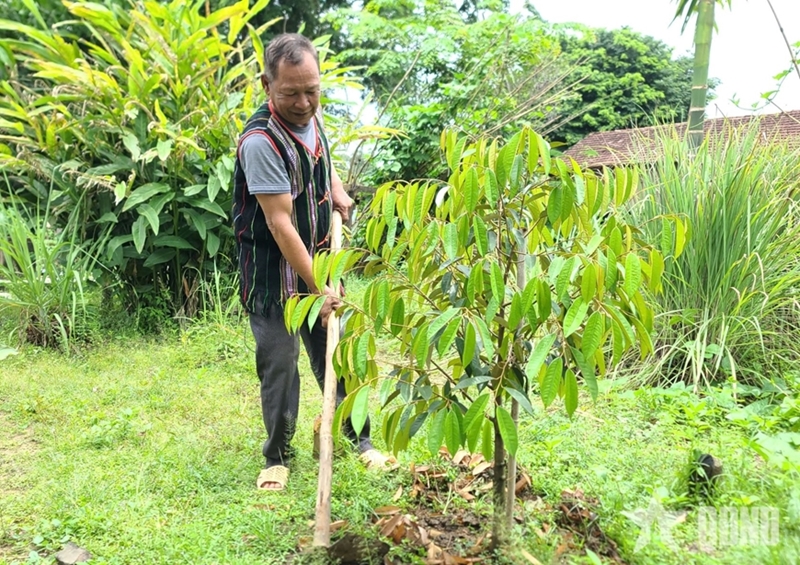
In addition to actively disseminating information and encouraging local residents, elder Y Mok Hra is also regarded as a role model in economic development in Drang Phok hamlet. |
His sincere and approachable communication has helped residents better understand their rights and responsibilities as citizens living in border areas. As a result, more villagers have voluntarily joined patrol teams protecting the border and border markers.
Thanks to these efforts, Drang Phok hamlet has recorded no border-related legal violations for many years. The outcome reflects the effectiveness of grassroots mass mobilization efforts and the strengthening of the “people’s heart posture” in border areas.
Similarly, Phan Manh Hung, born in 1966 and a member of the Thai ethnic group, has earned the trust of residents in Hamlet 10 of Ia Rve border commune through years of dedication and community service. He has actively contributed to protecting territorial sovereignty and maintaining security and public order in border areas.
Hung also regularly encourages residents to participate in self-management models for border and border markers, remain vigilant against illegal activities, and help preserve political security and social order in border communities.
“The movement encouraging all people to participate in protecting territorial sovereignty and national border security is an important task that requires the combined strength of all sectors, organizations, and people,” said Hung.
Dak Lak province has four land-border communes bordering Cambodia, namely Ea Bung, Buon Don, Ia Lop, and Ia Rve, with a border section of more than 70 kilometers holding important strategic significance for national defense and security.
The border region is home to many ethnic groups, and some residents still face economic difficulties and uneven legal awareness. However, thanks to the coordinated efforts of Party committees, local authorities, armed forces, and trusted community figures, public understanding of the law has improved significantly. Illegal border crossings, land encroachment, and unauthorized settlement have declined markedly, while military-civilian solidarity has continued to strengthen.
The province’s four land-border communes currently have 26 trusted community figures. These respected individuals are considered “living landmarks,” helping maintain peace and stability along the national frontier while reinforcing the “people’s heart posture.”
In recent years, village elders and trusted community figures have effectively served as bridges connecting local residents with the Party’s guidelines and State’s policies. Their contributions have not only helped maintain security but also strengthened military-civilian solidarity and fostered peaceful lives in border communities.
Translated by Tran Hoai