    |
 |
|
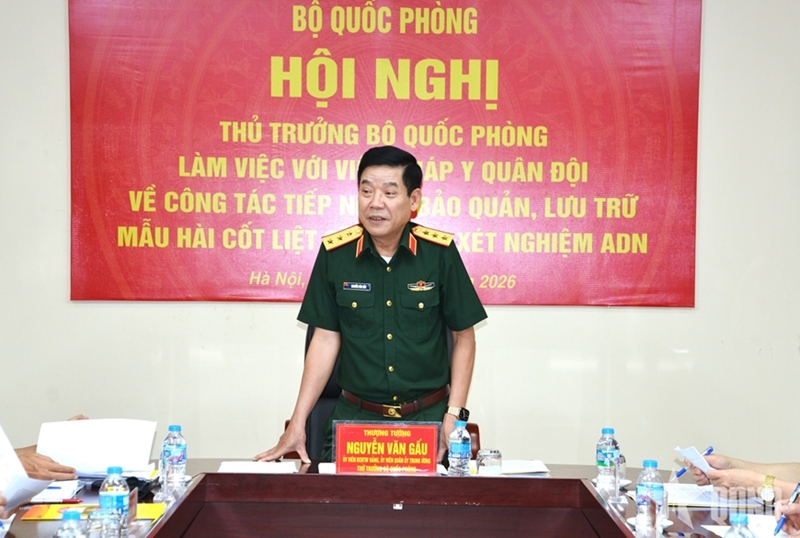
Sr. Lt. Gen. Nguyen Van Gau chairs the working session. |
At the event, Director of the Department of Military Medicine Maj. Gen. Nguyen Truong Giang reported that the department has strictly implemented directives from higher authorities on DNA verification of martyrs’ remains, and closely coordinated in drafting related documents. It has also developed technical procedures, digitized sample information, and ensured medical support for martyrs’ remains search and collection forces.
The Military Institute of Forensic Medicine is currently storing 2,699 martyrs’ remains samples and 160 samples of martyrs’ relatives, and has reached full capacity.
In the coming period, the institute is expected to receive and store nearly 256,000 additional samples. Therefore, building new facilities for reception, processing, preservation, and storage is urgent and necessary.
|
|
 |
|
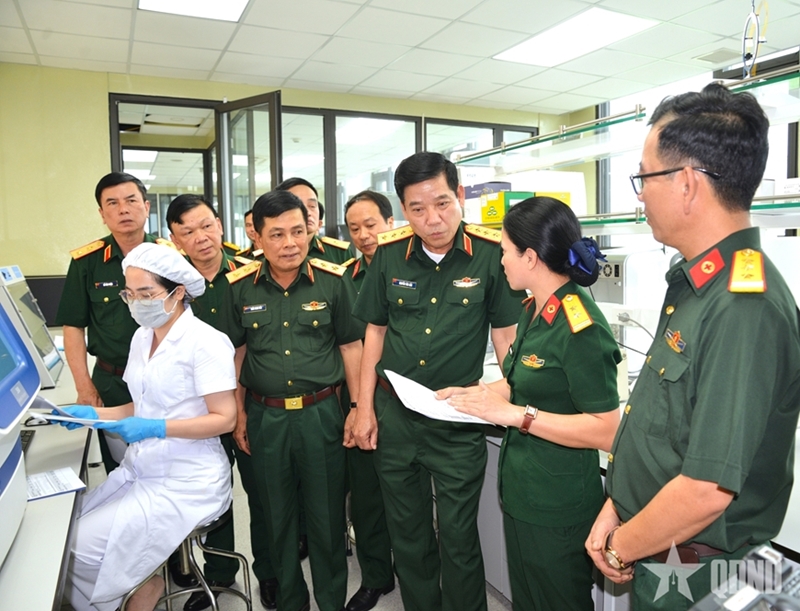
Delegates visit the testing laboratory at the Military Institute of Forensic Medicine. |
To meet the requirement for storing more samples in the time ahead, the General Department of Logistics and Technical Services has directed relevant agencies and units to renovate warehouse K4 of Depot 708 under the Department of Military Medicine into a storage facility capable of holding about 80,000 samples during the first phase of the 500-day campaign of collecting and identifying martyrs’ remains. Plans are also being prepared for a new specialized storage facility with capacity for around 400,000 samples and future expansion.
The Department of Military Medicine has instructed its affiliates to review infrastructure and procure additional equipment to improve DNA testing capacity at the Military Institute of Forensic Medicine.
At the meeting, delegates discussed measures and recommendations to improve quality and accelerate the progress of the projects serving DNA testing missions.
|
|
 |
|
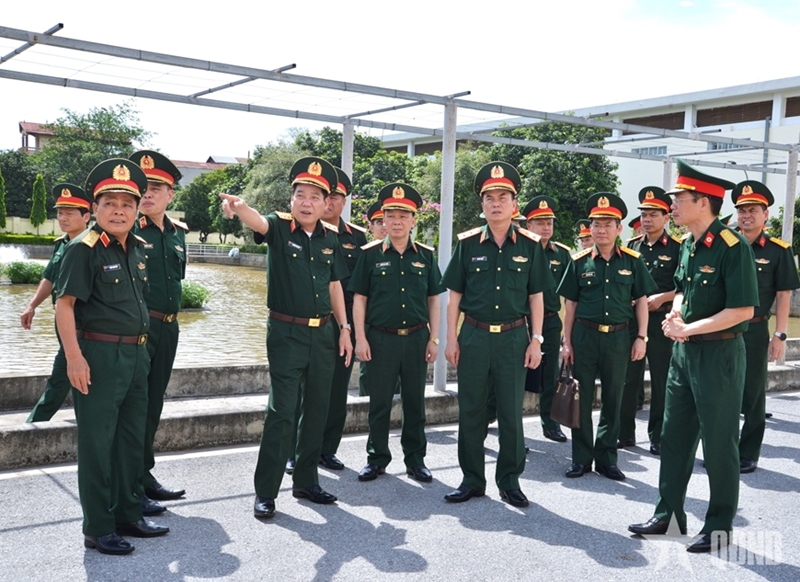
Delegates conduct a survey at Depot 708. |
Concluding the session, Gen. Gau praised the General Department of Logistics and Technical Services, the Department of Military Medicine, the Military Institute of Forensic Medicine, and Depot 708 for their efforts and performance. Agreeing with the suggestions, the defense leader emphasized the importance of the work and its profound humanitarian significance, requiring strict, scientific implementation and absolute accuracy to avoid any mistakes or loss of samples.
He directed the General Department of Logistics and Technical Services to quickly complete all procedures and reports to submit to the Ministry of National Defense leadership for further guidance.
Translated by Mai Huong