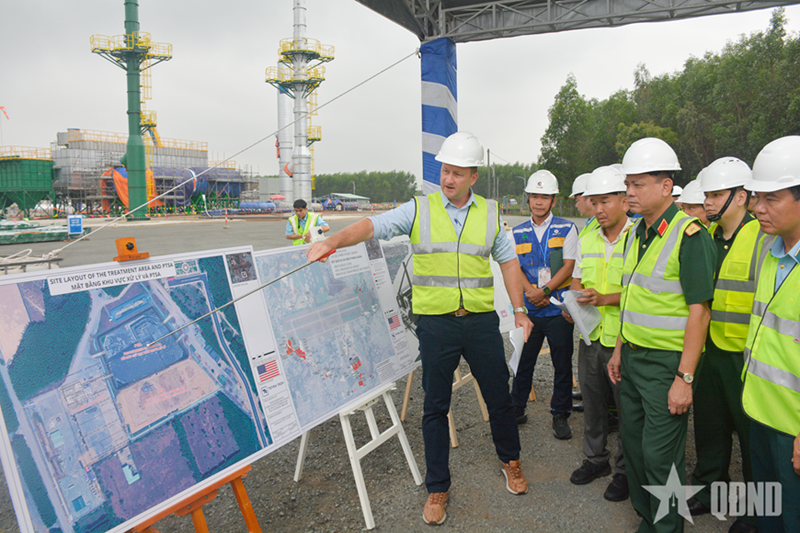
Bien Hoa Airport is the largest dioxin-contaminated hotspot in Vietnam, with an estimated 500,000 cubic meters of contaminated soil and sediment spread across more than 120 hectares as a legacy of Agent Orange use during the war in Vietnam.
    |
 |
|
Sr. Lt. Gen. General Nguyen Truong Thang and delegates are briefed on project progress at the site. |
|
|
 |
|
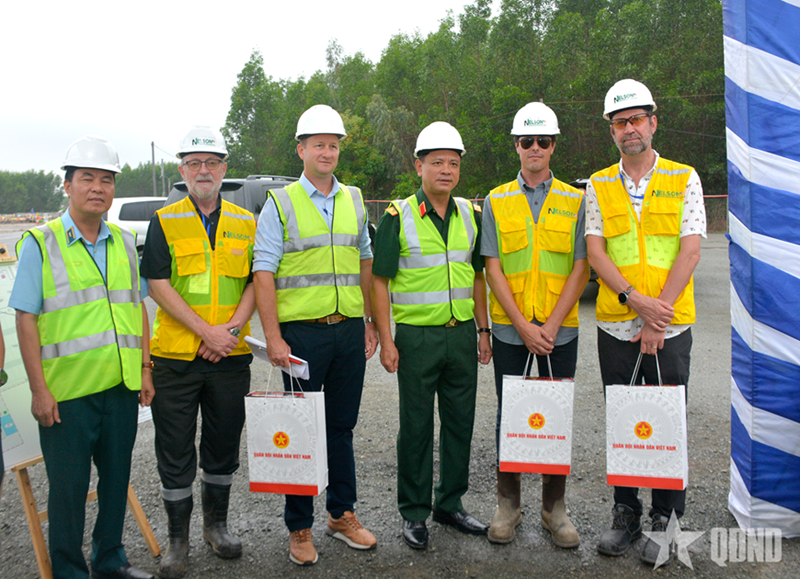
Gen. Thang presents gifts to representatives of the construction contractor. |
The project is a cooperation initiative between the U.S. Embassy and Vietnam’s Ministry of National Defense. Its scale is approximately three times larger than the dioxin remediation project at Da Nang Airport.
From January 2020 to May 2026, more than 235,000 cubic meters of contaminated soil and sediment were excavated and treated, achieving nearly 50 percent of the project's total workload. A total of 48.37 hectares has been remediated, including 14 hectares already handed over to the Air Defense-Air Force Service.
In 2026, the Air Defense-Air Force Service, the U.S. Embassy, and Dong Nai authorities have coordinated preparations for remediation of contaminated areas outside the airport, covering about 4.2 hectares with an estimated contaminated volume of 44,512 cubic meters.
The project employs two remediation methods of secure landfill and Thermal Conductive Heating (TCH) technology.
In his speech, Gen. Thang hailed participating agencies and units for their efforts and called for accelerated excavation and treatment activities, completion of the thermal treatment system, and continued environmental, health, security, and safety monitoring during project implementation.
|
|
 |
|
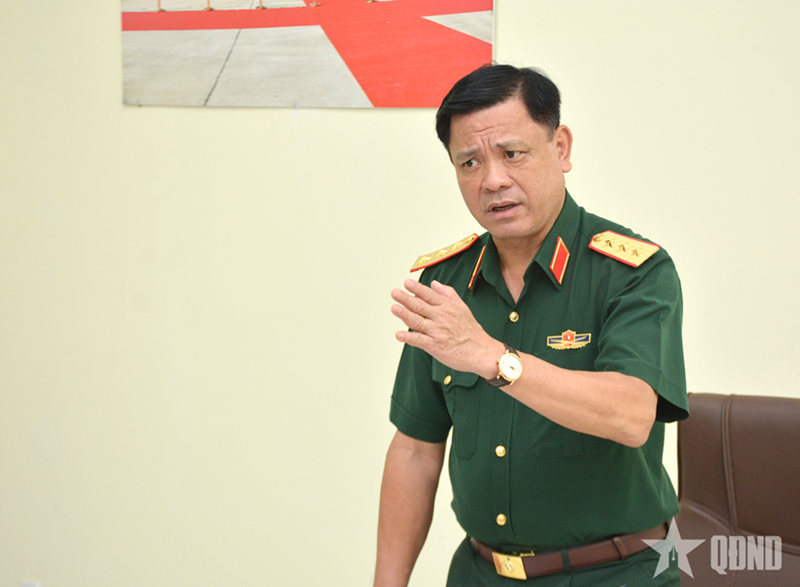
Sr. Lt. Gen. Nguyen Truong Thang speaks at the event. |
|
|
 |
|
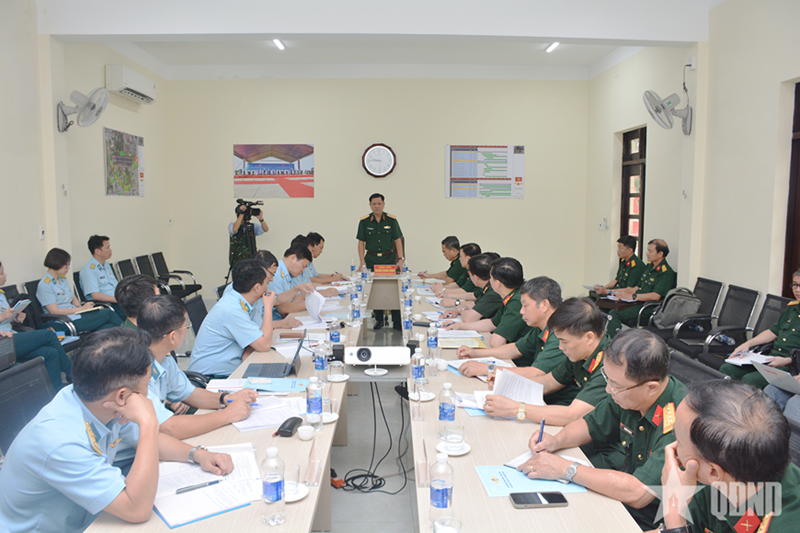
An overview of the inspection session |
He also directed relevant agencies and units to pro-actively and closely coordinate in project execution, technical appraisal, and environmental procedures in accordance with regulations.
The defense leader asked for continued information dissemination about Agent Orange disaster and ongoing efforts to address war consequences, support victims, and raise international awareness of Vietnam’s “Joining hands to ease the pain of Agent Orange victims” initiative.
Translated by Mai Huong