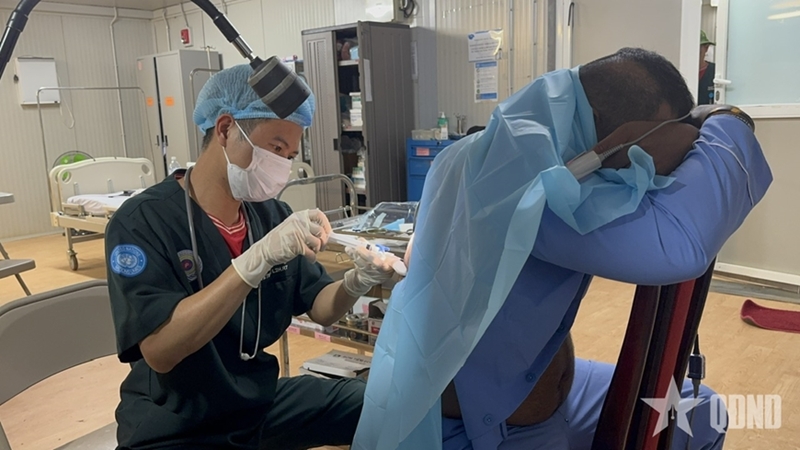
AMET Team 1 carried out the MEDEVAC mission, comprising Sr. Capt. and Doctor Pham Cong Tinh and two nurses. The patient, transported to the capital Juba, was a U.N. police officer suffering from a right-sided pleural effusion of unknown origin, with pleuritis suspected. After the initial treatment, the patient was conscious, afebrile and had relatively stable vital signs. However, a significant amount of pleural effusion remained on the right side, requiring further examination, intervention and diagnostic assessment at a facility with more advanced specialist capabilities.
    |
 |
|
The patient receives intensive care before being transported by helicopter to Juba. |
The hospital reported the case to the Mission’s medical agencies and recommended that the patient be monitored for 24 hours after the intensive care before being transferred to India’s Level-2+ Field Hospital in Juba.
According to Doctor Pham Cong Tinh, the greatest risk was that hypoxia and respiratory failure could worsen during the flight. However, thanks to intensive care provided by the AMET medical personnel, the patient remained relatively stable for most of the flight. After landing, the patient continued to be monitored while being transported from the airport to the receiving facility. At around noon that day, the AMET team completed the handover of the patient to India’s Level-2+ Field Hospital in Juba.
While AMET Team 1 was carrying out its mission in Juba, the Operations Department of L2FH Rotation 7 received an urgent notification from the Mission regarding a serious security incident in Bor area, hundreds of kilometers from Bentiu. The incident resulted in multiple casualties and required urgent medical assistance and evacuation.
The hospital’s leadership immediately activated AMET Team 2, comprising three members and led by Sr. Capt. and Doctor Pham Ly Thanh, to carry out the CASEVAC mission.
Lt. Col. Dinh Vu Ngoc Ninh, Deputy Director for Professional Affairs of L2FH Rotation 7, said all relevant sections were mobilized simultaneously immediately after the order was received. In response to a mass-casualty situation, the team prepared a full set of equipment for managing severe trauma cases. As the area to be approached still posed potential security risks, the team members were required to carry body armor, ballistic helmets, drinking water and emergency food supplies to ensure they could operate independently at the scene. Within just 15 minutes, the team was ready for deployment.
|
|
 |
|
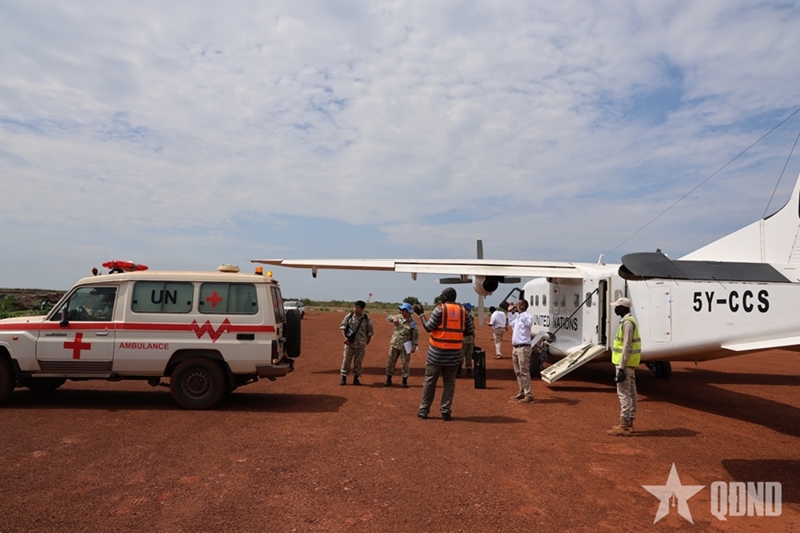
An ambulance transports the patient to the helicopter parking area. |
AMET Team 2 was urgently transported by helicopter to the mission area. However, approximately 15 minutes after takeoff, the helicopter encountered an unexpected technical problem and was forced to turn back and make an emergency landing. The flight was delayed, but the CASEVAC mission remained active.
Doctor Pham Ly Thanh said that while waiting, the team members took turns resting to maintain their physical and mental readiness, while the whole team remained on standby. Alternative plans were continuously updated so that the team could switch to another means of transport and depart immediately upon receiving the order.
At the time of reporting, AMET Team 2 remained on standby for deployment. This readiness status would only end once the Mission officially ordered the cancellation of the mission.
|
|
 |
|
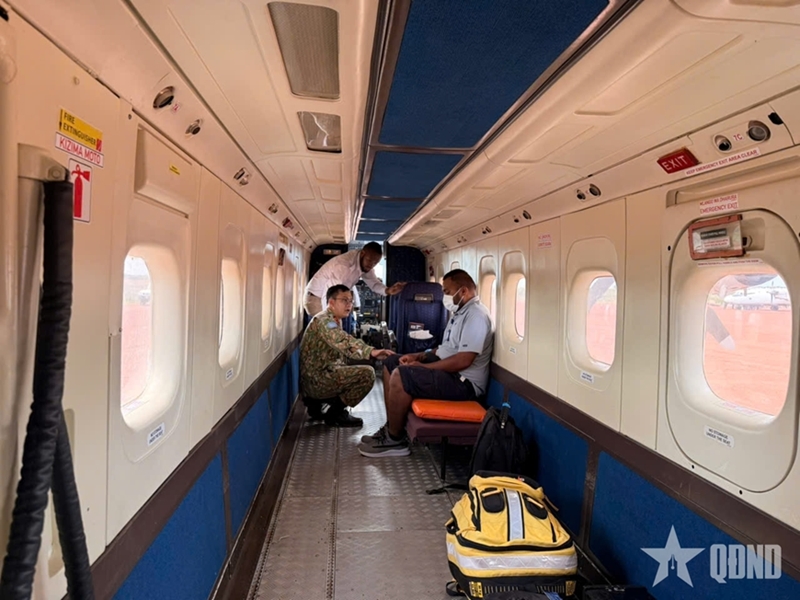
Medical personnel care for the patient aboard the aircraft. |
AMET of the L2FH Rotation 7 went through a demanding day, demonstrating the professional competence, coordination capabilities and a high level of readiness of Vietnamese military medical personnel in carrying out U.N. peacekeeping duties.
Translated by Quynh Oanh