The launch of the system aims to fulfil one of the six “pioneering tasks” assigned to the MoIT by Prime Minister Pham Minh Chinh at the ministry’s year-end conference, held on December 19 to review performance in 2025 and the 2021–2025 period, and outline key tasks for 2026.
    |
 |
|
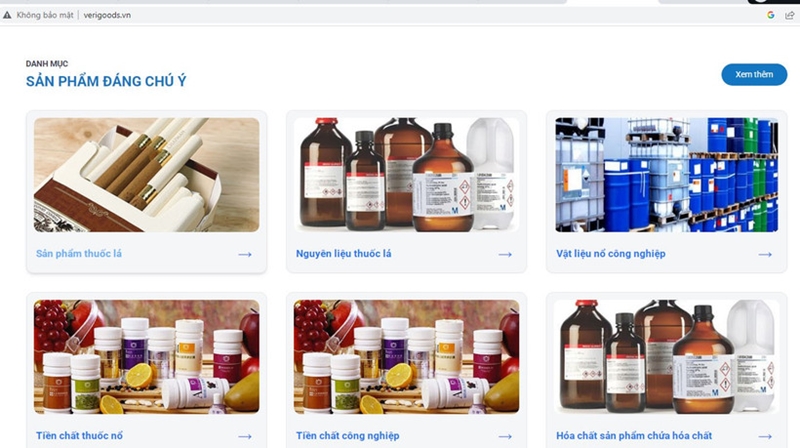
The Ministry of Industry and Trade is set to launch its product traceability system at www.verigoods.vn on December 23. |
Built with a people- and business-centered approach, the system is designed to serve as a bridge between enterprises and consumers, helping strengthen market confidence. As businesses make product information transparent through authentication tools such as QR codes, consumers can more easily identify genuine products while businesses gain an effective tool to affirm brand credibility and prevent and curb counterfeiting.
Under current regulations, product traceability is mandatory for goods categorized by ministries and ministry-level agencies basing on risk assessments and their potential impact on human health, the environment, and social order and safety. The rollout will follow an appropriate roadmap to ensure feasibility and minimize additional costs for businesses.
Tran Huu Linh, Director of the MoIT's Agency for Domestic Market Surveillance and Development, said enterprises are encouraged to register and declare product information and obtain authentication codes as soon as the system officially becomes operational.
When the MoIT’s circular on goods traceability takes effect on January 1, 2026, compliance will become mandatory for businesses dealing in high-risk product groups, including chemicals and chemical-containing products, industrial precursors, explosive precursors, industrial explosives, and tobacco raw materials and products, while application will be encouraged for other product categories.
Amid rapid digital transformation, many businesses, particularly small and medium-sized ones, continue to face challenges in investing in technological infrastructure and data governance. The MoIT’s traceability system is expected to provide technical support and establish a common baseline for traceability capacity, thereby promoting more synchronized digital transformation across the sector.
The system allows enterprises to declare and update information on raw material origins, production processes, circulation, and distribution in line with data standards. It also supports state agencies in supervision, post-production inspection, risk analysis, and handling of violations.
Source: VNA