He has dedicated 15 years to telecommunications infrastructure research, from early 4G studies to the deployment of 2,500 “Make in Vietnam” 5G base stations. Driven by the ambition to develop “Make in Vietnam” technologies, Truyen and his colleagues are working toward a broader goal of gradually making Vietnam's mark and contributing to the development of the global technology industry.
    |
 |
|
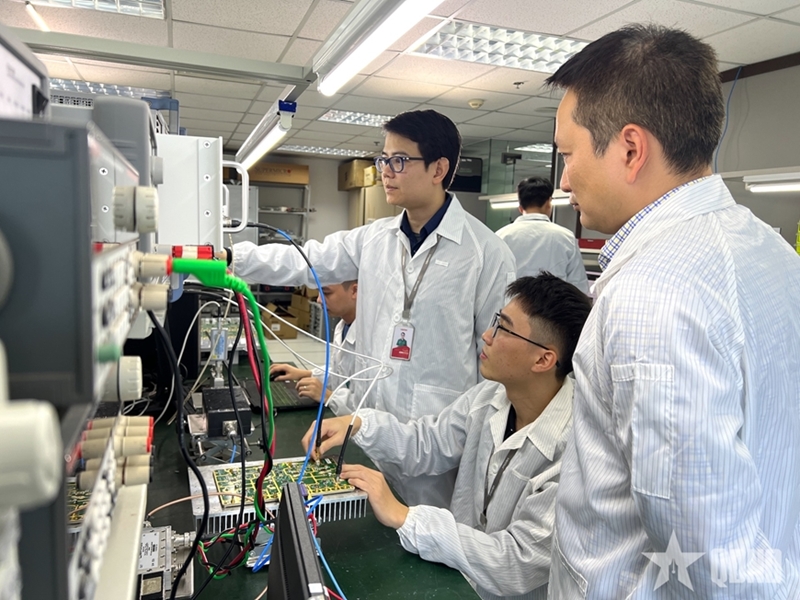
Lt. Col. Hoang Dinh Hai Truyen (standing, wearing glasses) and his colleagues in a laboratory (Photo: Viettel High Tech) |
“If I ever leave, I will be the last one to go”
In 2025, Viettel successfully deployed 2,500 “Make in Vietnam” 5G base stations, making Vietnam one of the first five countries in the world to master 5G network infrastructure and operate a large-scale Open RAN system.
Since joining Viettel in 2011, Truyen has been closely involved in Viettel’s journey toward mastering telecom infrastructure. For him, 5G is not just a product but a reflection of national technological self-reliance.
Early in his career at the Viettel Research and Development Institute (predecessor of Viettel High Tech), he faced many difficulties and uncertain project opportunities. Despite this, he chose to stay, believing persistence would eventually open doors. “If I ever leave, I will be the last one to go,” he said.
After more than four years, he joined the 4G base station design project in 2015, an important milestone in Viettel’s pursuit of telecom infrastructure autonomy.
|
|
 |
|
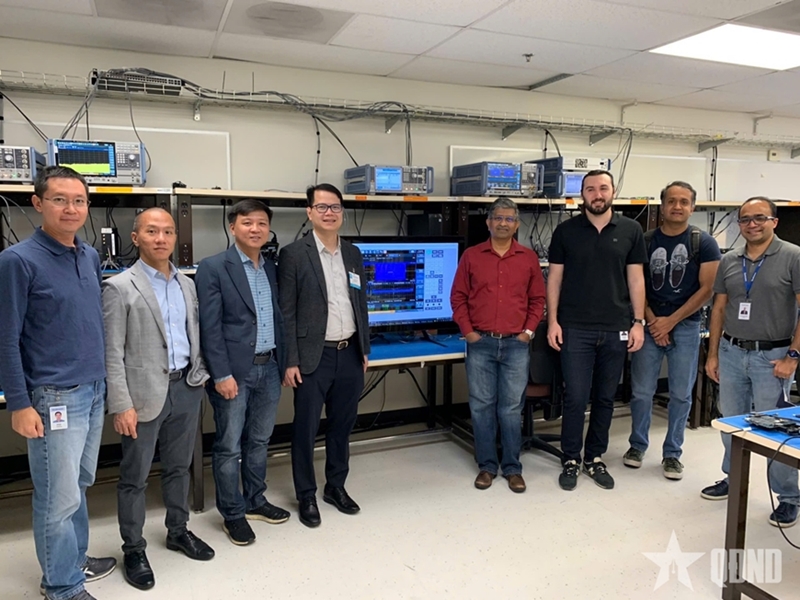
Lt. Col. Hoang Dinh Hai Truyen (fourth from left) and a Viettel High Tech delegation during a working visit to the U.S. for 5G Open RAN cooperation (Photo: Viettel High Tech) |
From 4G experience to global 5G ambitions
Building on 4G experience, the team faced significantly greater challenges in 5G, including much higher bandwidth, complex signal processing, and interference management. When Viettel began 5G research in 2019, the technology was still new globally, requiring engineers to independently solve many technical problems.
Alongside mastery of technology, Viettel’s strategy was clear that 5G products must be commercially viable, large-scale deployable, and globally competitive in cost.
Following this approach, the team developed multiple 5G technology platforms in parallel to ensure autonomy and flexibility. In late 2021, early 2022, after completing the 8T8R radio unit, Viettel High Tech was assigned to develop 5G Massive MIMO 32T32R and 64T64R base stations using Open RAN standards for global compatibility.
Cooperation with Qualcomm and international recognition
To accelerate development, the team engaged directly with global partners, including Qualcomm in the U.S. In 2022, Viettel High Tech and Qualcomm began collaboration on 5G Open RAN base stations using ASIC chipsets.
After about 2.5 years, Viettel successfully developed its first Open RAN base station meeting international standards and ready for commercial deployment.
Qualcomm’s CFO and COO Akash Palkhiwala highly praised Viettel’s engineers’ capabilities, noting that the team completed the project significantly faster than industry norms and demonstrated world-class technical competence.
|
|
 |
|
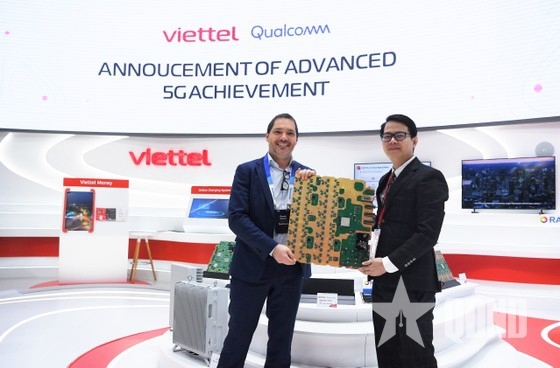
Hoang Dinh Hai Truyen (right) at the Mobile World Congress 2023 in Spain (Photo: Viettel High Tech) |
Risk-taking, redesign, cost optimization
A major milestone came when Viettel High Tech was assigned to deploy 2,500 5G base stations. This required massive coordination across production, supply chains, and network optimization.
The team was reorganized into smaller groups with decentralized responsibility, and engineers worked in three shifts during peak periods to ensure progress.
A key challenge was cost competitiveness. Viettel required the system to match or outperform international vendors in pricing. As chief engineer, Truyen directly redesigned and optimized the system architecture, renegotiated over 300 material codes and more than 10,000 components within two weeks, and worked closely with suppliers to secure support.
Despite the risks, this effort enabled Viettel to produce its largest-ever batch of 32T32R 5G stations.
Reflecting on the project of deploying 2,500 “Make in Vietnam” 5G base stations, Truyen emphasized that the achievement belongs to the entire Viettel Group. He highlighted the importance of leadership support and collaboration from other units within the group.
|
|
 |
|
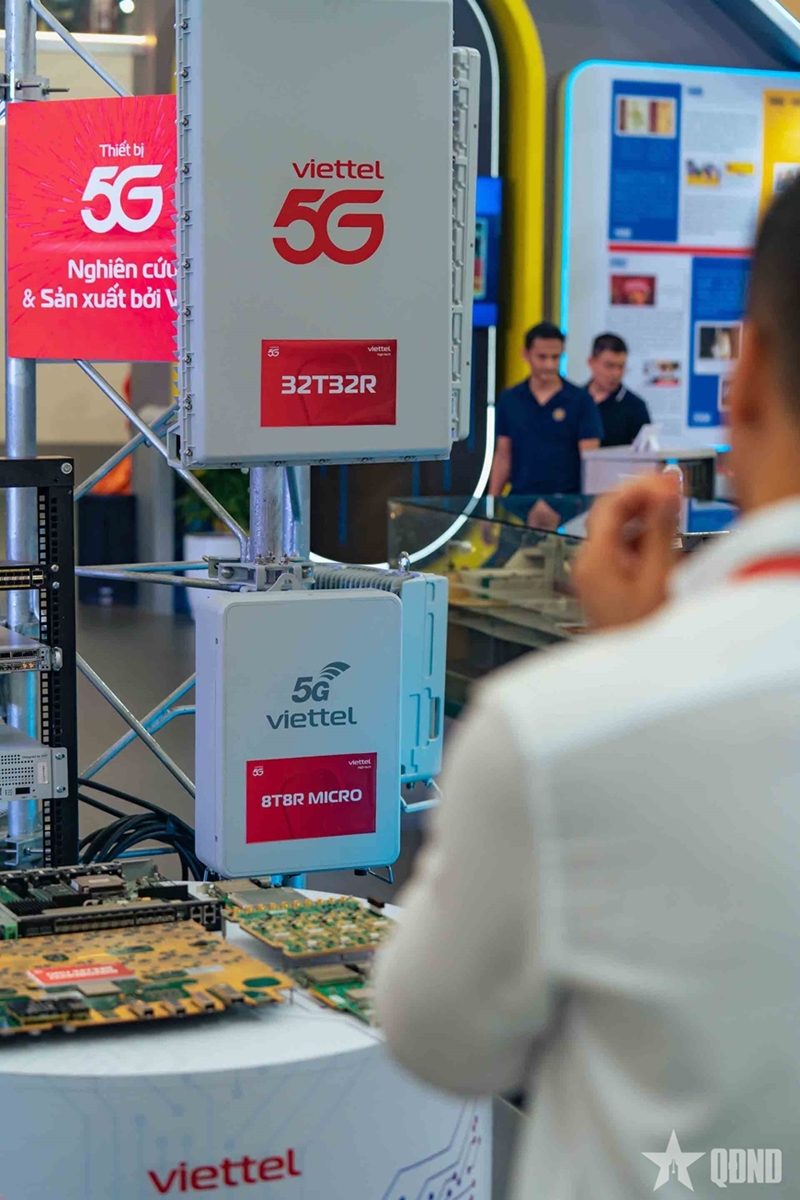
The ecosystem of 5G Open RAN base stations researched and mastered by Viettel High Tech, displayed at the exhibition of 80 years of national achievements |
For him, the most valuable outcome is that engineers have gradually mastered technologies, fully controlled hardware, software, deployment, and optimization of the 5G network. He believes the project has built a foundation of knowledge and confidence for future generations of Vietnamese engineers.
Truyen’s colleague, Luong Hao, Deputy Director of the Broadband Wireless Equipment Research Center, noted that Truyen consistently believes Vietnamese engineers can independently develop world-class technologies.
Beyond Viettel High Tech, Truyen also serves as a member of Vietnam’s strategic technology advisory group under the Ministry of Science and Technology, contributing to national 5G development policies.
He frequently emphasizes “mission and aspiration,” noting that his work is not yet finished. After 5G, his next goal is 6G. “We aim to accompany the world in 6G development,” Truyen said.
For engineers like him, patriotism is creating products that serve the nation and are competitive globally.
Translated by Mai Huong