Complementary economies
New Zealand is an open economy with strengths in agriculture, food, dairy, meat, fruit and high-quality processed products, while Viet Nam has a market of more than 100 million people, diverse production capacity and an increasingly important role in regional supply chains. Their complementary economic structures and participation in free trade agreements (FTAs) provide a solid foundation for expanding trade.
    |
 |
|
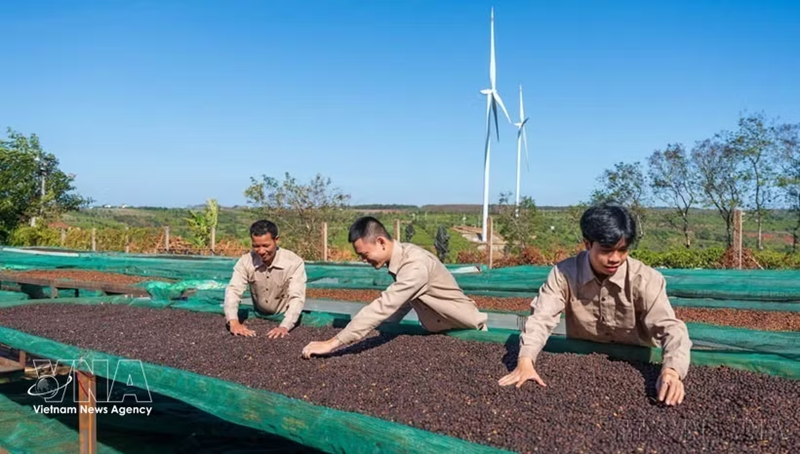
Coffee production process at Ngon Avatar Co., Ltd. meets the requirements for official exports to New Zealand and several European markets. |
Bilateral economic and trade ties have maintained positive growth, with complementary product structures and limited direct competition. Viet Nam is New Zealand’s 12th largest trading partner, accounting for about 2.1% of its total trade, while New Zealand ranks 41st among Viet Nam’s trading partners.
According to the Vietnamese Department of Customs, two-way trade reached USD 1.5 billion in 2025, up 15.8% year-on-year. Viet Nam’s exports to New Zealand rose 3.4% to USD 711 million, while imports increased 29.8% to USD 784 million.
In the first half of 2026, bilateral trade totaled USD 844.4 million, up 14.6% year-on-year. Viet Nam’s exports rose 18.8% to USD 399.6 million, while imports climbed 11.1% to USD 444.8 million.
Deputy Minister of Industry and Trade Nguyen Sinh Nhat Tan said Viet Nam regards New Zealand as an important partner in the Asia-Pacific region, adding that stable trade growth despite global economic uncertainties demonstrates significant untapped potential.
Both countries are members of the Comprehensive and Progressive Agreement for Trans-Pacific Partnership (CPTPP), Regional Comprehensive Economic Partnership (RCEP) and ASEAN-Australia-New Zealand Free Trade Area (AANZFTA), which help businesses reduce costs, enhance competitiveness and expand markets.
At the ninth meeting of the Viet Nam-New Zealand Joint Trade and Economic Commission (JTEC) in Wellington last year, the two sides agreed to explore measures to achieve their 3-billion-USD bilateral trade target by 2026, including further opening markets for agricultural and food products, stepping up trade and investment promotion, and facilitating green and sustainable agricultural and forestry trade.
Creating fresh momentum
Liz Bell, Executive Director of the ASEAN New Zealand Business Council, said New Zealand businesses are highly interested in Viet Nam and want to expand investment and operations there, particularly in high-tech agriculture, quality food, education, renewable energy and technology.
Do Huu Tung, First Secretary at the Viet Nam Trade Office in New Zealand, described New Zealand as an open market for Vietnamese exports such as garments, electronic components, wooden products, machinery and equipment. However, technical requirements, particularly food safety standards, remain a major challenge.
Demand for Vietnamese products is increasing despite New Zealand’s relatively small population of about five million, with consumers showing growing interest in “Made in Viet Nam” goods, from consumer products and handicrafts to furniture and technology equipment. The shift toward sustainable and environmentally friendly products also offer opportunities for Vietnamese exporters.
The trade office called for stronger support in production, farming areas, quality control and traceability to help Vietnamese agricultural and seafood products meet international standards. It also urged industry associations to closely monitor market developments and keep businesses updated on local regulations and standards.
Vietnamese Ambassador to New Zealand Phan Minh Giang said that to realize the goal of raising bilateral trade to USD 3 billion at an early date, both sides should coordinate on breakthrough solutions to remove technical barriers, facilitate market access for key products and make more effective use of FTAs to which both countries are parties.
He also emphasized the need to strengthen trade promotion, business connectivity and trade channels to better exploit market potential. Establishing direct or convenient air links between the two countries would further improve connectivity and unlock resources, he added.
“These will be important factors in improving the effectiveness of trade agreements, expanding markets and making Viet Nam-New Zealand trade ties more substantive and sustainable,” the ambassador said.
Source: VNA